
Brand Monitoring in AI Era
Brand Monitoring in AI Era
Learn what brand monitoring means today, why AI platforms have changed how brands are tracked, and how to build an effective monitoring system.
Haritha Kadapa

Highlights
AI monitoring redefines brand visibility: AI platforms generate answers, not links. Your brand’s visibility now depends on whether it is included in those answers.
Absence is the primary risk signal: In AI-driven discovery, not being mentioned means not being considered. Visibility gaps often go undetected without AI monitoring.
Traditional monitoring cannot see AI outputs: Legacy tools track mentions across web and social channels, but they do not capture how AI platforms include or exclude your brand.
Query-based tracking reveals true visibility: Monitoring real user queries across AI platforms shows where your brand appears, how often, and in what context.
Metrics make AI visibility measurable: AI mention rate, absence rate, and share of AI voice turn AI presence into clear, trackable performance indicators.
What is brand monitoring?
Brand monitoring is the practice of actively tracking where and how your brand is mentioned across digital channels.
Traditionally, brand monitoring meant setting up alerts on social media platforms, watching news aggregators, and reviewing ratings on third-party sites. These tools measured volume: how many times was your brand mentioned, and in what context?
That approach still has value. But it only captures part of the picture.
Today, a growing share of brand discovery happens inside AI platforms. When a potential buyer asks ChatGPT, “What are the best tools for customer data management?” or asks Perplexity, “Which project management software works best for remote teams?”, the AI platform delivers a direct answer. It does not return a list of links for the user to evaluate. It makes a recommendation, draws comparisons, and assigns meaning to the brands it includes.
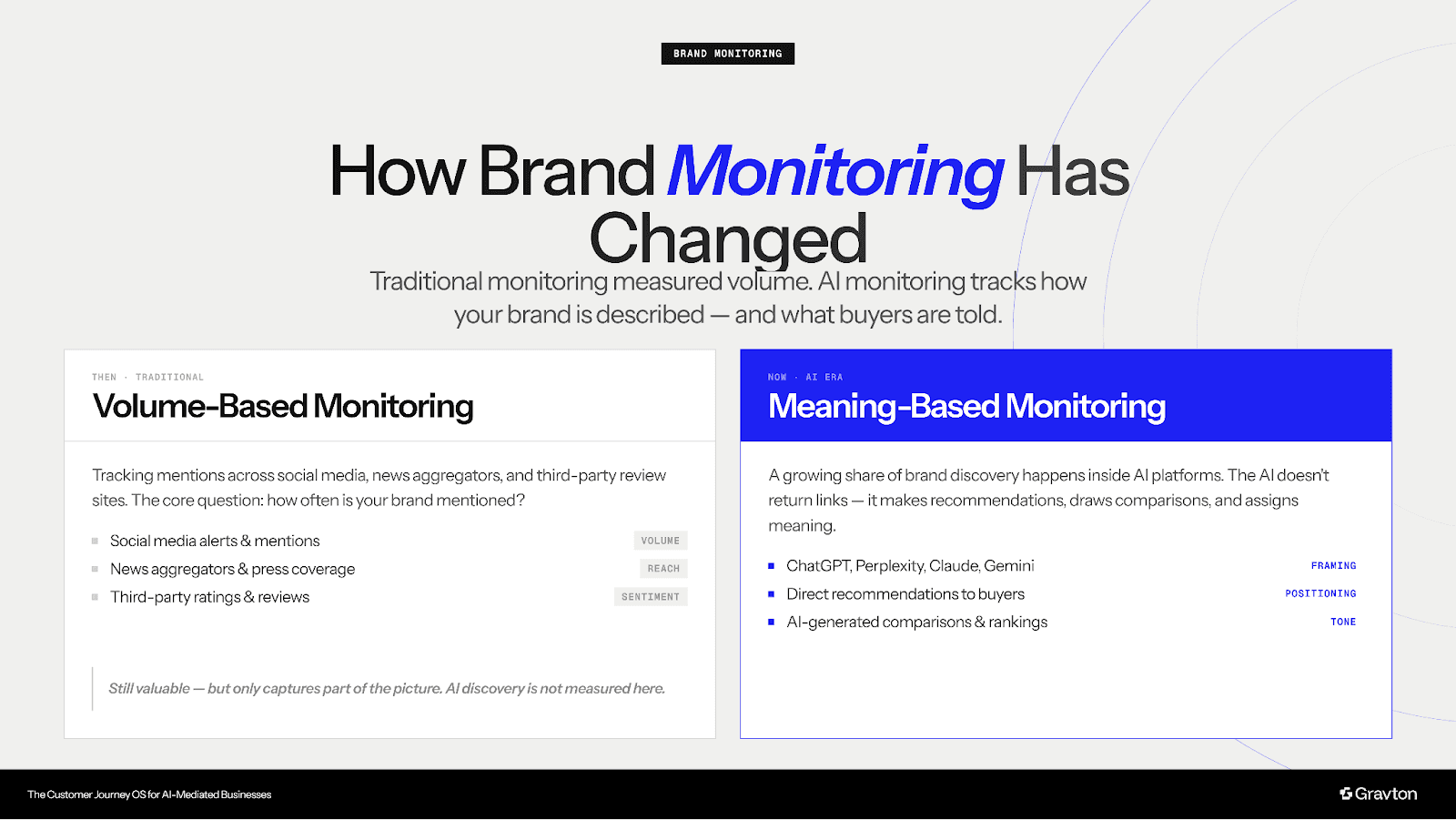
Figure 1: Traditional monitoring vs brand monitoring.
Why AI platforms changed brand monitoring
Consider a company called BrandZ, an AI-driven digital marketing platform. BrandZ has a well-maintained LinkedIn presence and regular mentions in industry newsletters.
Under traditional monitoring, BrandZ looks strong on the surface. The metrics suggest growth, giving the marketing team confidence.
But when a buyer types “best AI-driven digital marketing platform for teams of 50 to 200” into Perplexity, BrandZ is absent. The AI response names three competitors and describes each in detail. That absence is a problem. Traditional monitoring tools do not catch this because they do not track AI responses.
This is the core shift now: traditional monitoring tells you what people are saying. AI monitoring tells you what machines are concluding.
What AI brand monitoring tracks
AI brand monitoring focuses on three types of output:
AI summaries
When users ask broad category questions, AI platforms produce synthesized answers. Monitoring tracks whether your brand appears in those summaries and how it is described.
AI comparisons
Users frequently ask AI platforms to compare options. Monitoring shows whether your brand is included in those comparisons and how it stacks up against competitors.
AI recommendations
When users ask for a recommendation, AI platforms often name specific brands. Monitoring tracks how often your brand receives a direct recommendation and in what context.
How AI brand monitoring differs from traditional monitoring
Traditional brand monitoring is reactive. It reacts to brand mentions in reviews, social posts, or articles by detecting them and responding. In contrast, AI monitoring takes a proactive approach. It identifies not just what is said, but also what remains unsaid, highlighting potential issues.
Table 1: Key differences between traditional brand monitoring and AI monitoring.
Feature | Traditional Monitoring | AI Monitoring |
Data sources | Social, news, reviews | AI summaries, citations, LLM output |
Output format | Raw mentions | Synthesized narratives |
Risk type | Reputation damage | Narrative distortion or omissions |
Response speed | Reactive | Requires proactive content strategy |
Measurement | Volume and sentiment | Visibility and citation frequency |
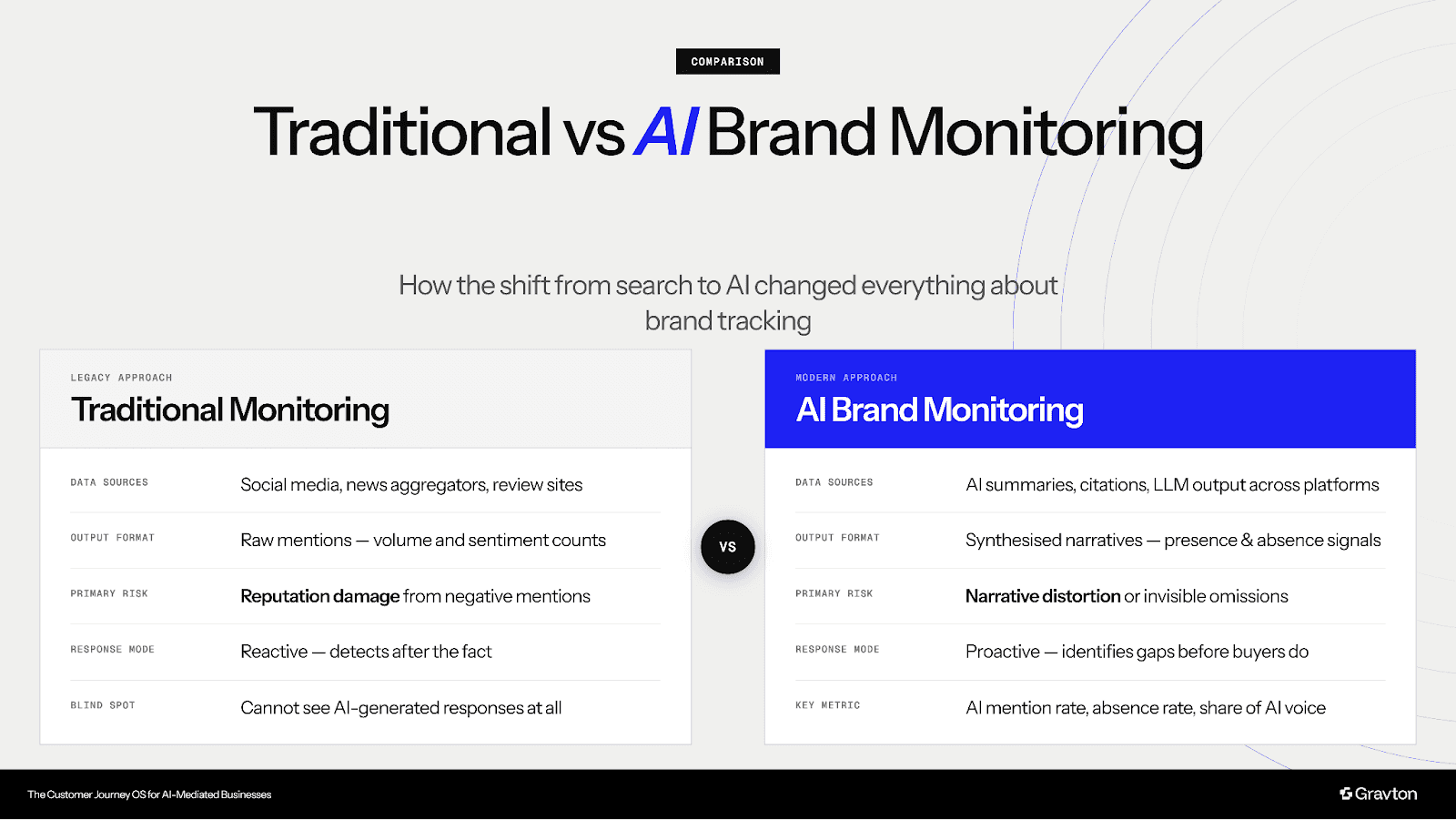
Figure 2: Key differences between traditional monitoring and AI brand monitoring.
How to build an AI brand monitoring system
Step 1: Define your core query set
List the prompts your buyers would ask for an AI platform. Include three categories:
Branded queries:
“What is BrandZ?” or “Is BrandZ good for small businesses?”
Category queries:
“Best AI-driven digital marketing platform for mid-sized teams.”
Comparative queries:
“How does BrandZ compare to BrandX?”
Step 2: Run queries across AI platforms
Test each query in ChatGPT, Perplexity, Google AI Overviews, Microsoft Copilot, and Claude. Document the full response, not just whether BrandZ appears.
Step 3: Track presence and absence
For each query, note whether BrandZ appears. Is it named as a primary option, a secondary option, or is it absent?
Step 4: Monitor on a regular cadence
AI responses evolve as models are updated and new content is published. Run your queries regularly. Treat shifts in visibility as early signals that something in the content has changed.
Key metrics for AI brand monitoring
Key metrics for AI brand monitoring include:
AI mention rate
The percentage of relevant queries where your brand appears. For example, if BrandZ appears in 30 of 100 tracked queries, its AI mention rate is 30%.
Absence rate
Absence rate is the inverse of the AI mention rate. If BrandZ is missing from 70 of 100 queries, its absence rate is 70%. High absence rates in category queries indicate a content gap.
Share of AI voice
Share of AI measures how often your brand appears compared to competitors across the same query set. If a competitor appears in 60% of the same queries, you can identify a significant, measurable gap.
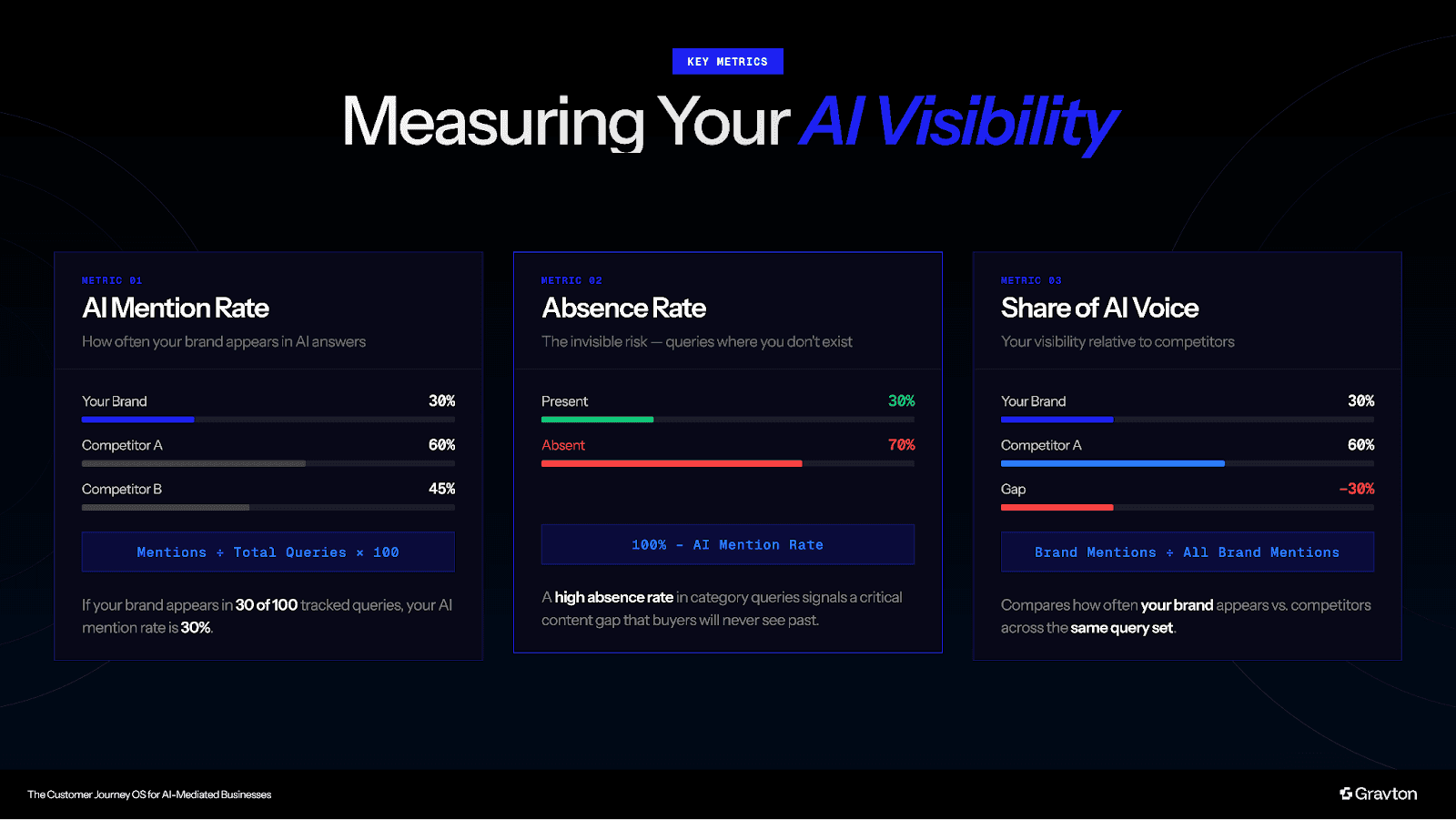
Figure 3: Key metrics for AI brand monitoring.
Final thoughts: what monitoring tells you
The shift from search engines to AI platforms has made brand monitoring more consequential. AI responses now create first impressions. They shape how buyers understand brands, categories, evaluate options, and make decisions.
Monitoring answers the first question: what is being said, or not said, about your brand in AI responses.
Brand monitoring alone is not enough. To fully understand your AI visibility, you also need to analyze sentiment and AI narratives. Sentiment tells you whether your brand is described positively, negatively, or neutrally. AI narratives reveal the recurring themes and positioning assigned to a brand in AI responses over time.
See Sentiment & AI Narratives.
See the Glossary of terms for definitions.
FAQs on AI brand monitoring
What is AI brand monitoring?
AI brand monitoring is the process of tracking how AI platforms mention, describe, and evaluate your brand. It goes beyond traditional monitoring by analyzing AI-generated summaries, recommendations, and comparisons.
Why is AI brand monitoring important?
AI brand monitoring is important because AI platforms increasingly shape how buyers discover and evaluate brands. If your brand is not included in AI responses, you may be excluded from consideration early in the decision-making process.
How does AI brand monitoring work?
AI brand monitoring works by identifying key user queries, running them across AI platforms, and tracking whether your brand appears in summaries, comparisons, or recommendations.
How is AI brand monitoring different from traditional brand monitoring?
Traditional brand monitoring focuses on raw mentions such as what people say about your brand across social media, news, and reviews. AI brand monitoring focuses on how AI systems interpret and present that information.
In short:
Traditional monitoring → human opinions
AI monitoring → machine-generated conclusions
How do you build an AI brand monitoring system?
To build an AI brand monitoring system, define key user queries, test them across AI platforms, track whether your brand appears, and repeat this process regularly to monitor changes over time.
Is AI brand monitoring enough on its own?
No. AI brand monitoring shows where your brand appears, but it does not explain how your brand is described. To fully understand perception, it should be combined with sentiment analysis and AI narrative tracking.
Win your AI search demand universe
Understand how AI platforms are rewriting what brand monitoring means and where competitors are being tracked, cited, and recommended in ways your current tools aren't capturing.
VISIBILITY & CONTENT STRATEGY