
Prompt Market Analysis: What Buyers Actually Ask AI
Prompt Market Analysis: What Buyers Actually Ask AI
Learn how marketing leaders analyze prompt patterns across AI platforms to understand demand, identify content opportunities, and improve AI visibility.
Haritha Kadapa

Highlights
Prompt market analysis: Marketing leaders examine large volumes of prompts across AI platforms to identify patterns, trends, and emerging user needs.
AI demand revealed through prompt patterns: Repeated structures such as “best tools for…” or “Brand Z vs…” highlight areas of concentrated buyer demand and decision-making.no
Prompt market analysis as a marketing discipline: Marketing leaders, analysts, and product teams conduct prompt market analysis to understand the demand landscape, informing their content creation strategies.
Collaborative efforts of prompt market analysis and intent intelligence: While intent intelligence explains why users pose specific questions, prompt market analysis reveals what users are asking across an entire category. Together, these approaches offer a comprehensive view of AI search behavior.
Conducting prompt market analysis: Marketing leaders follow a systematic workflow including defining a prompt framework, analyzing patterns, evaluating AI responses, assessing competition, identifying gaps, and translating insights into an effective content strategy.
What is prompt market analysis?
Prompt market analysis is the practice marketing leaders use to collect and study large volumes of prompts across AI platforms. It shows what questions people ask, how they phrase them, and which sources are cited in AI responses.
Marketing leaders conduct prompt market analysis to:
discover emerging user needs
identify new content opportunities
understand how AI systems respond to different types of questions
In short:
Prompt market analysis → patterns and trends in prompts at scale
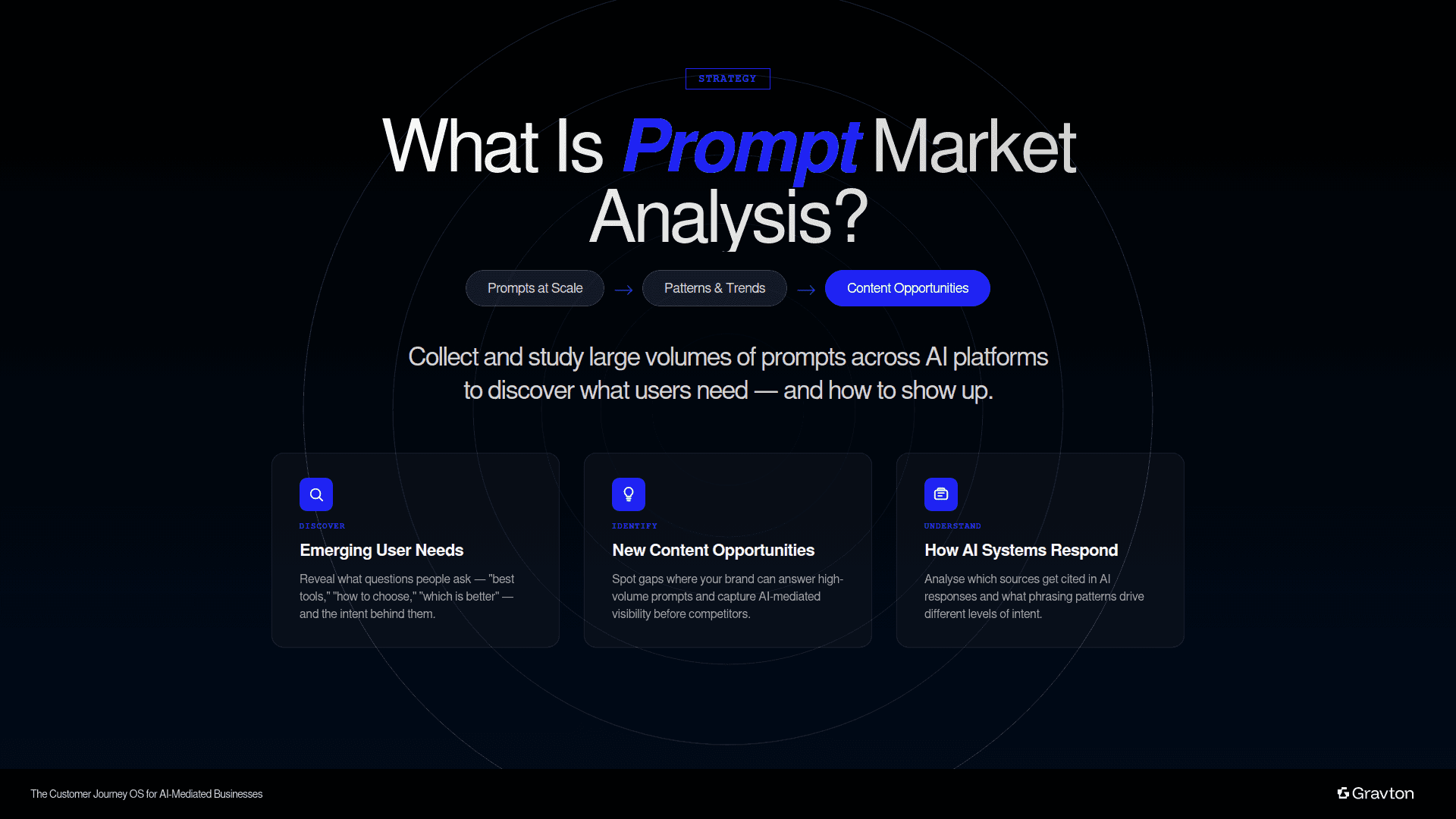
Figure 1: What is prompt market analysis?
How intent intelligence and prompt market analysis work together
Where intent intelligence explains the why behind an individual prompt, prompt market analysis answers the what at scale.
When combined, intent intelligence and prompt market analysis provide a complete picture of AI search behavior.
Prompt market analysis shows what people ask. E.g., “What is AI visibility?” shows demand.
Intent intelligence explains why they ask it. E.g., The same query reflects early-stage learning intent.
Marketing leaders use both approaches together to:
Track demand
Understand user motivation and
Optimize content to appear in AI responses
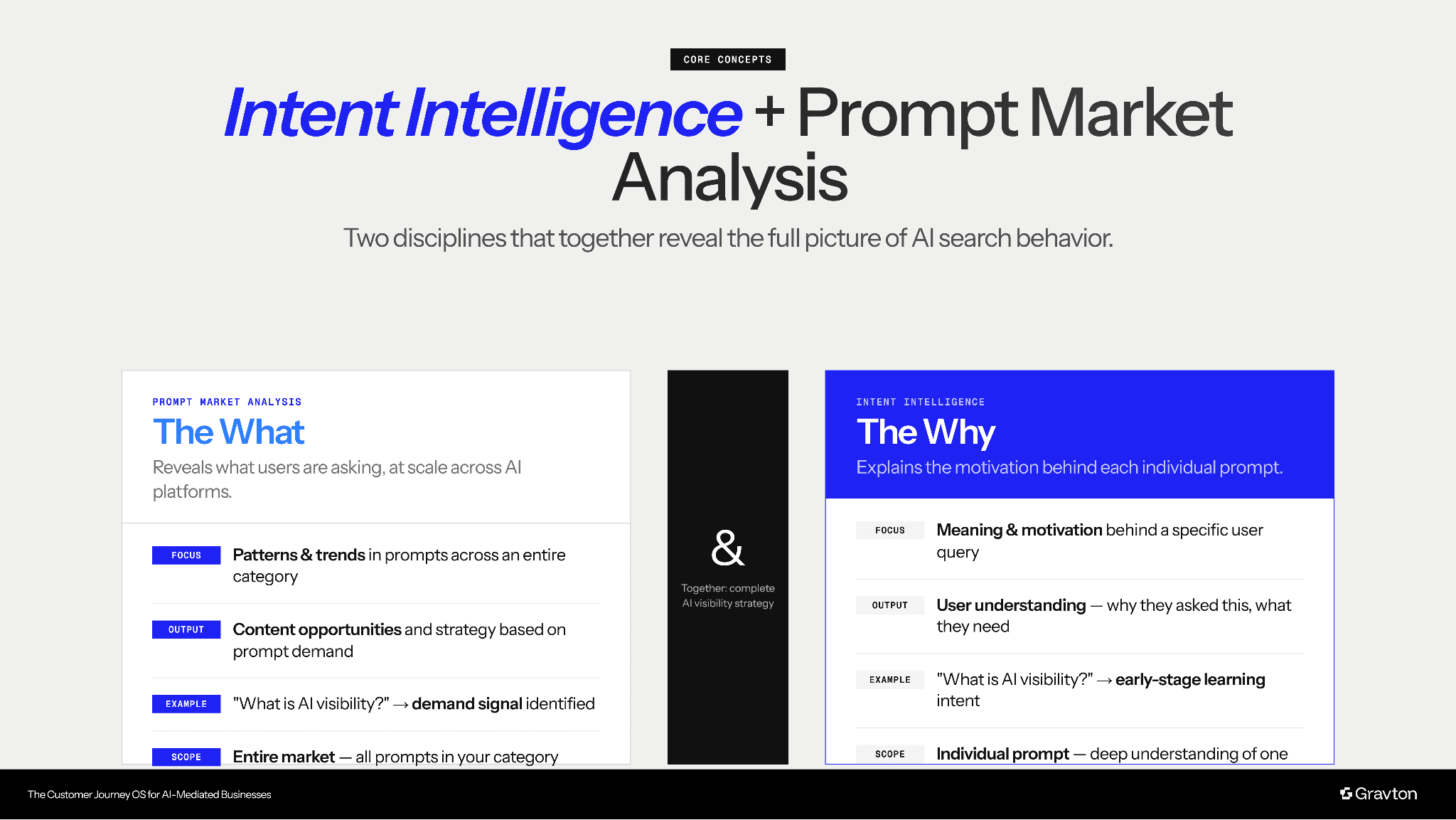
Figure 2: How Intent Intelligence and Prompt Market Analysis Work Together.
Why prompt market analysis matters now
Buyers are increasingly turning to AI platforms not just for information, but for recommendations, comparisons, and decisions. A buyer evaluating marketing analytics software is no longer just typing “marketing analytics software” into Google and reviewing the first page of results. They are asking ChatGPT, “What are the best marketing analytics tools for a B2B SaaS company with a team of five?” and receiving a synthesized, structured answer.
That prompt is specific. It carries commercial intent. And the brands that appear in AI responses to prompts like it have a significant advantage over those that do not.
Prompt market analysis helps marketing leaders identify these patterns across a category and prioritize them.
The running example: BrandZ
Throughout this guide, the example is Brand Z, an AI-driven digital marketing platform designed for small to mid-sized businesses that want to automate campaigns, optimize performance, and scale growth efficiently.
Brand Z’s buyers are typically marketing managers, founders, and growth teams looking for intelligent automation without the complexity of enterprise tools.
Brand Z’s marketing team suspects that buyers are asking AI platforms a wide range of questions in their category, but they do not know which questions matter most, how those questions are phrased, or where Brand Z appears in AI-generated responses.
Prompt market analysis is the starting point for answering those questions.
Conducting prompt market analysis: methods and workflow
Marketing leaders conduct prompt market analysis through a structured workflow.
Step 1. Define your prompt framework
Before collecting data, marketing leaders define the structure of the prompts you want to study. Identify the categories of questions buyers ask across your product category. Then, map the questions users ask before, during, and after the buying process.
For Brand Z, the prompt framework might include,
TOFU (Top of Funnel – Informational intent):
→ “What is an AI-driven digital marketing platform like Brand Z?”
→ “Why use AI in digital marketing?”
MOFU (Middle of Funnel – Commercial investigation intent):
→ “Best AI-driven digital marketing platforms like Brand Z”
→ “How to choose a marketing automation platform”
BOFU (Bottom of Funnel – Decision/transactional intent):
→ “Brand Z vs Brand X for marketing automation”
→ “Is Brand Z good for small businesses?”
Step 2. Analyze prompt patterns at scale
With a defined framework, the next step is to look for patterns. Group prompts by themes and intent types. This step helps marketing leaders understand how users naturally frame their questions and where high-intent clusters exist.
Common patterns include:
Informational intent:
→ “What is…”
→ “How does…”
→ “Why use…”
These patterns indicate learning-focused queries where users are trying to understand a concept or category.
Navigational intent:
→ “[Brand Z] login”
→ “[Brand Z] pricing”
→ “[Brand Z] features”
These patterns show users trying to find a specific brand or resource they already know.
Commercial investigation intent:
→ “Best [category] for…”
→ “Top tools for…”
→ “How to choose…”
These patterns reflect evaluation behavior, in which users compare options and seek solutions tailored to their needs.
Transactional intent:
→ [Brand Z] free trial”
→ “Book a demo”
→ “Sign up for…”
These patterns indicate action-oriented queries with a clear intent to convert.
Step 3. Test prompts across AI platforms
Run representative prompts across AI platforms. Observe how answers are constructed, what formats are preferred, and which types of content get surfaced. Focus on patterns, not just individual outputs. E.g., AI responses often prioritize list-based or comparison formats.
Step 4. Assess competitive visibility
Certain brands appear consistently across high-intent queries. Identify which brands, products, and concepts appear most frequently across prompts. This reveals the competitive landscape within AI responses and highlights who dominates high-intent queries.
→ “Brand X: appears in 70% of tracked prompts
→ “Brand Y: appears in 15%
→ “Brand Z: appears in 15%
Step 5. Identify opportunity gaps
Compare prompt demand with existing content coverage. Look for areas where user intent is strong but content is weak, unstructured, or missing. These gaps represent the highest-impact opportunities for visibility.
Use-case prompts:
→ “AI marketing for lead generation”
→ “AI tools for campaign optimization”
Segment prompts:
→ “for startups”
→ “for small marketing teams”
Comparison prompts:
→ “Brand Z vs Brand X”
Step 6. Translate insights into content strategy
Marketing leaders use findings to guide content creation and optimisation. Prioritise high-intent prompts and structure content in a way that AI systems can easily interpret and cite.
This process helps them move from isolated keyword targeting to a broader, intent-driven strategy built around real user questions.
Use-case pages (lead generation, campaign optimization)
Segment-specific pages (for startups, SMBs)
Comparison content (Brand Z vs competitors)
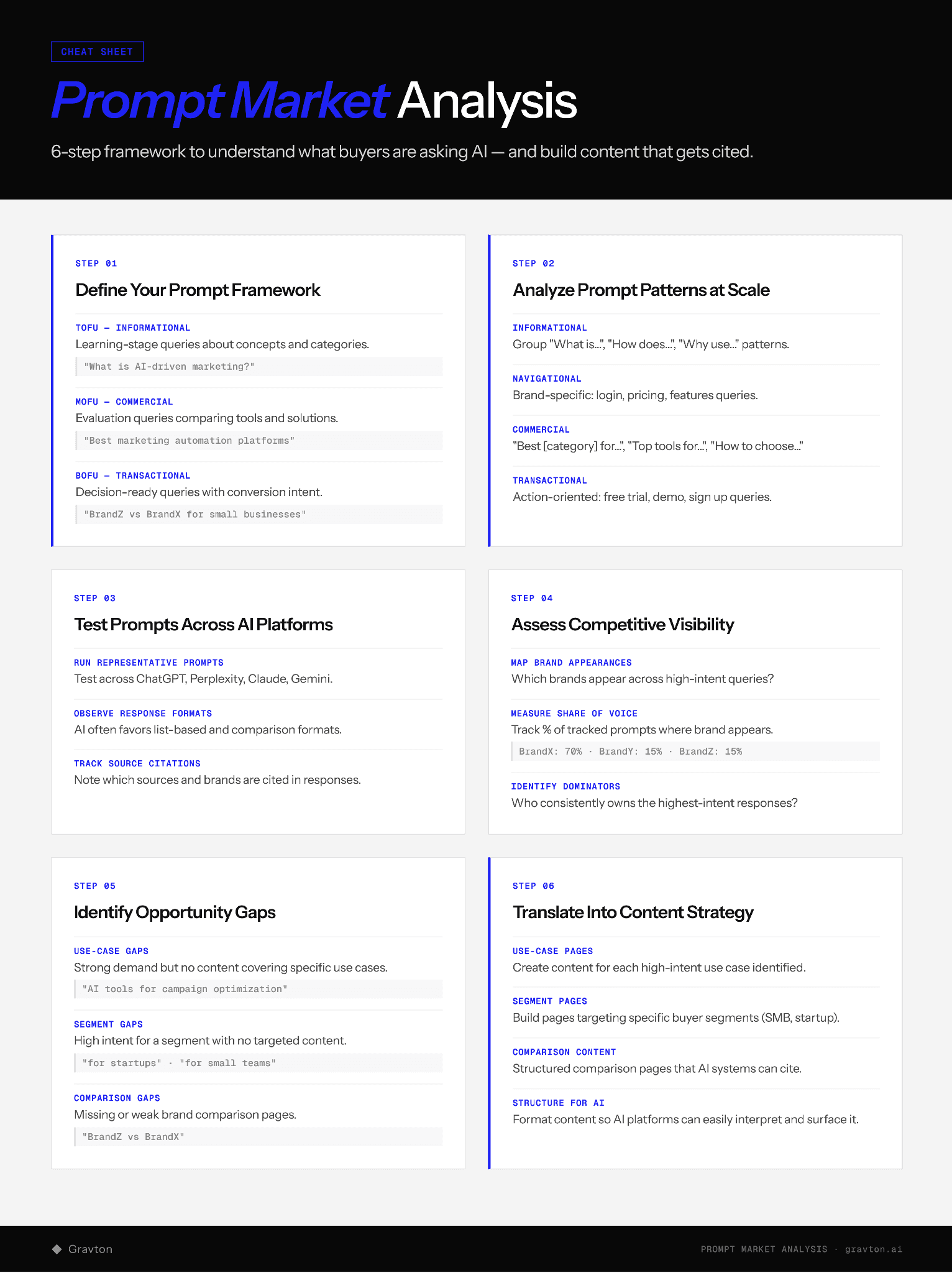
Figure 3: Workflow to conduct prompt market analysis.
For a deeper look at how your brand specifically appears and is positioned in AI responses, check out the AI Brand Narrative Audit guide.
Prompt market analysis vs. AI brand narrative audit
Table 1. Prompt Market Analysis vs. AI Brand Narrative Audit.
Aspect | Prompt Market Analysis | AI Brand Narrative Audit | Example |
Scope | Entire market and category | Your brand specifically | Analyze all prompts vs Analyze one brand’s presence |
Primary goal | Understand user intent and demand | Evaluate brand perception in AI responses | Identify what users want vs How a brand is described |
Focus | Prompt patterns, themes, and trends | Brand mentions, sentiment, positioning | Questions like “best tools” vs Whether a brand is described as a top option or not. |
Key output | Content opportunities and strategy | Visibility gaps and narrative insights | New content ideas vs Positioning gaps |
Core question | What are users asking and who appears? | How is my brand being represented? | “What tools are popular?” vs “How is this brand described?” |
Final thoughts: what prompt market analysis tells you
Prompt market analysis is the discipline that brings structure to an AI visibility strategy. Without it, marketing teams are guessing creating content based on intuition about what buyers might ask, rather than evidence of what they are actually asking.
The prompt market analysis changes everything about the content roadmap. Instead of publishing another general overview of product analytics, the marketing teams now understand the highest-value opportunity. This opportunity lies in creating content tailored to specific use cases and company stages. The content should be structured to match the prompt patterns that buyers are already using. Additionally, it should be positioned to close the gap against competitors who currently dominate those responses.
Start with the prompt framework. Follow the data. Build content that AI platforms can actually use. That is what prompt market analysis makes possible.
FAQs on prompt market analysis
What is prompt market analysis?
Prompt market analysis is the practice marketing leaders use to study large volumes of prompts across AI platforms. It reveals what users ask, how they phrase questions, and what patterns emerge
Why is prompt market analysis important for AI visibility?
Prompt market analysis helps identify which prompts drive demand and where your brand is missing, allowing you to create content more likely to be cited in AI-generated responses.
How are intent intelligence and prompt market analysis different?
Intent intelligence explains why users ask questions, focusing on meaning and motivation. Prompt market analysis shows what users ask, focusing on patterns, trends, and prompt structures.
How is prompt market analysis different from keyword research? Keyword research analyzes search volume for isolated terms. Prompt market analysis examines the full structure and meaning of user questions at scale.
Who performs prompt market analysis?
Marketing leaders, analysts, and product teams, not AI models. AI models use intent to respond to users; marketing teams analyze intent to influence what AI recommends.
What are the steps in prompt market analysis?
Prompt market analysis follows a structured workflow. It includes defining a prompt framework, analysing patterns, evaluating AI responses, assessing competitive visibility, identifying gaps, and translating insights into content strategy.
Win your AI search demand universe
Understand how AI platforms respond to the exact prompts your buyers are typing and where competitors are dominating the demand patterns you haven't mapped yet.
VISIBILITY & CONTENT STRATEGY