
Intent Intelligence: Understanding Why Users Ask What They Ask
Intent Intelligence: Understanding Why Users Ask What They Ask
Learn what intent intelligence is, how AI platforms interpret the meaning behind user prompts, and how marketing teams can use intent to align content with buyer needs.
Haritha Kadapa

Highlights
Intent intelligence shifts focus from keywords to meaning: Traditional SEO focused on matching keywords. Intent intelligence analyzes the meaning behind user prompts and identifies user motivations.
Buyer journey mapping becomes critical: Each intent type reflects a different decision stage. Content must align with informational, navigational, commercial, and transactional needs.
Commercial intent drives the highest impact: Comparison queries are where decisions are made. If your brand is missing or poorly framed, you lose influence at the most critical stage.
How AI models interpret intent: AI models take a task-focused approach to interpret prompts. They analyze entities, context, and implied tasks to determine user intent and generate relevant, structured responses.
Measuring intent intelligence: Brands can measure intent intelligence using metrics such as entity citation share, prompt coverage rate, citation source quality, intent category coverage, and competitor citation delta to track visibility and identify gaps.
What is intent intelligence?
Intent intelligence is the practice of analyzing the meaning behind user prompts.
In traditional search, marketing teams focused on keywords: which terms users were typing, how often, and what the ranking opportunity was. That approach treated user queries as isolated signals, words to be matched.
Intent intelligence goes further. It asks not just what words a user typed, but what they were trying to accomplish. What stage of the buying journey are they in? What decision are they facing? What would actually help them?
AI models analyze the full semantic meaning of a prompt, including the implied task, to generate a response that addresses the user's actual needs.
Intent intelligence is the marketing discipline that makes sense of the shift from keyword matching to intent interpretation and turns it into a content strategy.
In short:
Intent intelligence → meaning and motivation behind the prompt
See What AI Prompts are & How Users Ask Questions and Give Instructions to AI Systems
The four types of intent
Intent intelligence classifies prompts into four categories, each reflecting a distinct user motivation and buyer journey stage.
Informational intent
The user wants to learn something. Example: “What is an AI-driven digital marketing platform?”
A buyer at this stage needs clear, educational content that defines the category and establishes your brand as a credible source of knowledge.
Navigational intent
The user wants to find a specific brand, website, or resource. They already know where they want to go. Example: “Go to the Brand Z login page.”
At this stage, the buyer has already formed an intention. The goal of a brand should be visibility and accurate representation so the user lands in the right place.
Commercial investigation intent
The user is comparing options and evaluating which solution best fits their needs. This is a high-value intent stage, where AI responses carry significant influence. Example: “Which is the best AI-driven digital marketing platform Brand Z vs. Brand Y?”
A buyer at this stage is making decisions. AI platforms frequently generate comparison responses here. If your brand is absent or characterized as a secondary option, you lose ground at a critical moment.
Transactional intent
The user is ready to take action, whether that means signing up, requesting a demo, or downloading a resource. Example: “Sign up for Brand Z free trial” or “Book a Brand Z demo.”
At this stage, friction is the enemy. Content needs to be direct, clear, and action-oriented.
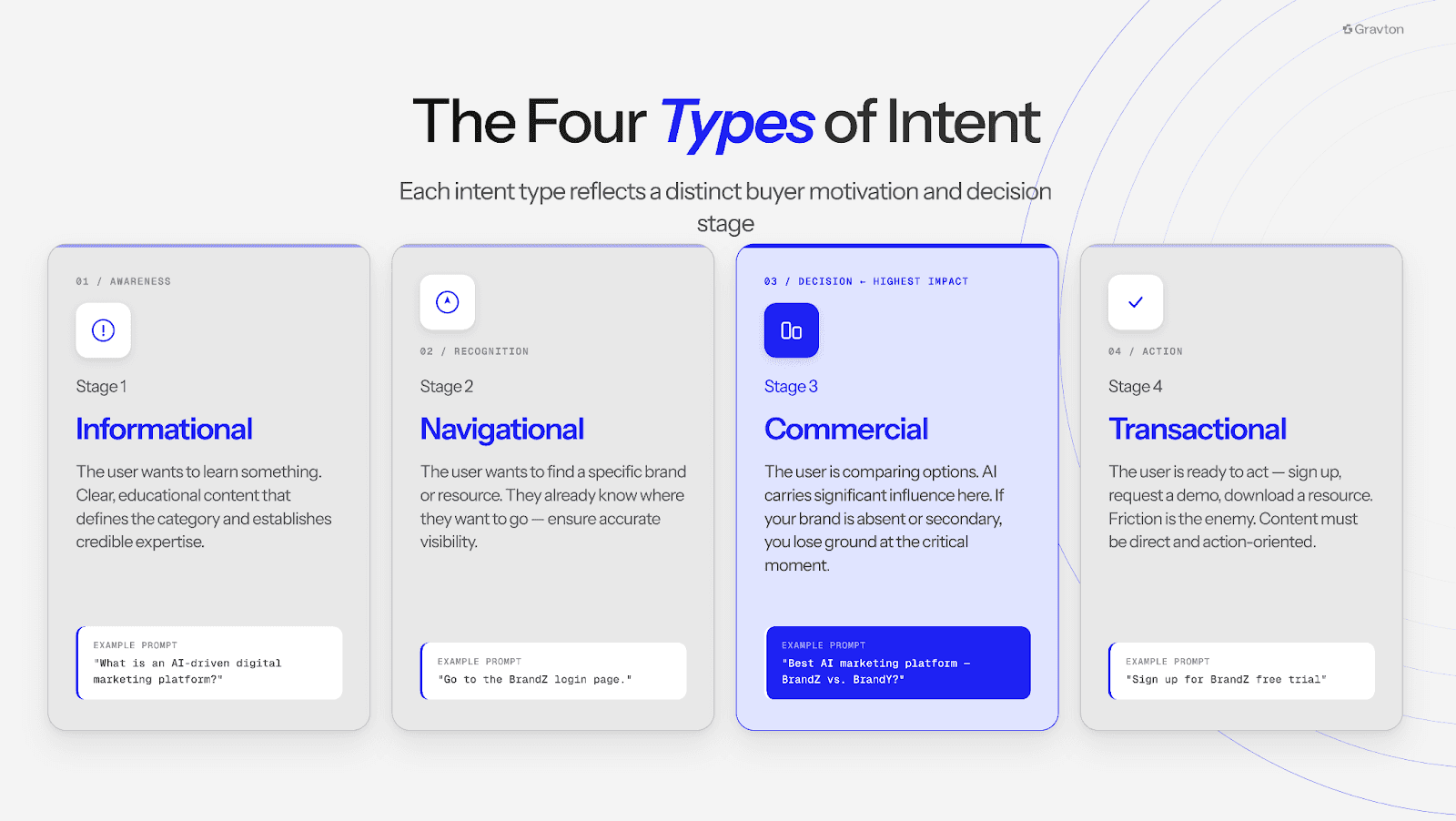
Figure 1: The four types of intent: Informational, Navigational, Commercial, Transactional
Why intent intelligence matters in the AI search era
Consumer search habits are shifting to AI platforms. AI handles 50% of searches today and is becoming the user’s new front door to information and brand discovery. The shift makes it critical to understand why AI Search Visibility Matters.
AI visibility often delivers higher-intent and higher-value visitors. Traffic arriving through AI platforms is usually further along in the research journey, more informed, and closer to making a decision. Example: A query like “best tools for enterprise analytics” indicates higher intent than “what is analytics.” Sectors such as software, finance, and healthcare are gaining greater visibility due to their strong reliance on research and expert content. This highlights the importance of intent intelligence and prompt market analysis. Content quality, clarity, and credibility now determine whether a brand appears in AI responses.
How AI models interpret intent in prompts
AI models use a task-focused approach to interpret user queries. Rather than matching isolated keywords, they analyze prompts for entities (subjects), context (modifiers), and implied tasks.
For example, in the prompt “Best AI marketing platform for small businesses?”
Entities (subjects): AI marketing platform
Context (modifiers): for small business
Implied tasks: finding the best option
This task-focused approach helps AI models understand that the user is trying to compare two options (commercial investigation) and make a strategic decision.
In short:
Implied tasks → serve as a direct signal of underlying intent.
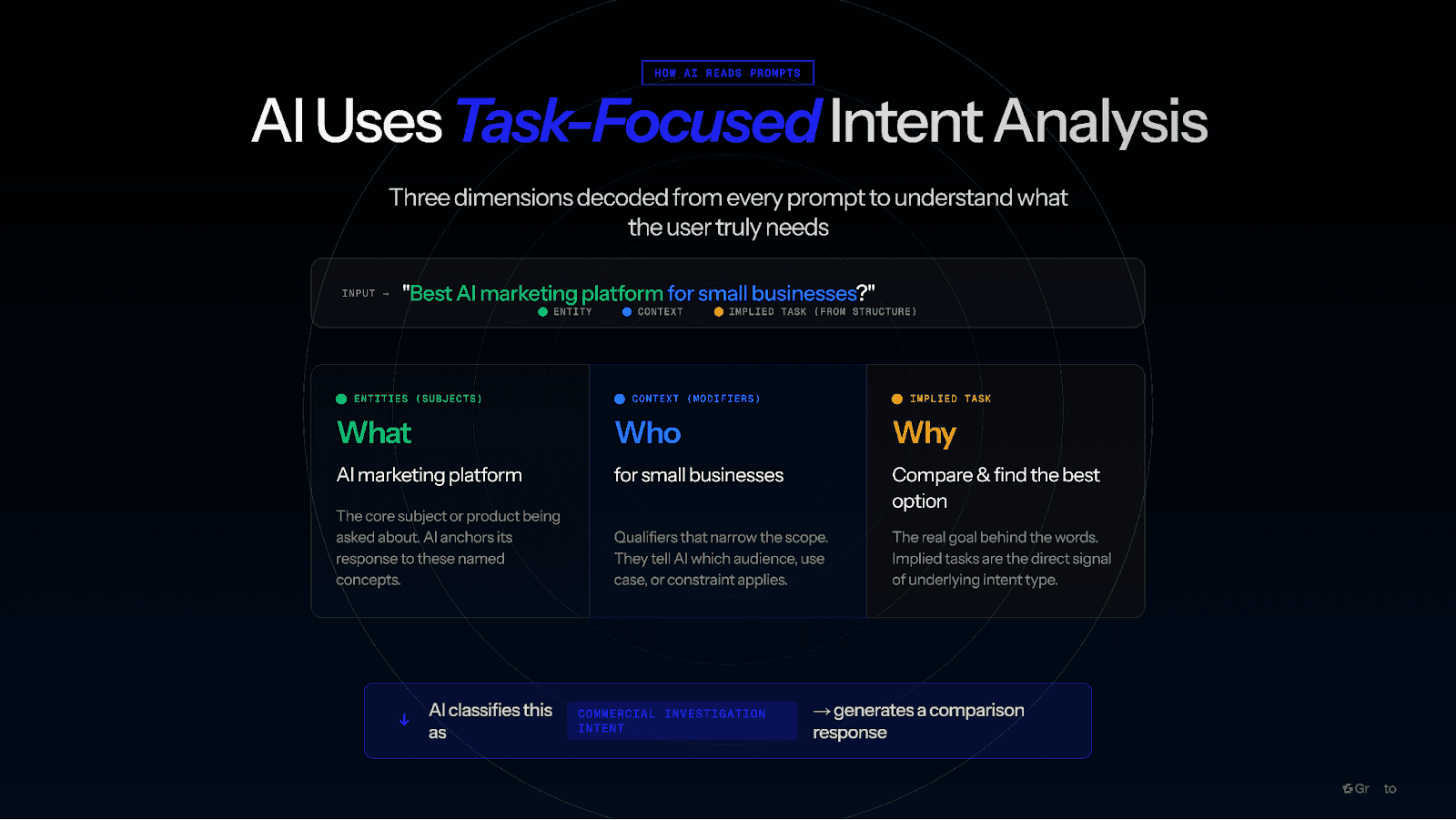
Figure 2: How AI models interpret intent: using Entities, Context, and Implied tasks.
How AI models and marketing teams use intent differently
Intent intelligence
Both AI large language models (LLMs) and marketing teams use intent intelligence, but for different purposes.
AI models:
AI models analyze intent to generate accurate and relevant answers. They interpret prompts, classify intent, and decide which information to present to the user.
Marketing teams:
Marketing teams use intent intelligence to understand their audience and shape their content strategy. They study prompts, identify user needs, and optimize content that aligns with user needs. The goal is to get AI platforms to cite or recommend their brand.
In short:
AI systems → understand intent to respond to users
Marketing teams → analyze intent to influence what AI recommends
How intent intelligence differs from traditional keyword research
The shift from keyword matching to task and intent interpretation fundamentally changes how AI models detect user needs and surface content.
Table 1: Traditional Keyword Research vs. Intent Intelligence.
Dimension | Traditional Keyword Research | Intent Intelligence | Example |
Unit of analysis | Keyword | Full question or prompt | “Best AI marketing platform for startups like Brand Z” |
Data source | Search engine ranking data | AI platform query analysis | Prompts where Brand Z appears in ChatGPT responses |
Buyer context | Low: keyword only | High: full sentence with buying signals | Query shows need: “automation for small teams” |
Competitive metric | Ranking position | Entity citation share | Brand Z vs competitors in AI answers |
Content output | Keyword-optimised page | Structured, quotable, AI-citable content | Brand Z comparison pages, use-case guides |
Visibility tracked | Google SERP | ChatGPT, Perplexity, Google AI Overviews | Brand Z mentions in AI Overviews, ChatGPT |
The three principles of intent intelligence
Intent intelligence works best when it follows a clear structure. Three principles guide it.
Table 2: Principles of intent intelligence.
Principle | What It Means | Why It Matters | Example |
Prompt taxonomy | Classifies prompts by type and intent level | Helps prioritize high-value queries | “What is Brand Z?” (informational) or “Brand Z vs Brand X” (commercial) |
Entity analysis | Tracks brands, products, and concepts in AI responses | Measures AI visibility and competition | AI responses mention Brand Z alongside Brand X and Brand Y. |
Intent shift tracking | Monitors how user queries evolve over time | Identifies emerging demand early | Queries shift from “What is Brand Z?” to “Brand Z pricing” to “Sign up for Brand Z.” |
Together, these principles help marketing teams move from reactive content creation to proactive strategy.
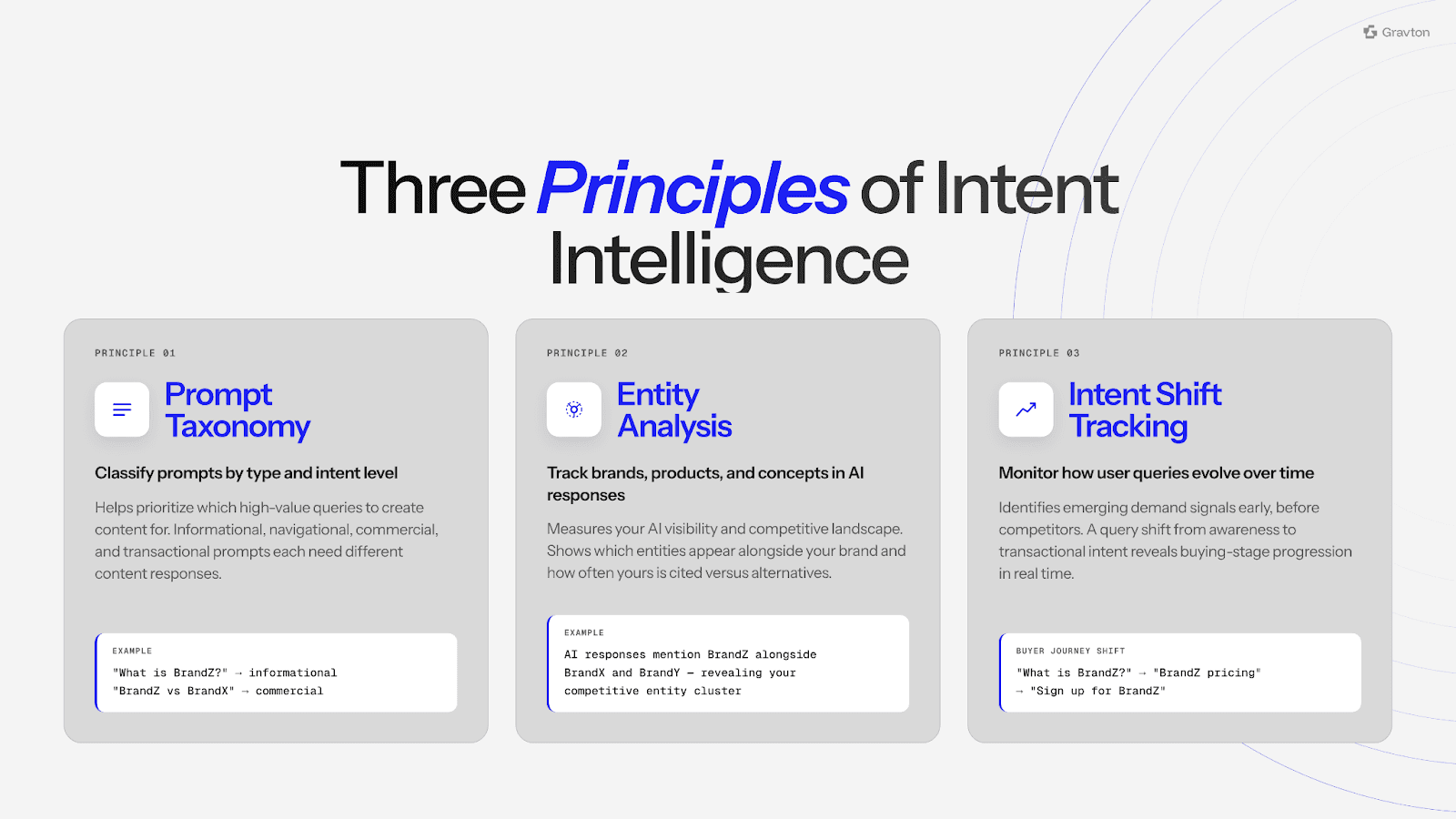
Figure 3: Three principles of intent intelligence: Prompt taxonomy, Entity analysis, and Intent shift tracking.
Measuring intent intelligence performance
Five metrics that give you a clear view of intent intelligence performance.
Entity citation share
The percentage of relevant prompts that mention your brand across AI platforms. E.g., Brand Z appears in 40% of relevant AI responses.
Prompt coverage rate
The proportion of your defined prompt framework where your brand has any presence at all. E.g., Brand Z appears in 60 of 100 tracked prompts.
Citation source quality
The proportion of your brand’s citations originating from owned versus third-party sources, reflecting the reliability and control of your visibility. E.g., AI cites Brand Z blog content and product pages as primary sources.
Intent category coverage
The distribution of your brand’s presence across prompt types, highlighting gaps in informational, navigational, comparative, and transactional visibility. E.g., Brand Z appears in informational and commercial queries but is missing in transactional prompts like “Brand Z demo.”
Competitor citation delta
The gap between your citation shares and that of your closest competitors, tracked over time. E.g., A competitor appears in 70% of prompts vs 40% for Brand Z.
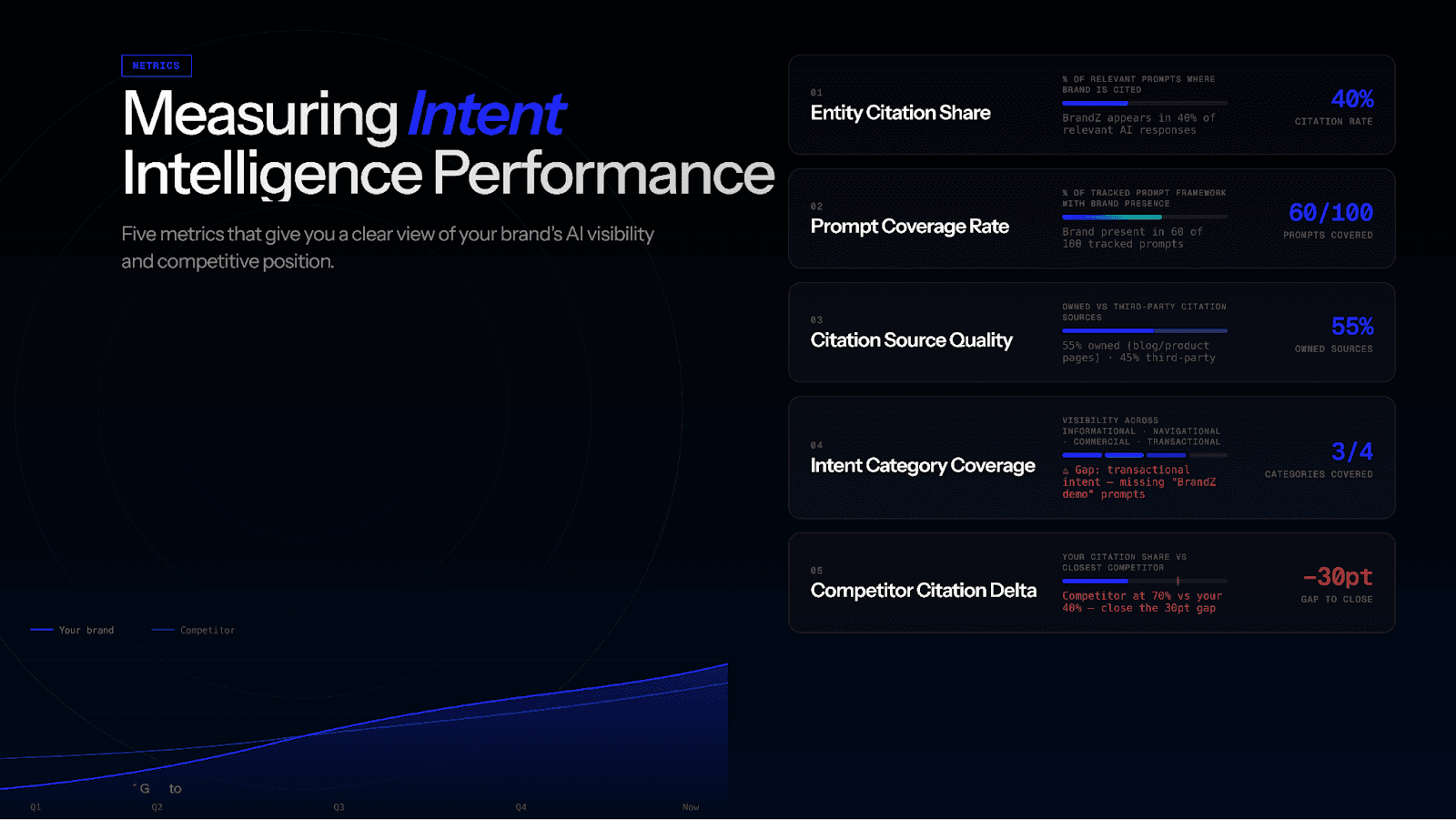
Figure 4: How to measure intent intelligence.
Final thoughts: What intent intelligence tells you
Intent intelligence is the practice of understanding why buyers ask what they ask, and using that understanding to create content that AI platforms recognize, cite, and use to serve those buyers.
This means moving beyond generic category keywords and investing in content that directly addresses high-intent prompts: comparison content, use-case-specific guides, and structured answers to the specific questions shift-based operations teams are asking as they approach a decision.
The brands that win in AI search are not necessarily the biggest or most well-known. They are the brands whose content most clearly and directly answers the questions buyers are actually asking.
Intent intelligence is how you know what those questions are.
FAQs on intent intelligence
What is intent intelligence?
Intent intelligence analyzes the meaning behind user prompts. It focuses on the full semantic meaning, not just keywords. It helps identify user motivation and intent type across different stages of the journey.
What are the different types of intent?
Intent intelligence classifies prompts into four main types. These include informational, navigational, commercial investigation, and transactional intent. Each type reflects a different stage in the user journey, from learning to decision-making and action.
Why does intent intelligence matter in AI search?
AI platforms interpret intent to generate answers. They prioritise content based on meaning, not keywords. Understanding intent helps brands align content with user needs and improve AI visibility.
How do AI models interpret prompts?
AI models analyse prompts using a task-focused approach. They identify entities, context, and implied tasks, which help them understand user intent and generate relevant responses.
What are the core principles of intent intelligence?
Intent intelligence follows three key principles. These include prompt taxonomy, entity analysis, and intent shift tracking. Together, they help prioritize queries, measure visibility, and identify emerging demand.
How can brands measure intent intelligence performance?
Brands can use specific metrics to track performance. These include entity citation share, prompt coverage rate, citation source quality, intent category coverage, and competitor citation delta. These metrics show visibility, gaps, and competitive position.
Win your AI search demand universe
Understand how AI platforms interpret buyer intent behind every prompt and where competitors are aligning their content to needs your brand is failing to address.
VISIBILITY & CONTENT STRATEGY