AI Search Visibility Strategy: Boost Your Brand’s AI Reach
AI Search Visibility Strategy: Boost Your Brand’s AI Reach
Learn how an AI search visibility strategy helps your brand show up in ChatGPT and Google AI answers. Get tactics on GEO, citations, and measurement.
Haritha Kadapa
Highlights
AI Visibility is Key: Being cited in AI-generated answers is now as important as traditional search ranking for brand awareness.
Four Steps for AI Search Visibility Strategy: Build an SEO foundation, apply Generative Engine Optimization (GEO), optimize for Answer Engine Optimization (AEO), and strengthen content authority.
Combine SEO with AI Optimization: Integrating traditional SEO with GEO and AEO ensures content is discoverable, authoritative, and included in AI responses.
Structured, Quotable Content Wins: Clear, factual, and well-formatted content improves your chances of being referenced in AI answers.
Measure AI Impact: Track brand mentions, referral traffic, and citations in AI responses alongside traditional SEO metrics to assess visibility and ROI.
AI search visibility strategy focuses on being discoverable everywhere AI looks. It determines whether your brand appears in the AI-generated answers. This includes ChatGPT, Perplexity, and Google AI overviews that deliver responses to millions of users every day.
AI platforms are no longer just index pages; they synthesize information to create answers. Large Language Models (LLMs) draw from trusted, structured, authoritative sources to generate responses. If your brand doesn’t feature in those AI-generated answers, you become invisible at the point of decision-making.
This guide offers decision-makers a comprehensive, actionable framework for developing an AI search visibility strategy from the ground up. It explains why a generative AI search strategy is important now and outlines the core principles behind it.
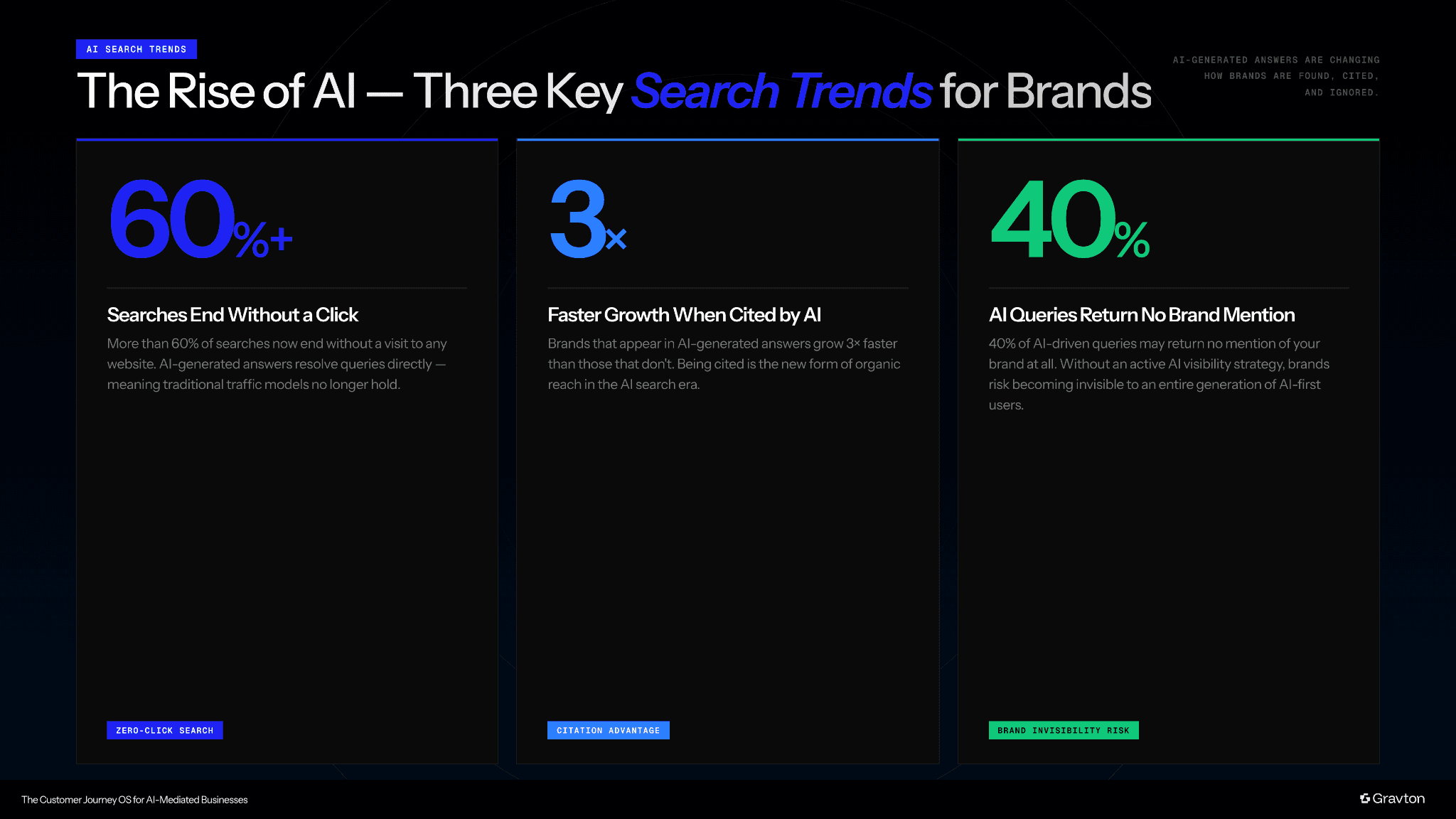
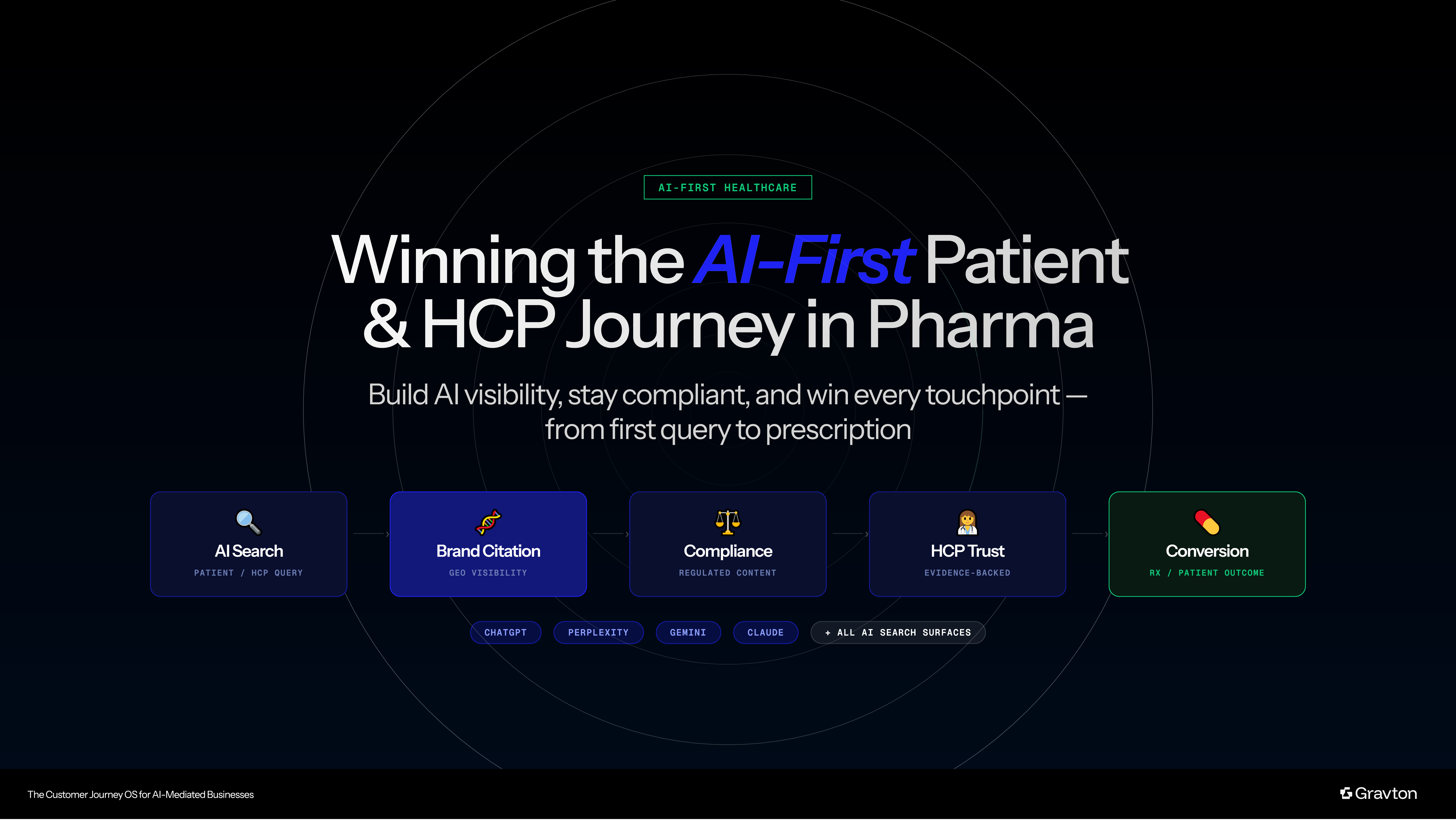
Figure 1: The rise of AI: three key search trends for brands.
What Is an AI Search Visibility Strategy?
AI search visibility strategy is a structured plan that ensures your brand, products, and expertise are accurately and consistently represented everywhere in AI-generated answers. This strategy encompasses content, technical, and authority signals that large language models (LLMs) use to determine which brands and sources to cite in their responses.
The discipline behind AI Search Visibility strategy is a combination of Search Engine Optimization (SEO), Generative Engine Optimization (GEO), Answer Engine Optimization (AEO), and content authority building. In practice, GEO involves designing content specifically to be included in the AI responses. Traditional SEO focuses on achieving a high ranking in the blue links of a search engine results page (SERP). AEO is the practice of structuring and formatting content so that it appears in direct answer boxes and Google AI Overviews. Content authority building aims to establish credibility through high-quality content, consistent brand mentions, trusted backlinks, and recognition across platforms that AI systems rely on. Together, these disciplines create a unified approach known as AI Search Visibility strategy.
An effective AI search optimization strategy ensures your response is concise and factual. It increases the likelihood that the LLMs will quote your content. For example, if a user prompts, “What are the benefits of AI search optimization?” The ultimate goal is to be recognized as a trusted source, so that when the AI cites “sources across the web,” your site is included among them.
In summary, AI search visibility strategy combines established SEO fundamentals, such as quality content with experience, expertise, authoritativeness, and trustworthiness (E-E-A-T), and site performance with new tactics designed for “question-answer-first” formats and AI-generated responses.
|
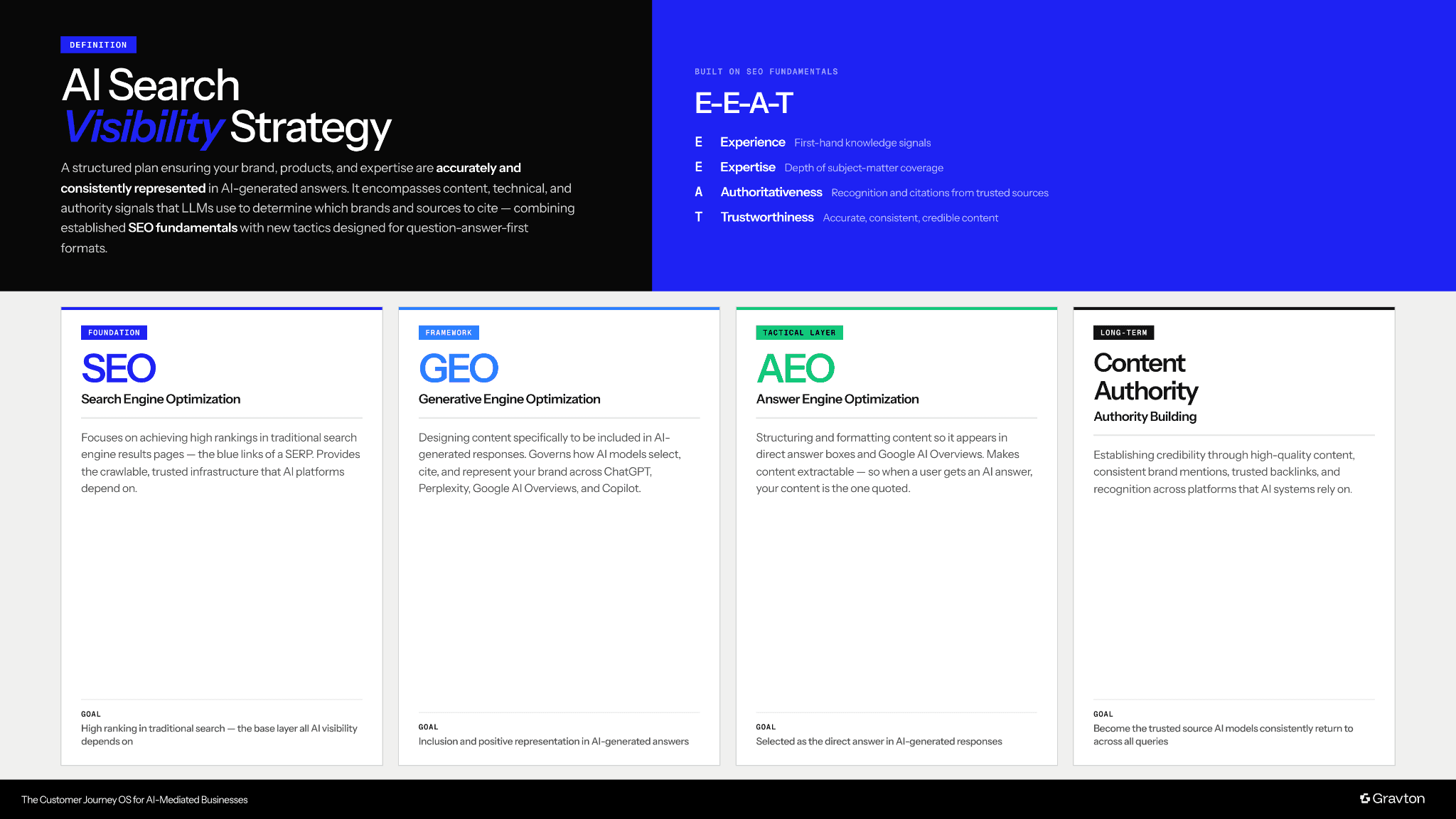
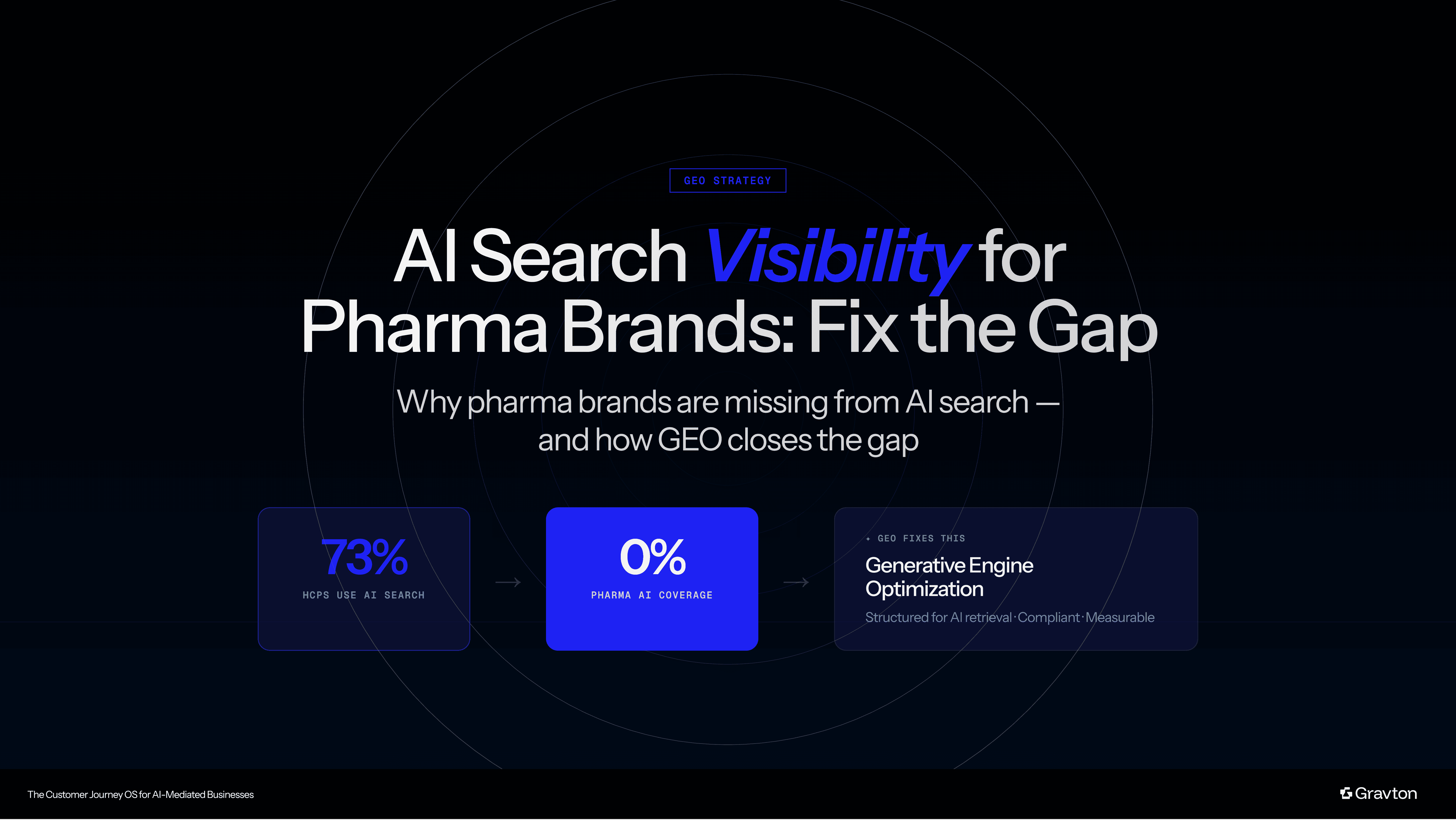
Figure 2: Building an AI search visibility strategy.
Why Does AI Search Visibility Matter?
Users are moving away from traditional click-based searches. AI chatbots and Google's generative features are the user’s new front door. ChatGPT has 900 million weekly active users. Google's AI Overviews has ~2 billion people each month. Brands that are cited or mentioned in these answers capture attention at the critical moment when users are looking for information.
Reducing clicks: AI summaries reduce website traffic. ~60% of Google searches now result in no clicks to website links. An AI response completely addresses the user’s query. Meaning being cited in that answer equates to achieving the new “top result.”
Rising AI Traffic: AI-driven search traffic soared by 350% year-over-year in early 2025. Projections suggest that by 2028, AI sources will generate more web traffic than traditional search.
High User Intent: Visitors coming from AI answers tend to be highly engaged. An average AI-led visitor is valued at 4.4x more than a traditional search visitor.
Early adopters of AI search optimization can gain a lasting edge. By influencing how AI describes your brand, you can build trust and recognition within the “invisible funnel” of AI-assisted discovery.
How to Build an AI Search Visibility Strategy?
An AI Search Visibility Strategy is not a single tactic. It is a combination of four systems working together:
Search Engine Optimization (SEO) → Ensures visibility in AI search engines
Generative Engine Optimization (GEO) → Ensures inclusion in AI-generated answers
Answer Engine Optimization (AEO) → Ensures your content is selected as the answer
Content Authority Building → Ensures your brand is trusted and cited consistently
Together, these determine whether your brand appears, is cited, and is recommended across AI platforms like ChatGPT, Perplexity, Google AI Overviews, and Copilot.
Each discipline has a distinct role. None of them work in isolation. All four systems must run in parallel. A brand that only invests in SEO will rank in traditional search but go unmentioned in AI answers. A brand that only optimizes for AI answers without a solid SEO foundation will lack the crawlable, trusted content that AI platforms depend on.
The AI Search Visibility strategy can be implemented through 4 steps.
Step 1 → Build the SEO Foundation
SEO is the infrastructure layer of your AI search visibility strategy. Without a sound SEO foundation, the rest of your AI visibility work has nothing to stand on.
AI platforms do not operate independently of the web. ChatGPT retrieves current information via web search APIs. Perplexity runs its own crawler. Google AI Overviews are built directly on top of Google's organic search index. In every case, strong SEO signals such as backlinks, domain authority, determine whether AI systems can access, trust, and draw from your content at all.
Ensure crawlability and indexability
Web pages should be easily accessible to search crawlers. Broken links, slow load times, and poor mobile usability lower the chances that AI platforms will index your content. Aim for Core Web Vitals scores above 90 and address any indexing errors highlighted in Google Search Console.
Build domain and topical authority
AI models weight sources with demonstrated expertise. A site that has published consistently on a topic with depth is more likely to be treated as a trusted source. This is especially true if it has earned citations and quality backlinks from industry publications. In contrast, users are significantly less likely to view a site that has published sporadically across unrelated topics as credible.
Strengthen internal linking and content structure
AI crawlers understand your content and highlight important pages mostly based on internal linking. You should ensure that every major piece of content is part of a clearly linked content cluster, a pillar article, supporting guides, and blog articles, all connected by descriptive anchor text. Generic anchors such as "click here" or "read more" no longer convey topical authority.
Optimize metadata
AI models weight recency as a trust signal. A page with no date is harder for an AI to evaluate as current and reliable. Every article must contain the author's name, publication date, and the last updated information.
Step 2 → Apply GEO Principles
GEO, or Generative Engine Optimization is the discipline that governs how AI models select, cite, and represent your brand in their generated answers. SEO improves visibility in AI search engines and focuses on website's ranking in traditional search engine results. GEO improves a brand’s visibility inside AI-generated answers.
AI models do not rank pages. They synthesize responses from sources they assess as factual, structured, and authoritative. The criteria they apply are different from search ranking algorithms, and they require a deliberate content approach.
Write in factual, quotable language
AI models are trained to cite sources that make specific, verifiable claims. Every claim in your content should be specific, direct, and backed by data, a cited source, or a concrete example. Hedging language such as "could potentially," "might possibly," "in some cases," signal low confidence.
Define terms explicitly on first use
AI systems build their understanding of your content from clear definitions. When you introduce a concept, define it precisely. Clear definitions improve the likelihood that an AI model will extract and cite your explanation.
Lead every section with the answer
AI engines evaluate the first one to two sentences of a section to determine whether it addresses a user query. Write in the inverted pyramid structure: answer first, supporting detail second. This applies to every H2 section, every FAQ answer, and every product or service description on your site. If your opening sentence is contextual or introductory rather than substantive, the engine moves on.
Use structured content formats
Structured and clearly formatted content is more likely to be cited by generative AI systems. Write H2 and H3 headings that match user search prompts. Use short paragraphs and concise sentences. Include bullet points, numbered lists, facts and comparisons where necessary.
Build entity consistency
AI models construct a representation of your brand from every signal they find. This includes your website, third-party publications, press coverage, social profiles, and partner sites. Inconsistency in company name, product descriptions weaken your entity signals.
Step 3 → Optimize for AEO
AEO is the practice of structuring and formatting content so that it appears in direct answer boxes and Google AI Overviews.
Where GEO governs your overall brand presence across AI platforms, AEO is making your content extractable. For example, when a user asks a question and receives an answer in Google AI Overview or a summary in ChatGPT, AEO determines the response.
That requires three things done well.
Implement structured data and schema markup
Schema markup reduces ambiguity for both crawlers and AI systems.
Apply the FAQ schema so AI models can identify and extract individual question-and-answer pairs.
Apply Article schema to communicate authorship, publication date, and content type.
Apply the How-to schema to step-by-step instructional content.
Apply the organization schema to establish your brand as a recognized entity.
Design FAQ sections for direct extraction
AI models directly extract FAQ-formatted content into their responses. Include five to eight FAQ questions, each answering a real query a buyer would ask. Answers must be concise, 100 words or fewer, and written in an active voice.
Provide concise, standalone definitions and answer blocks
In addition to FAQs, add key definitions and summaries so they can stand alone as extracted answers. Write as though every section heading is a query and every opening paragraph is the answer to that query. If an AI model lifts a single paragraph from your page, that paragraph alone should fully answer the question without requiring the surrounding context.
Step 4 → Build Content Authority
Content authority is the long-term layer of your AI search ranking. SEO helps your website rank on traditional search engines. GEO manages your brand’s presence in the AI search. AEO ensures that your content is selected as the direct answer in AI-generated responses. Content authority makes you the brand that AI models consistently trust and return to across a wide range of queries over time.
Build topical authority through content clusters
Build a content architecture that demonstrates your brand's commitment to comprehensive coverage. For each topic your brand should focus on, create a structured content cluster. Include a pillar article providing detailed coverage of the topic, around 3,000 words. Include two to three guides that explore subtopics in depth. Each guide should be supported by two to three blog articles. These blog articles should answer specific questions related to the subtopics. Link each piece to the others using descriptive anchor text.
Publish authoritative explanations with named sources
LLMs treat explicit attribution as a credibility signal. Name the source explicitly in the text. Content that cites five or more authoritative external sources receives 156% more AI citations. Reference data from government, established industry reports, academic papers.
Earn credible third-party mentions
AI platforms gather information from a wide range of sources across the web. This includes mentions in industry publications, expert roundups, analyst reports, and credible external sources.
Update content regularly
Freshness contributes to AI citation selection. Update the core content at least quarterly and include a 'last updated' date.
AI Search Visibility: Measure and Improve It
A single factor does not determine AI search ranking. It requires dedicated monitoring across all platforms where buyers search. SEO signals like backlinks, crawlability, indexability, site performance, internal linking, and domain authority determine whether AI systems can access, trust, and draw from your content. To enhance visibility, follow simple principles. Focus on content clarity, factual density, entity consistency, and quotable language. These elements influence whether AI models select and cite your pages.
Further, structuring content with schema markup, FAQs, and answer-first formatting can improve your chances of being featured in AIO. Additionally, structuring content with schema markup, FAQs, and answer-first formatting can increase your chances of being featured in a Google AI Overview.
Over time, maintaining topical depth, using expert citations, and getting credible third-party mentions will build your authority. Regular content updates are important, too. All these signals provide a measurable framework for assessing AI visibility.
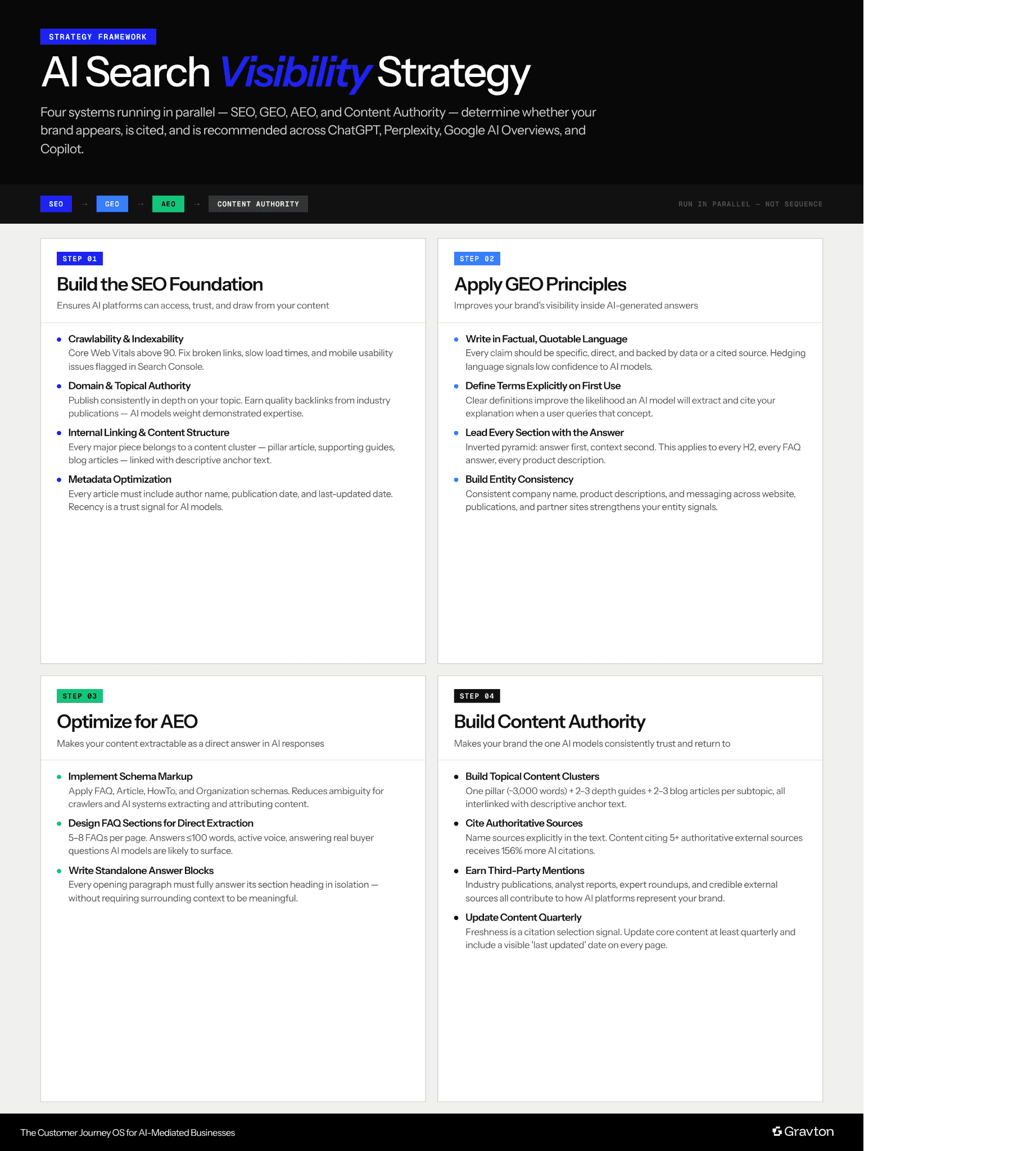
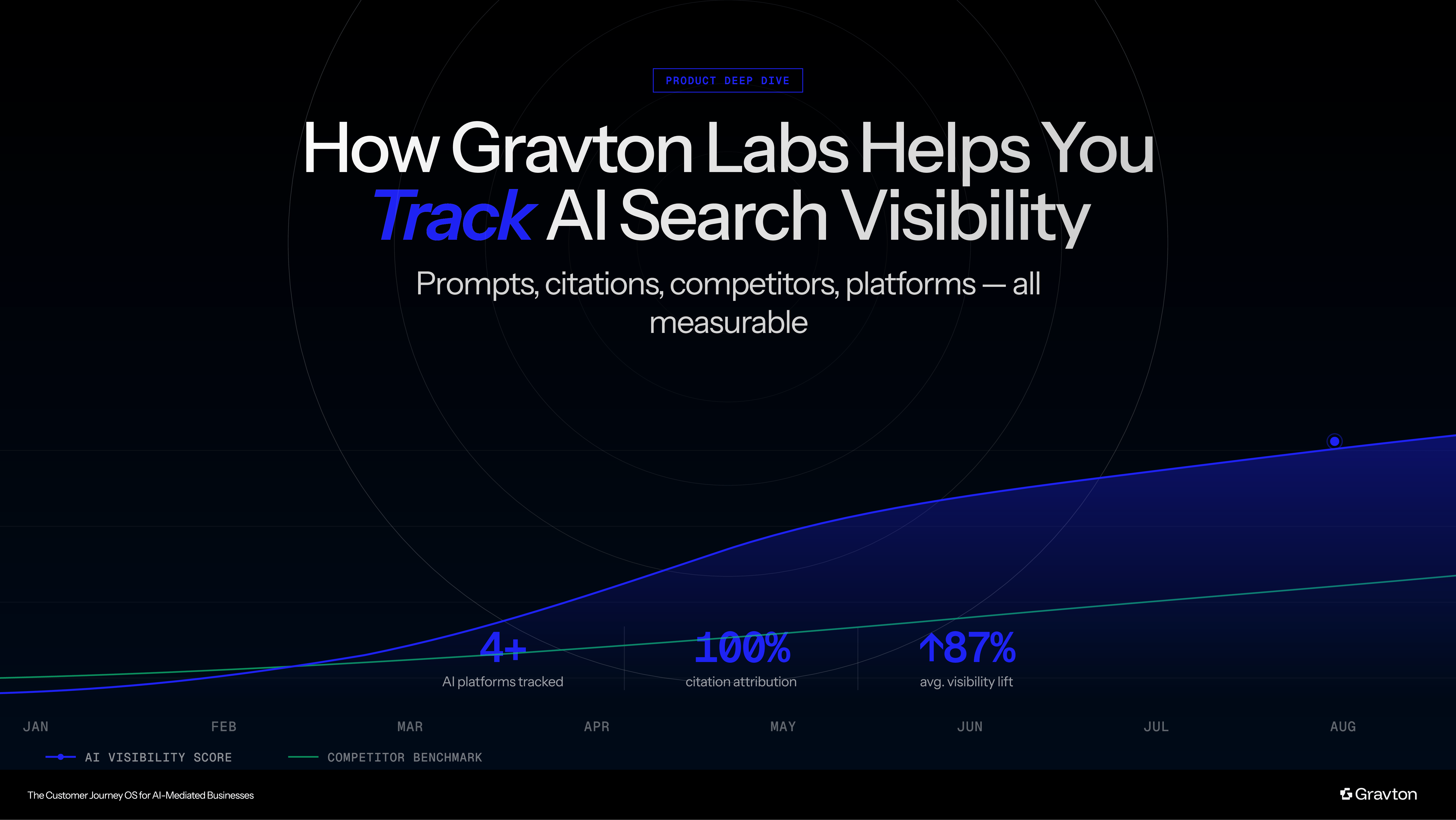
Figure 3: A strategic framework for AI search visibility.
AI Search Visibility Strategy: Frequently Asked Questions
What is an AI search visibility strategy?
An AI search visibility strategy is a structured plan that focuses on being discoverable everywhere AI looks. It improves how often and how favorably your brand appears in AI-generated answers. It combines content optimization, entity authority, structured data, and continuous monitoring to ensure your brand is cited as a trusted source by LLMs.
Why does AI search visibility matter for my business?
AI search visibility influences how users get answers from AI platforms. For example, if a user prompts, “What are the benefits of AI search optimization?” The ultimate goal is to be recognized as a trusted source, so that when the AI cites “sources across the web,” your site is included among them. Being mentioned or cited in AI-generated answers boosts your brand’s exposure at the exact moment people are making decisions.
How do I improve AI search visibility?
Ensure your site is crawlable, fast, and authoritative so AI platforms can access and trust your content. Write clear, factual, and answer-first explanations that are easy for AI to quote. Use schema markup, FAQs, and concise definitions to make your content extractable. Maintain consistent brand information across the web and earn credible third-party mentions to strengthen authority.
How do I measure the performance of my AI search ranking strategy?
Measure where and how often your brand appears in AI-generated answers across platforms and Google AI Overviews. Monitor citations, brand mentions, and referral traffic from AI sources in your analytics tools. Evaluate supporting signals such as organic rankings, backlinks, crawlability, and content freshness, since these influence AI visibility. Over time, improvements in answer inclusions, higher-intent traffic, and increased third-party mentions indicate that your AI search ranking strategy is becoming more effective.
Free AI Visibility Audit
Limited Availability.
VISIBILITY & CONTENT STRATEGY