
AI Search Visibility for Pharma Brands: Fix the Gap
AI Search Visibility for Pharma Brands: Fix the Gap
Pharma brands are missing from AI search, costing them leads and visibility. Learn why AI search visibility for pharma brands fails and how GEO can fix it.
Haritha Kadapa

Highlights
Most pharma content is built for search engines: Most pharma websites use long-form pages, compliance-heavy language, and downloadable PDFs that traditional search engines can index, not AI.
Regulatory language creates a citability gap: Compliant content is not always citable content. Medical-legal review removes the specificity AI needs to quote a source, and hedged phrases get skipped.
AI search is already a primary healthcare interface: Millions of physicians, patients, and medical students are already using ChatGPT, Perplexity, and similar tools for health-related information and treatment research.
Entity authority and citation signals drive AI visibility: AI platforms prioritize sources reinforced across clinical registries, medical databases, peer-reviewed publications, and strong external citation networks, not just brand-owned channels.
The fix is restructuring, not more content: Most pharma organizations already have the clinical information AI needs. The barrier is format, structure, and external reinforcement, not content volume.
Physicians are asking ChatGPT about treatment options. Patients are using Perplexity to research medications. Healthcare decision-makers are relying on Google AI Overviews before they visit a brand website. In almost every case, pharma brands are missing from AI search and responses.
AI search visibility for pharma brands is quickly becoming one of the most urgent and under-addressed gaps in pharmaceutical marketing. This article explains why that happens, the structural causes, and how Generative Engine Optimization (GEO) for pharma can fix it.
This challenge is part of a much larger shift toward industry-specific GEO, where AI systems evaluate trust, authority, and visibility differently across sectors like healthcare.
Why pharma brands are missing in AI search
Pharma brands are missing from AI search because their content was built for search engines, not for AI large language models (LLMs).
Compliance-focused content limits citability
Medical-legal review shapes most pharma content around regulatory risk. Legally, this is a right call, but often the specificity that makes content useful is stripped out. The remaining content is technically accurate but too vague for AI LLMs to cite. AI platforms need clear, factual, self-contained statements they can cite directly.
Content format doesn't match how AI retrieves information
Most pharma websites rely on long-form pages, downloadable PDFs, or brochure-style messaging designed for human browsing. LLMs don't read pages the way humans do. They scan for clearly defined answers, structured sections, and factual claims.
Pharma brands lack entity authority in the AI landscape
AI models build internal knowledge graphs by tracking how consistently a brand, drug, or condition appears across trusted external sources. If a pharma brand isn't referenced across medical databases, clinical publications, and third-party platforms, it doesn't register as a credible entity.
The key takeaway here is straightforward: AI responses cite academic research, clinical guidelines, and government health sources. Pharma brands may have technically and legally sound content, but if it isn't structured for AI LLMs, it won't appear in AI responses.
What this means in practice
Suppose a HCP asks an AI platform like Perplexity which biologic has the strongest real-world evidence for moderate-to-severe [some disease]. The answer they receive will draw on clinical guidelines, published meta-analyses, and formulary resources, not on a pharma brand's HCP portal, no matter how well-funded that portal is.
Suppose a patient asks ChatGPT whether a medication is safe to take with a common comorbidity, the answer pulls from government health sources and structured medical databases. The brand website, built around compliance-approved messaging and visual design, doesn't appear.
This is the practical consequence of the failure points above. It's not that pharma brands are penalized by AI platforms; they're not structured to be selected by them.
How AI search and source citation works
AI platforms decide what to cite through two tightly linked mechanisms: training and retrieval.
During training, models ingest massive volumes of text and begin to form a kind of citation memory. Frequent references to other credible sources accumulate influence. Much like academic literature, the more a source is cited and reinforced across the corpus, the more weight it carries in the model’s internal understanding.
At retrieval time, this gets operationalized. When a user asks a question, the system performs a real-time sweep of available content, but it doesn’t treat all sources equally. It prioritizes sources with strong citation signals: those that appear often, are referenced by other authoritative domains, and maintain a consistent association with the topic in question. This is why well-linked, widely referenced publishers and documentation tend to dominate AI responses.
This is why structured formats such as FAQs, clinical summaries, and plain-language explainers perform better in AI search. They match how models process and reproduce information.
|
Where pharma content for AI search actually fails
Research across healthcare communications, digital health adoption, and AI search behavior shows some patterns in gaps.
Patients and healthcare professionals (HCPs) are already using AI, but pharma brands aren't there yet
A 2024 study conducted among adults with chronic health conditions found that 30% of respondents reported being likely to use AI chatbots for health purposes within the next 12 months, with many expressing uncertainty but clear emerging interest.
Usage is even more pronounced in clinical training environments. A study of medical students found that while only ~28% use AI tools for structured studying, nearly 90% rely on them to quickly access medical information.
Industry-backed data also suggests a similar engagement. OpenAI says 40 million people use ChatGPT for healthcare every day. These statistics indicate that AI platforms are being used across the full patient research journey, from early symptom checks to understanding treatment.
Content structure is the primary barrier
Accessibility and extractability, meaning how content is structured, determine whether AI platforms can use it effectively. In healthcare, only 6% of health systems have a well-defined AI strategy. The challenge isn't a lack of content; it's the difficulty of scaling it across fragmented systems with dispersed data, siloed platforms, and inconsistent formats.
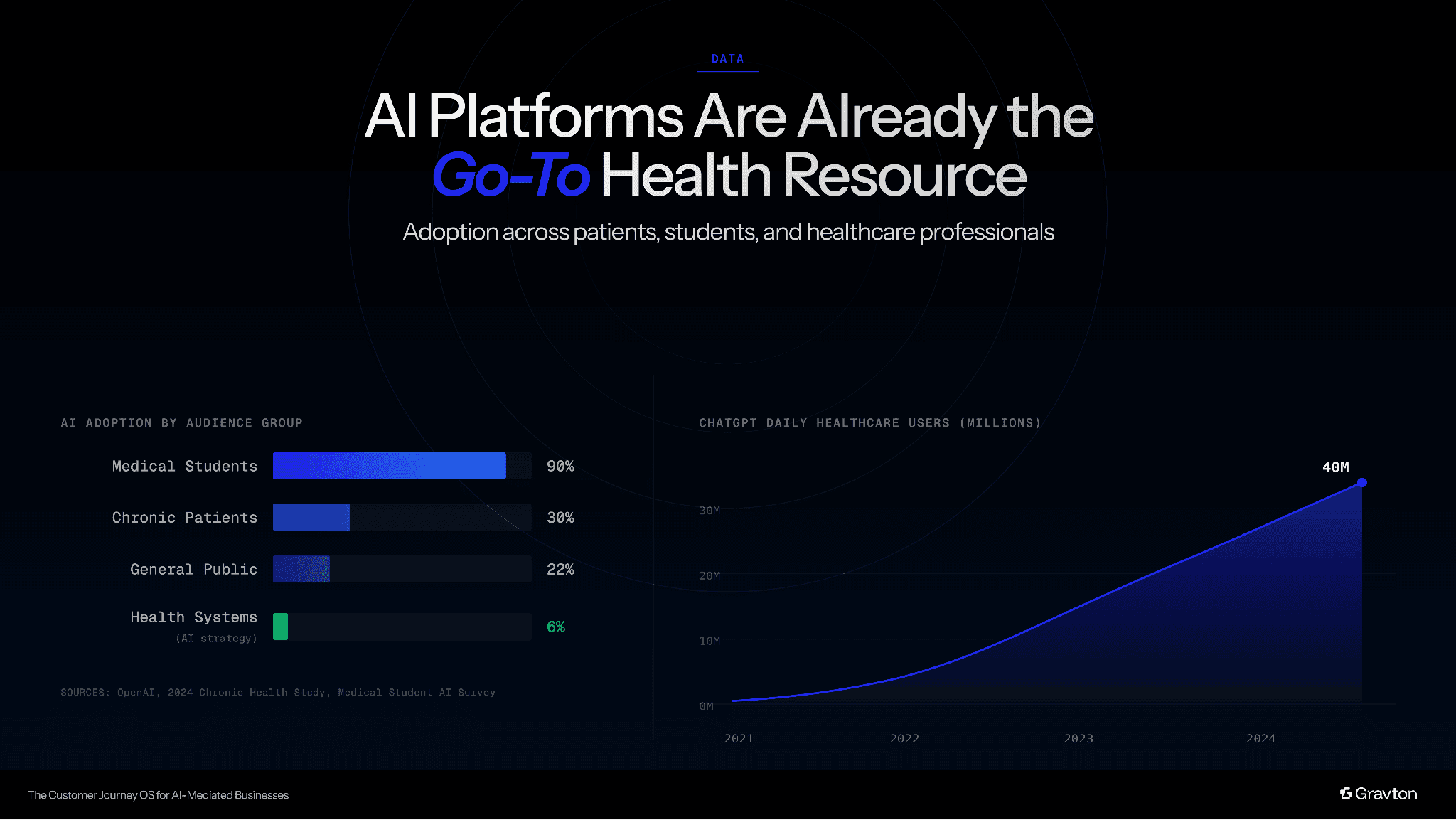
Figure 1: Data showing how AI platforms are rapidly becoming a primary source for healthcare information.
Regulatory caution creates a citability gap
This is the most pharma-specific failure point. Medical-legal review, by design, removes specificity that could expose the organization to regulatory risk. The result is language that is compliant but not quotable, while AI platforms need quotable language.
AI models consistently prefer content with concrete, measurable claims over content with hedged or generalized language. Phrases like "may help support" or "has been associated with" scored significantly lower on AI extraction.
Entity authority is underdeveloped for most pharma brands
Entity recognition, which assesses how consistently and accurately a brand is referenced across authoritative third-party sources, is one of the primary signals AI platforms use to assess citation confidence. For pharma brands, this means presence in clinical trial registries, medical databases, peer-reviewed publications, and recognized formulary resources.
Most pharma digital marketing investment goes into owned channels: brand websites, detail aids, and HCP portals. Those channels matter, but they don't build the external authority signal that AI models weigh most heavily.
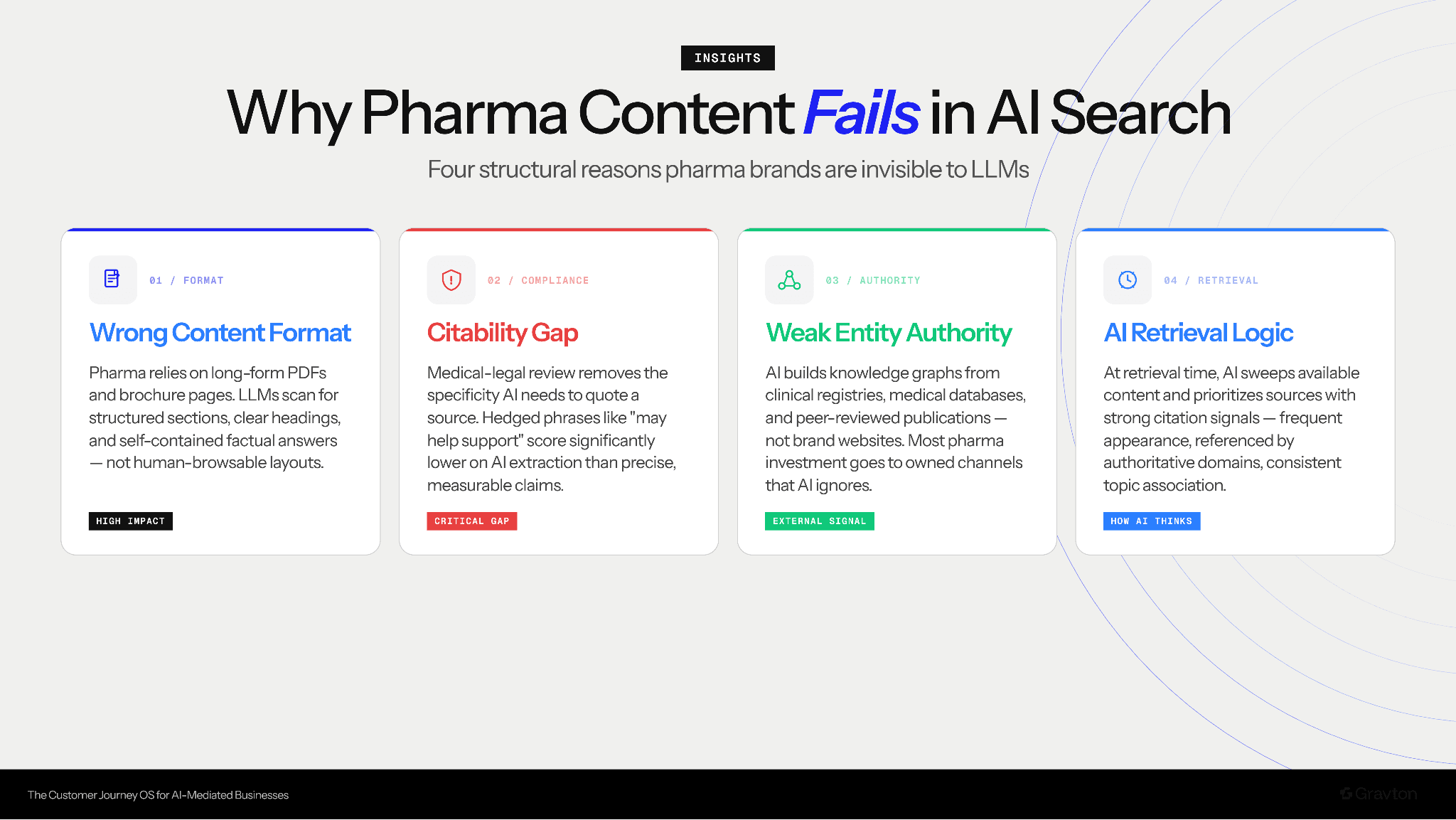
Figure 2: Insights on why pharma content for AI search fails.
How can pharma brands optimize content for AI search?
To optimize pharma content for AI search, brands need to move beyond traditional SEO and adopt a GEO for pharma approach focused on clarity, extractability, and structured clinical information.
Stage 1: Restructure existing content
Reformatting what already exists often produces the greatest improvement in AI discoverability. Most pharma organizations already hold the clinical detail AI platforms need, such as indication summaries, efficacy data, dosing guidance, and safety profiles. The gap is structural, not informational. Before creating net-new material, reorganize this content into question-led sections with defined headings and answer-first formats. That is, lead each section with the core clinical takeaway, whether that is the approved indication, a key efficacy endpoint, or a dosing regimen. Consolidate data fragmented across prescribing information PDFs, medical affairs microsites, and regulatory portals into unified, machine-readable formats.
See Gravton's AI-native content production environment
Stage 2: Build external entity authority
Presence in clinical guidelines and recognized HCP-facing platforms strengthens authority. Even small variations in how a therapy name or trial endpoint is cited across platforms weaken AI pattern recognition. AI platforms surface clinical information validated across trusted external ecosystems, not just owned channels. Drug names, indications, and study references must be consistent across every source, including clinical trial registries, peer-reviewed publications, treatment guidelines, and third-party medical databases.
Stage 3: Monitor and iterate
AI visibility for pharma content shifts as models update and clinical evidence evolves. Run quarterly prompt audits across AI platforms like ChatGPT, Perplexity, and Google AI Overviews using real HCP queries, such as: How is this therapy positioned against its comparator? What is the recommended dosing in a specific patient population? and patient-facing queries centered on symptoms, outcomes, and safety. Test how endpoints, safety data, and indication language surface in generated responses. Gaps feed back into Stage 1, making this a continuous loop rather than a one-time exercise.
|
Key takeaways on AI search visibility for pharma brands
Pharma brands aren't being penalized by AI platforms. The brands are simply not structured to be selected by them. The content exists. The clinical evidence exists.
This includes how HCP and patient journeys are increasingly AI-first across platforms and decision points. What's missing is a format that allows AI platforms to find, read, and cite it. Pharma digital marketing in AI search era is no longer just about ranking, it's about becoming citable, extractable, and trusted by AI platforms. Fixing AI search visibility for pharma brands doesn't require a content overhaul. It requires restructuring what already exists and building presence in the external ecosystems where AI actually looks.
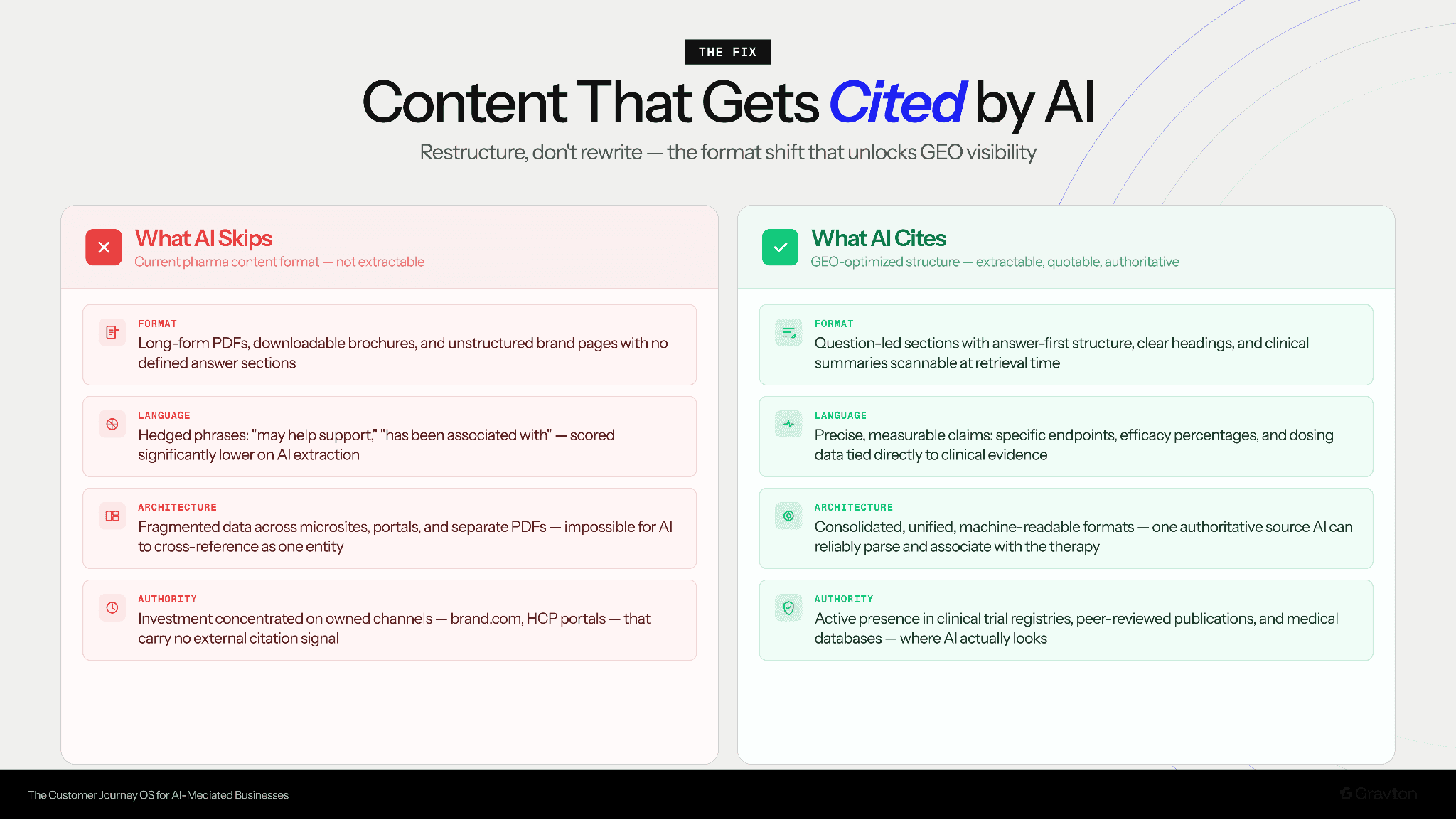
Figure 3: The types of content AI platforms prioritize, extract, and cite, and the types they ignore.
FAQs on why pharma brands are missing in AI search
Why are pharma brands missing from AI search results?
Pharma content was built for search engines, not AI LLMs. Most pharma websites rely on long-form pages, compliance-heavy language, and downloadable PDFs. LLMs, however, scan for clearly defined answers, structured sections, and factual claims, and most pharma content isn't built that way.
Does compliant content automatically qualify for an AI citation?
No. Medical-legal review removes the specificity that makes content usable for AI. The result is language that is compliant but not quotable by AI. LLMs prefer concrete, measurable claims. Hedging phrases like "may help support" or "has been associated with" score significantly lower on AI extraction than clear, evidence-backed statements.
Are physicians and patients already using AI for health information?
Yes. OpenAI reports that 40 million people use ChatGPT for healthcare every day. Nearly 90% of medical students rely on AI to quickly access medical information. AI platforms actively support the entire patient research journey, from early symptom checks to exploring treatment options.
What signals do AI platforms use to decide what to cite?
AI platforms prioritize sources that frequently appear, are cited by authoritative domains, and consistently relate to a topic. For pharma brands, this translates to a strong presence in clinical trial registries, medical databases, peer-reviewed publications, and their own websites or HCP portals.
Do pharma brands need to create more content to improve AI visibility?
No. Most pharma organizations already have the required information, but it's just not presented in a usable format. The issue is format, not quantity. Reorganizing existing content into structured, question-led sections improves AI search visibility for pharma brands without increasing volume.
How do pharma teams start improving AI search visibility in practice?
Most organizations begin by auditing how their key therapy areas appear across AI platforms. The next step is identifying where competitors are being cited instead of brand-owned or clinical sources and then restructuring content to close those gaps through a GEO approach.
|
Win your AI search demand universe
Understand how AI platforms handle pharma content and where compliance gaps create invisible ceilings, and where competitors are gaining the citations, your brand is being excluded from.
VISIBILITY & CONTENT STRATEGY