Industry-Specific GEO Strategies for AI Visibility
Industry-Specific GEO Strategies for AI Visibility
See how industry-specific GEO strategies help your brand get cited in AI responses across healthcare, finance, SaaS, and more. Start your free audit today.
Haritha Kadapa
Highlights
Industry-Specific GEO Drives Visibility: Industry-specific GEO can deliver up to 2-3× higher visibility and engagement by aligning content with how users search and how AI models select responses.
Generic content strategies don't make the cut: Map AI queries, audit crawlability, build sector-specific content hubs, leverage domain expertise, use structured content, strengthen brand mentions, and continuously iterate.
The ROI of Getting It Right: Optimizing for clinical queries drives healthcare brands into AI responses, targeting compliance content grows finance leads, structured comparison pages lift SaaS visibility, and strong authority signals can dramatically increase organic traffic.
Measure What AI Measures: Effective GEO measurement spans citation monitoring, crawlability audits, competitive benchmarking, authority signal tracking, and industry-specific query mapping.
AI search is no longer emerging; it is here. Yet most brands are invisible inside these responses because their content is not structured for generative engines. A buyer at your target account just asked ChatGPT to recommend solutions in your category. Your competitor appeared. You did not. That moment is not recoverable after it happens. But it is predictable and preventable before the next one.
AI Search impacts different industries and sectors differently. Traditional SEO will not solve this. If your brand is not cited inside AI answers, you are losing high-intent demand to competitors who are. This article shows what industry-specific GEO strategies look like across key sectors, what results they deliver, and how to implement, measure, and iterate.
What are Industry-Specific GEO Strategies?
Generative Engine Optimization (GEO) is the practice of structuring content so that AI platforms, including ChatGPT, Google AI Overviews, and Perplexity AI, can parse, understand, and cite it in generated answers. Industry-specific GEO strategies apply those principles to the distinct content requirements, trust signals, and user intent patterns of each sector.
A healthcare provider and a SaaS company both need AI visibility, but they earn it in different ways. Healthcare content must demonstrate clinical authority and regulatory compliance. SaaS content must deliver technical depth through feature comparisons and integration documentation. Finance content must show data transparency and credentialed expertise. A GEO that ignores these distinctions will not perform. GEO performance is not driven by content volume, but by how closely your content aligns with the authority signals AI systems use in your industry.
Why Do Industry-Specific GEO Strategies Matter for Your Business?
The case for industry-specific GEO strategies is not theoretical. The traffic, citation rates, and conversion rates are measurably different from those of generic optimization.
AI search traffic is projected to surpass traditional search by 2028. Brands not optimized for AI answers today are building a compounding visibility deficit. Content aligned with specific search intent can achieve up to 2-3× higher visibility and engagement compared to generic content. It directly matches how users phrase queries and how AI systems select responses.
At the same time, traffic from AI platforms consistently shows stronger intent and higher conversion rates, particularly during decision-stage journeys. This is already visible in B2B SaaS, where aligning content with AI-readable formats and authority signals is increasingly influencing trial discovery and vendor consideration.
What Are the Core Principles of GEO?
The core principles of GEO apply across every industry. What changes is how each principle is executed within a given sector.
Structured content: AI models parse clean HTML, proper heading hierarchies, FAQ schema, and tables more reliably than dense prose.
Factual, quotable language: AI platforms cite content that is direct, specific, and verifiable. Vague or hedging language does not get cited.
Authority signals: Expert authorship, certifications, cited sources, and brand mentions all influence whether an AI model treats your content as a reliable source.
User intent alignment: Content must match the actual queries users submit to AI platforms, not just the keywords they type into Google.
AI crawlability: Content must be technically accessible and properly formatted for AI platforms to retrieve and process.
For a deeper breakdown of GEO principles, see:
Core Principles of GEO → foundational concepts behind how AI systems evaluate and cite content
Core GEO Best Practices → practical guidelines for structuring content for AI visibility
Applying GEO Principles → how to translate theory into execution
Optimizing Your Site for AI Crawlability → technical considerations to ensure AI systems can access and interpret your content
Implementing Structured Data for AI Search → structuring content with schema markup so AI models can understand entities, context, and relationships for accurate citation
How Can Companies Tailor GEO Strategies to Their Industry?
Implementing industry-specific GEO requires a mix of strategic research and execution. Marketing teams need to align content with how their audience searches and how AI large language models (LLMs) interpret authority within that sector.
Key Steps to Build Industry-Specific GEO
Identify Industry AI Queries
Analyze the questions your audience asks in AI platforms like ChatGPT or Perplexity AI. Map these queries across the buyer journey, from awareness to decision, to understand what content formats AI models prioritize.
|
Audit Existing Content
Evaluate whether your content is easily crawlable, structured, and directly answers user intent. Ensure clean HTML, proper headings, and schema markup so AI models can parse it effectively.
Build Industry-Specific Content Hubs
Create dedicated pages aligned to your sector.
SaaS:
comparison pages, integration docs, solution guides
Finance:
regulatory FAQs, ROI calculators
Healthcare:
patient guides, clinically reviewed content
These hubs should reflect the exact terminology and entities used in your industry.
Leverage Expertise & Partners
Collaborate with domain experts, highlight certifications, and include case studies. These signals reinforce authority and increase the likelihood of AI citation.
Use Structured Content
Incorporate visuals, tables, FAQs, and supporting data, but always pair them with descriptive text. AI models rely on text context to interpret non-text elements.
Strengthen Brand Mentions
Build visibility through PR, partnerships, and industry discussions. Consistent brand mentions across relevant contexts help AI associate your brand with key topics.
Test and Iterate
Regularly check how your brand appears in AI-generated answers. Refine content based on gaps and track performance using GEO tools.
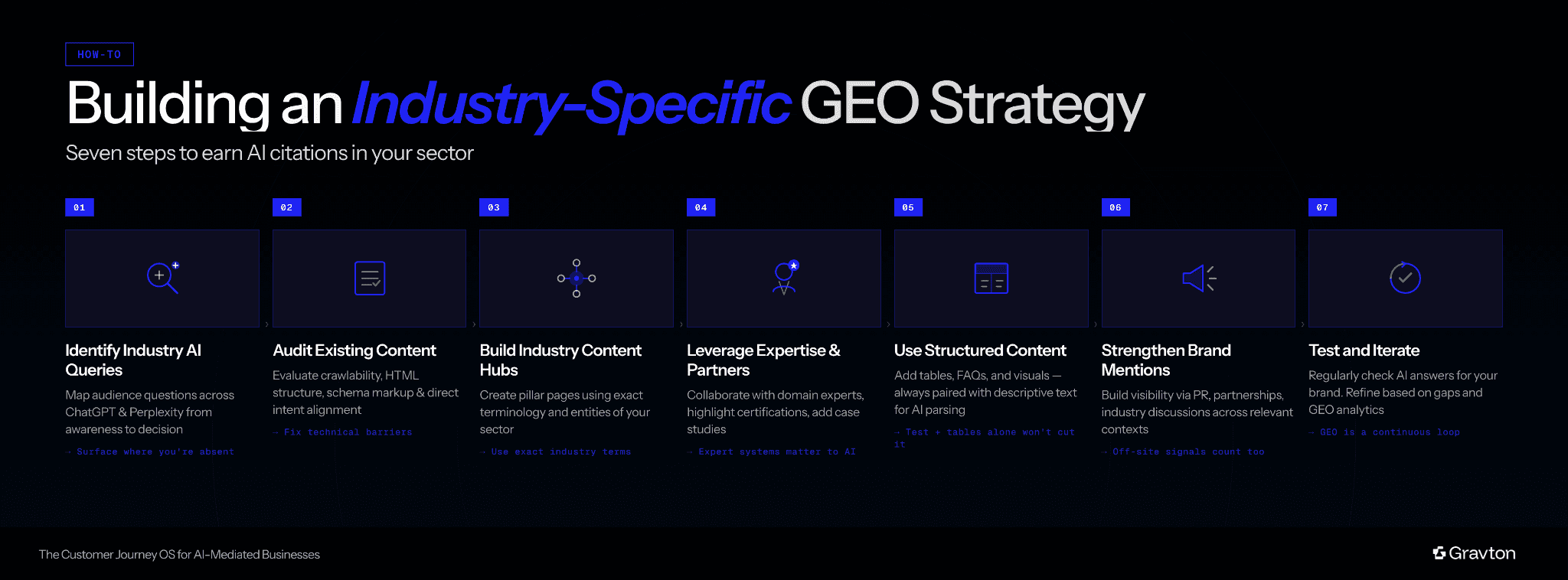
Figure 1: 7-key steps to build industry-specific GEO.
GEO Tactics by Industry
Table 1: GEO Tactics by Industry.
Industry | Key GEO Tactic | Content Format Focus | Expected Impact |
Healthcare | Clinical outcomes, treatments, compliance | Research-backed guides, FAQs | Higher trust & citation rates |
Finance | ROI benchmarks, regulations, risk | Reports, calculators, explainers | Stronger authority signals |
Tech / SaaS | Feature comparisons, integrations | Comparison pages, docs | Better inclusion in AI answers |
Manufacturing | Supply chain efficiency, technical specifications (materials, tolerances, certifications) | Case studies, technical docs | Improved niche relevance |
Retail / E-commerce | Pricing trends, product comparisons | Product pages, reviews, schema | Higher shopping visibility |
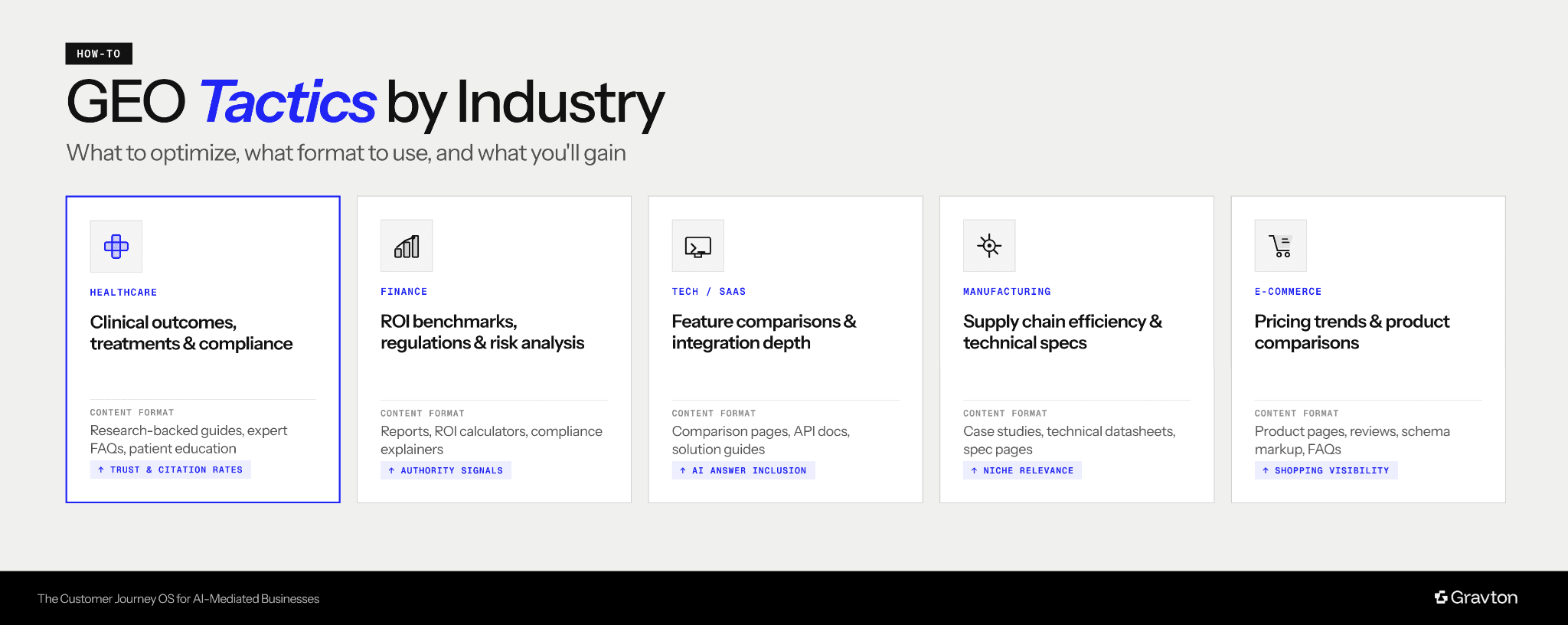
Figure 2: GEO tactics by industry.
In practice, successful GEO execution often requires collaboration across marketing, product, and compliance teams. The goal is simple: align your content with both industry expectations and AI models so your brand becomes a trusted source in responses.
Who Benefits Most from Tailored GEO? (With Examples)
Industry-specific GEO strategies deliver the most impact in sectors where trust, complexity, and expertise drive buying decisions, especially in B2B and regulated industries.
When content aligns with industry queries, formats, and authority signals, brands are far more likely to appear in AI responses on AI platforms.
Industry-Specific GEO Success Examples
Table 2: Industry-Specific GEO Strategy Examples.
Industry | GEO Strategy Applied | Result / Impact (Examples) |
Healthcare | Optimized for clinical queries (e.g., telemedicine efficacy), added expert-backed content and compliance signals | Increased presence in AI responses (e.g., from ~5% to ~60% in internal audits) |
Finance | Targeted compliance queries (e.g., blockchain regulations), added expert quotes and citations from sources like Harvard Business Review | +45% increase in AI citations, +22% growth in qualified leads |
Tech / SaaS | Built comparison pages, structured product content, and improved AI crawlability | +32% increase in leads, ~200% boost in AI-driven visibility |
Manufacturing / Industrial | Created technical content (e.g., supply chain KPIs, specs, case studies) and optimized for AI summaries | Increased inclusion in AI overviews and higher organic visibility |
Construction | Developed pillar pages and detailed product documentation with strong authority signals | +67% organic traffic growth, +540% increase in AI mentions |
E-commerce / Retail | Enhanced product pages with specs, FAQs, and schema markup | Increased visibility in AI shopping results and higher conversion traffic |
Professional Services | Published industry-specific guides and expert-led content | Improved presence in AI answers, driving targeted inbound leads |
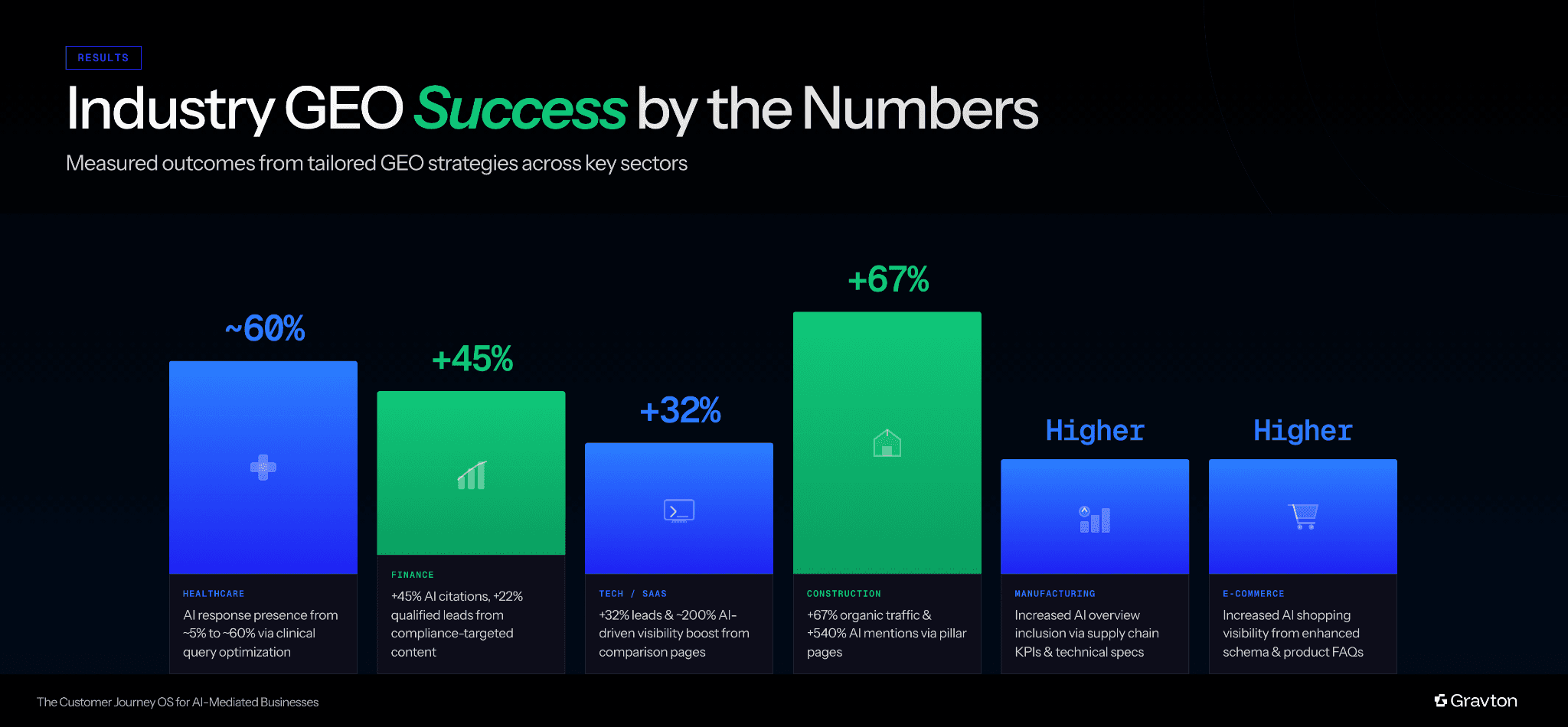
Figure 3: Examples of industry-specific GEO Success by the numbers.
|
How to Measure Industry-Specific GEO?
Here is how to measure industry-specific GEO execution:
AI citation monitoring
Track where your brand is cited across AI platforms by industry query, topic cluster, and competitor.
Crawlability audits
Identify every technical barrier preventing AI platforms from parsing your content correctly.
Competitive benchmarking
See which competitors are earning the AI citations you are missing and understand exactly why.
Authority signal tracking
Monitor which expert authorship, citations, and structured content elements are producing results.
Industry-specific query mapping
Identify the AI queries driving demand in your sector that your content does not yet answer.
To understand further, explore how to measure AI brand monitoring, sentiment, narratives, intent intelligence, and prompt-level market dynamics and improve your AI visibility.
Key Takeaways on Industry-specific GEO strategies
Industry-specific GEO strategies ensure your content is the right answer at the right time for AI search users in your sector. Aligning content with industry-specific authority signals whether clinical credibility in healthcare, regulatory expertise in finance, or technical depth in SaaS is what determines whether your brand gets cited or ignored.
The key takeaway: Don't treat GEO as generic SEO 2.0. Position your brand in AI responses where decisions happen, or watch competitors claim those AI-driven leads.
Frequently Asked Questions on Industry-Specific GEO Strategies
What are industry-specific GEO strategies?
Industry-specific GEO strategies tailor content to the authority signals and query patterns of a specific industry. They focus on how AI systems evaluate trust in that domain, such as clinical credibility in healthcare or technical depth in SaaS. This increases the likelihood that your content is selected and cited in AI responses.
Why do industry-specific GEO strategies matter more than generic SEO?
Because AI platforms evaluate authority differently across industries, generic SEO often fails to get cited. Industry-specific GEO aligns content with the exact signals AI models prioritize, improving visibility in AI responses. This leads to higher-quality traffic and stronger conversion intent compared to traditional search.
Which industries benefit most from tailored GEO?
Healthcare, finance, B2B SaaS, manufacturing, construction, and e-commerce all show strong results from tailored GEO. These sectors share a common factor: trust, complexity, and expertise drive buying decisions, which means AI citation rates are directly tied to how well content demonstrates domain authority.
Free AI Visibility Audit
Limited Availability.
VISIBILITY & CONTENT STRATEGY