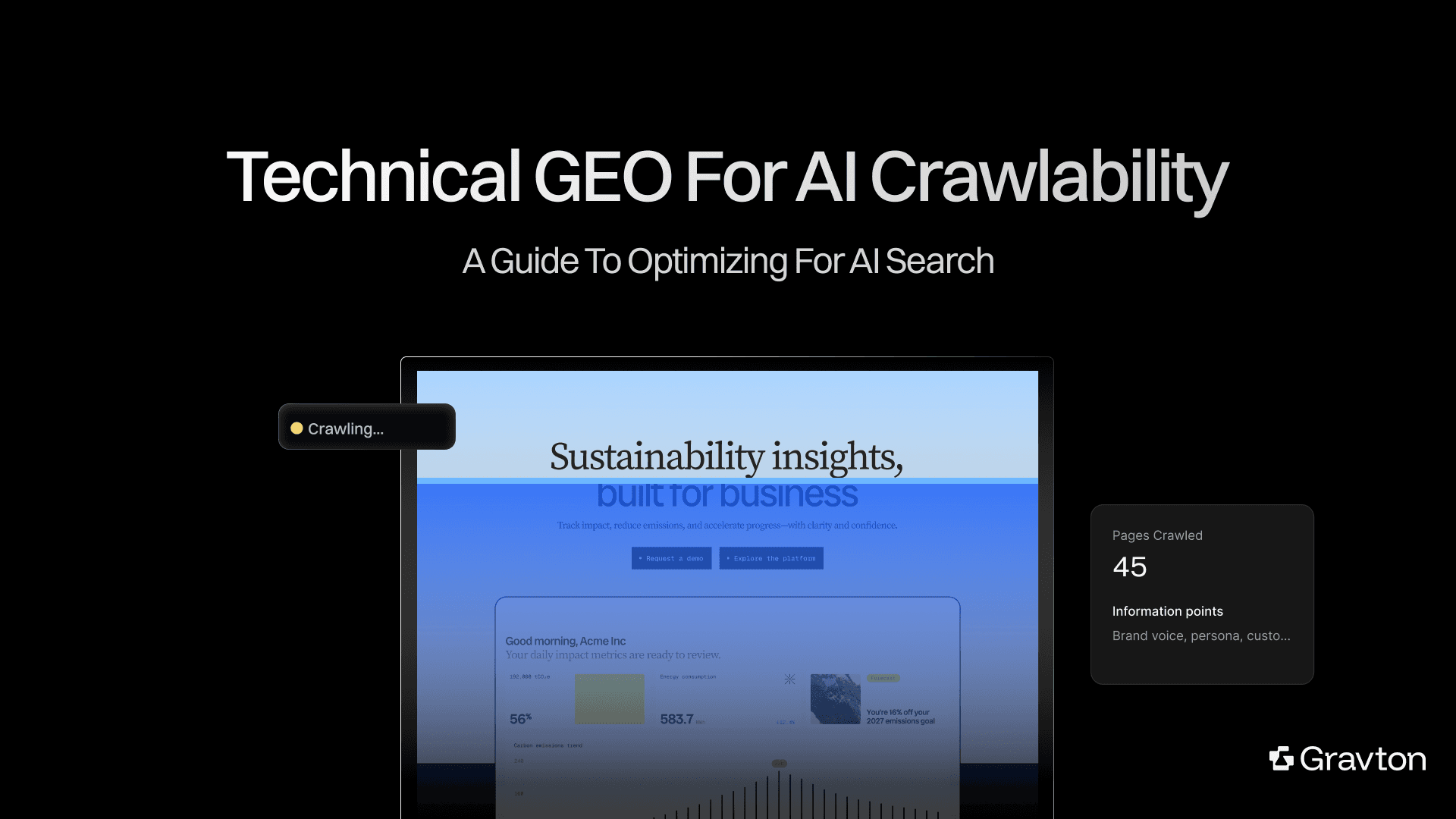
Technical GEO For AI Crawlability: A Guide To Optimizing For AI Search
Technical GEO For AI Crawlability: A Guide To Optimizing For AI Search
A complete guide to Technical GEO for AI crawlability. Learn how to optimize for AI crawlers, improve structured data, and increase visibility in AI search.
Haritha Kadapa
Highlights
AI Crawlability Is Foundational for AI Search Visibility: Technical GEO for AI crawlability makes your content accessible, easy to parse, and citable by AI models and their crawlers. Without these foundations, AI platforms may not be able to use even high-quality content.
Content Structure Directly Impacts AI Inclusion: Well-organized, clearly written, and easily extractable content increases the likelihood of being used in AI responses. Structure is as important as content quality.
Technical Foundations Enable Content Performance: Factors such as crawl access, HTML availability, structured data, and metadata determine whether AI systems can effectively process your content.
Structured Data Strengthens AI Interpretability: Implementing schema markup, such as Article, FAQPage, and HowTo, provides explicit, machine-readable context about your content. Schema markup reduces ambiguity and improves how accurately AI models understand and reuse your information in responses.
AI Optimization Requires Continuous Monitoring: Tracking crawl activity, mentions, and AI-driven traffic helps identify gaps and measure performance in AI search environments.
Most brands publish well-written articles, maintain technically sound websites, and invest in traditional Search Engine Optimization (SEO), yet they still find themselves completely absent from AI responses. They have no idea whether large language models (LLMs) can actually read their content. The reason is almost always the same: overlooking technical Generative Engine Optimization (GEO) for AI crawlability.
This guide explains what AI crawlability means, why it matters for your business, and exactly how to fix the gaps in your current setup. Whether you are a marketing director evaluating your tech stack or a head of growth trying to understand where AI-sourced traffic comes from, this article gives you the full picture.
What Is AI Crawlability in Technical GEO?
Technical GEO for AI crawlability refers to practices that make your web content accessible, easy to parse, and citable by AI LLMs and their crawlers.
AI crawlability ensures that LLMs can “see” your site. It combines GEO-optimized content for AI responses with technical SEO improvements so AI crawlers can access your pages. In practice, this means making sure AI platforms like ChatGPT, Perplexity, and Google’s AI Overviews can crawl your site just like Googlebot.
Think of it this way: traditional SEO optimizes for a human clicking a link in a results page, while Technical GEO optimizes for a machine reading your page and deciding whether your content is worth quoting in an answer.
A page might rank well in traditional search but still be invisible to an LLM crawler due to structural issues.
For example, content should be directly available in HTML rather than hidden behind JavaScript. It should include schema markup, have clear and unblocked crawl paths, and use well-structured prose that allows models to extract meaning easily.
How AI Crawlers Differ from Traditional Search Bots
Understanding the difference between traditional search bots like Googlebot and AI crawlers is essential before you optimize content.
Traditional search bots like Googlebot crawl your pages, index text and links, and use ranking algorithms to assign positions. They evaluate relevance and authority across millions of pages. They handle JavaScript reasonably well, respect robots.txt, and are primarily interested in your page relative to others.
AI crawlers, including GPTBot (OpenAI), ClaudeBot (Anthropic), PerplexityBot, and Google's extended crawlers for AI Overviews, have different priorities. They are looking for content that is factually dense, structurally clear, and easy to extract meaning from at the sentence and paragraph level. They are not ranking your page against others in real time. They are deciding whether your content is worth including in a training corpus or a retrieval index.
Table 1: How AI crawlers differ from traditional search bots.
Aspect | Traditional search bots (E.g., Googlebot) | AI crawlers (E.g., GPTBot, ClaudeBot, PerplexityBot) |
Primary goal | Rank pages based on relevance and authority | Extract and reuse citable facts in AI-generated answers |
Content goal | Rank high on search engines (Google/Bing) | Be cited or paraphrased in AI responses |
Crawler focus | Crawl and index full pages | Extract useful information from static content |
Optimization signals | Keywords, backlinks, mobile UX, site speed | Clear structure, concise answers, schema markup |
Preferred content format | Long-form articles, blog posts | Summaries, lists, tables, Q&A (easy to extract) |
JavaScript handling | Partial (can render, but delayed) | Often minimal or none (prefer raw HTML content) |
Schema markup use | Moderately important | Highly important for understanding context |
Semantic clarity need | Moderate | Very high (clear, structured meaning required) |
robots.txt respect | Yes | Yes, but rules and interpretation may differ |
Update behaviour | Regular re-crawling and indexing | Periodic corpus updates or retrieval refresh |
Visibility Metric | Rankings, impressions, click-through rate | AI citation presence (mentions in generated answers) |
Why AI Crawlability Matters for Your Business
AI search is no longer a peripheral experiment; it is quickly becoming a primary discovery channel for buyers.
A growing number of users now rely on AI-powered search experiences to research information and evaluate options, with around 50% of consumers already using AI tools during their discovery process.
As these AI summaries expand, they are fundamentally changing user behavior and reducing click-through rates, with studies showing organic clicks can drop by 30-35% when AI summaries are present.
In some cases, users rarely click any links beneath AI summaries. When AI answers are present, clicks to external websites can drop to roughly 1% of searches.
This shift means businesses can no longer rely only on rankings. Visibility now depends on whether AI models can access, understand, and cite their content. AI crawlability is essential to ensure your brand appears in AI responses as they increasingly influence decisions.
What are the Core Principles Behind AI Crawlability?
These are the foundational requirements a site must meet before any content-level GEO efforts can be effective.
Robots.txt Configuration & AI Crawler Governance
AI crawlers should be able to access your site properly. Many websites unintentionally block bots such as GPTBot, ClaudeBot, PerplexityBot, or Google-Extended in their robots.txt. Configure crawler directives to allow these agents on high-value pages while restricting access only where necessary.
Server-Side Rendering (SSR) & Static HTML Delivery
AI crawlers primarily use raw HTML. They are often poor at executing JavaScript effectively. If your content loads dynamically via client-side JavaScript frameworks without server-side rendering (SSR), there is a risk that AI crawlers see a near-empty page. Implement server-side rendering (SSR), static site generation, or pre-rendering to deliver all content in the initial HTML response.
Semantic HTML Architecture & Content Hierarchy
Structure content with a clear, logical HTML hierarchy. Proper use of H1–H3 headings, paragraphs, lists, and tables helps AI models interpret context and meaning. Each section should communicate a single idea, with headings that clearly reflect the content beneath them.
Structured Data & Scannable Content Design
Optimize content for extractability by organizing it into bullet points, numbered lists, and tables. Present concise answers early within sections. Implement schema markup (e.g., Article, FAQPage, HowTo) to enhance machine readability and improve compatibility with AI search features.
Metadata Management & Canonicalization Strategy
Maintain clean metadata and implement canonical tags (which specify the preferred version of a page) to control duplicate content. When multiple URLs contain similar information, canonicalization ensures that AI models reference the authoritative version. This preserves topical authority and prevents signal dilution.
Authority Signals & E-E-A-T Reinforcement
Strengthen credibility by showcasing expertise and trust signals. Include author attribution, credentials, and citations from reputable sources. Clearly referenced data and expert insights improve the likelihood of being selected and cited by AI models.
Content Freshness & Recency Optimization
AI models prioritize up-to-date information. Regularly update key pages with current data, examples, and insights. Consistent content refresh cycles help maintain relevance and improve inclusion in AI responses.
Page Load Performance & Crawl Reliability
Ensure fast load times and stable server performance. Pages that are slow or frequently return errors (such as 5xx responses) may be deprioritized or skipped by AI crawlers. Maintain strong uptime and efficient response times to support consistent indexing.
Distributed Brand Presence & the Invisible Funnel
AI models aggregate insights from a wide range of sources. Build visibility beyond your website through mentions in forums, blogs, and community platforms. Even unlinked brand references contribute to authority and increase the likelihood of inclusion in AI responses.
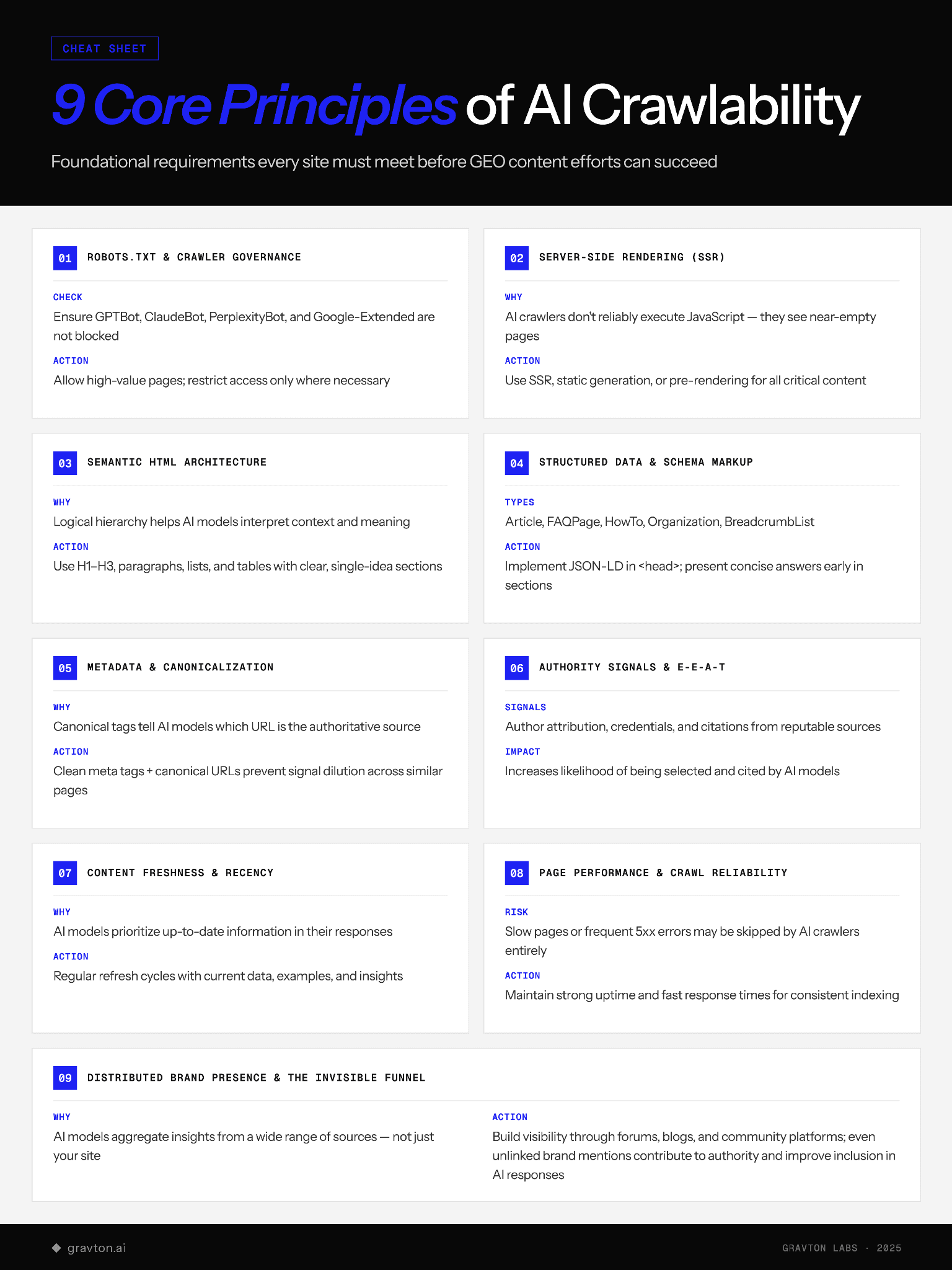
Figure 1: Nine core principles of AI crawlability.
How to Optimize Your Site for AI Crawlability?
Here is a step-by-step approach to optimizing your website content for AI crawlability.
Audit AI Crawler Access and Visibility
To optimize your site for AI crawlability, start by verifying whether AI crawlers can reach it. Review your server logs for AI user agents such as GPTBot, PerplexityBot, and Google-Extended. If they are missing, your robots.txt, CDN, or firewall settings may be blocking them. Ensure key pages are accessible and consider implementing an llms.txt file to guide AI models on which content to prioritize.
Design Content for Direct Answer Extraction
AI models prefer content that they can easily incorporate into responses. Structure your content so that:
Each section answers a specific question
Key definitions appear early and are self-contained
Important points are stated clearly in the first few lines
For example, write definitions in a way that allows others to quote them directly, instead of burying them. This increases the likelihood of being cited in AI responses.
Build Topical Authority Through Internal Linking
AI models infer expertise from how content is connected. Create a strong internal linking structure:
Link pillar pages to supporting articles
Use descriptive anchor text (not generic phrases like “click here”)
Reinforce relationships between related topics
This helps AI models understand that your site covers a subject comprehensively.
See Citation Graph & Source Influence, to understand how AI models select, connect, and prioritize sources when generating answers.
Create AI-Friendly Content Formats (FAQs, Glossaries, How-Tos)
Certain formats perform significantly better in AI responses:
FAQ pages that directly answer common questions
Glossaries with clear, concise definitions
Step-by-step guides for processes
These formats align closely with how users query AI platforms and how models construct responses.
Maintain a Clean and Updated XML Sitemap
Your sitemap.xml acts as a discovery layer for crawlers. Ensure it:
Includes all important pages
Excludes broken or irrelevant URLs
Is regularly updated and submitted to search consoles
An accurate sitemap increases the likelihood that your content will be indexed and retrieved by AI systems.
Strengthen Entity Recognition (Brand & Author Signals)
AI systems rely on entity recognition to determine trust. Strengthen your presence by:
Creating dedicated “About” and author pages
Maintaining consistent brand mentions across the web
Associating content with identifiable experts
This helps AI models connect your content to a credible entity.
Monitor AI Visibility and Iterate
Optimization is ongoing. Track how your content appears in AI-generated answers:
Monitor brand mentions in AI tools
Identify high-value queries where you are not cited
Refine content structure, clarity, and coverage accordingly
Regular iteration ensures your content stays competitive in evolving AI search environments.
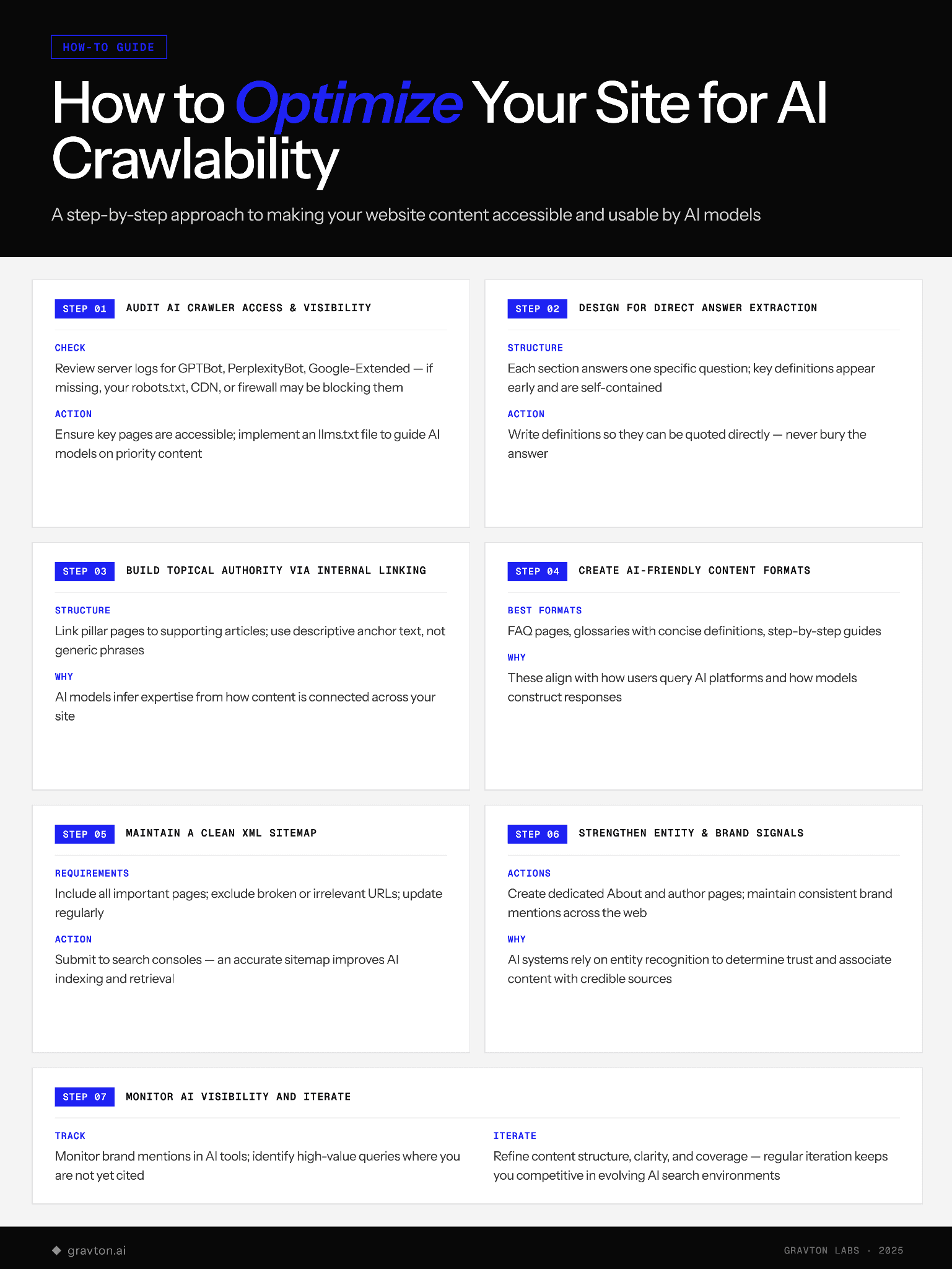
Figure 2: A step-by-step approach to optimizing the website content for AI crawlability.
How to Implement Structured Data for AI Search?
Structured data is one of the most effective ways to make your content interpretable by AI models. It works by embedding machine-readable context directly into your page, allowing models to clearly identify what your content represents.
Use JSON-LD for Implementation
Schema markup should be implemented using JSON-LD format and placed within the <head> section of your page. This ensures that crawlers can easily access structured data without relying on visible content or page rendering.
Prioritize High-Impact Schema Types
Focus on schema types that directly improve how AI models interpret and use your content:
Article / TechArticle:
Defines your content as a structured, authoritative resource with clearly labeled metadata
FAQPage:
Formats content in a way that aligns with how AI models generate answers
HowTo:
Structures step-by-step processes for easy extraction
Organization:
Establishes your brand as a recognized entity with defined attributes
BreadcrumbList:
Provides context about page hierarchy and topic relationships
Each of these schema types helps AI systems understand not only the content itself but also its role and relevance.
Ensure Complete and Accurate Metadata
Structured data should be fully populated with key fields such as:
Author or organization
Publication date
Headline and description
Incomplete or inconsistent metadata lessens clarity and weakens the interpretation of your content.
Keep Schema Aligned with Page Content
The structured data must accurately reflect what is visible on the page. Any mismatch between the schema and the actual content can reduce trust and limit how AI models use your content.
Validate and Maintain Your Implementation
Use tools like Google’s Rich Results Test to validate your schema. Regularly audit your structured data to ensure:
No errors or missing fields
Updated timestamps
Continued compatibility with evolving standards
Example: Article Schema (JSON-LD)
JSON
|
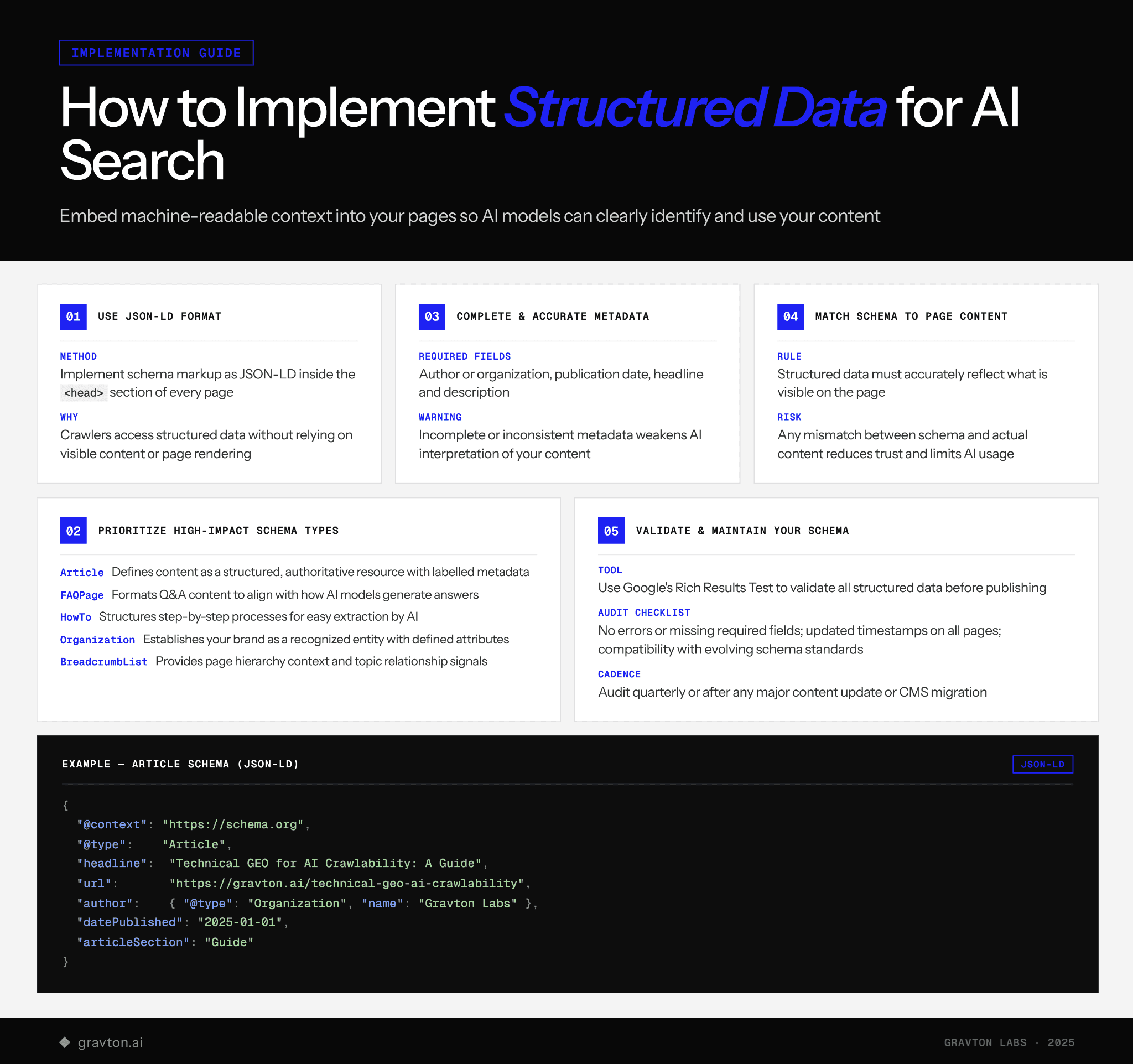
Figure 3: Steps to implement structured data for AI search.
Example of Effective Technical GEO and AI Crawlability
Consider a developer-focused web infrastructure company. Over six months, it increased AI-driven signups by nearly 10×. Traffic from AI platforms grew from under 1% to about 10% of total new signups.
The company made its documentation and blog fully accessible in static HTML. It structured the content so answers were easy to extract. Page titles and headings matched how users search in tools like ChatGPT and Perplexity, such as “best web hosting” or “Next.js tutorial.”
As a result, platforms like ChatGPT began citing its content consistently. Most AI-driven traffic came from ChatGPT, with Perplexity and others contributing smaller shares.
The company also observed significant crawl activity from AI bots. These crawlers operated at a meaningful fraction of the volume of traditional search bots. It also confirmed that AI crawlers do not reliably execute JavaScript.
As a result, all critical content was included in the initial HTML.
This example shows a simple truth: better crawlability and structure lead to higher visibility and measurable growth from AI search.
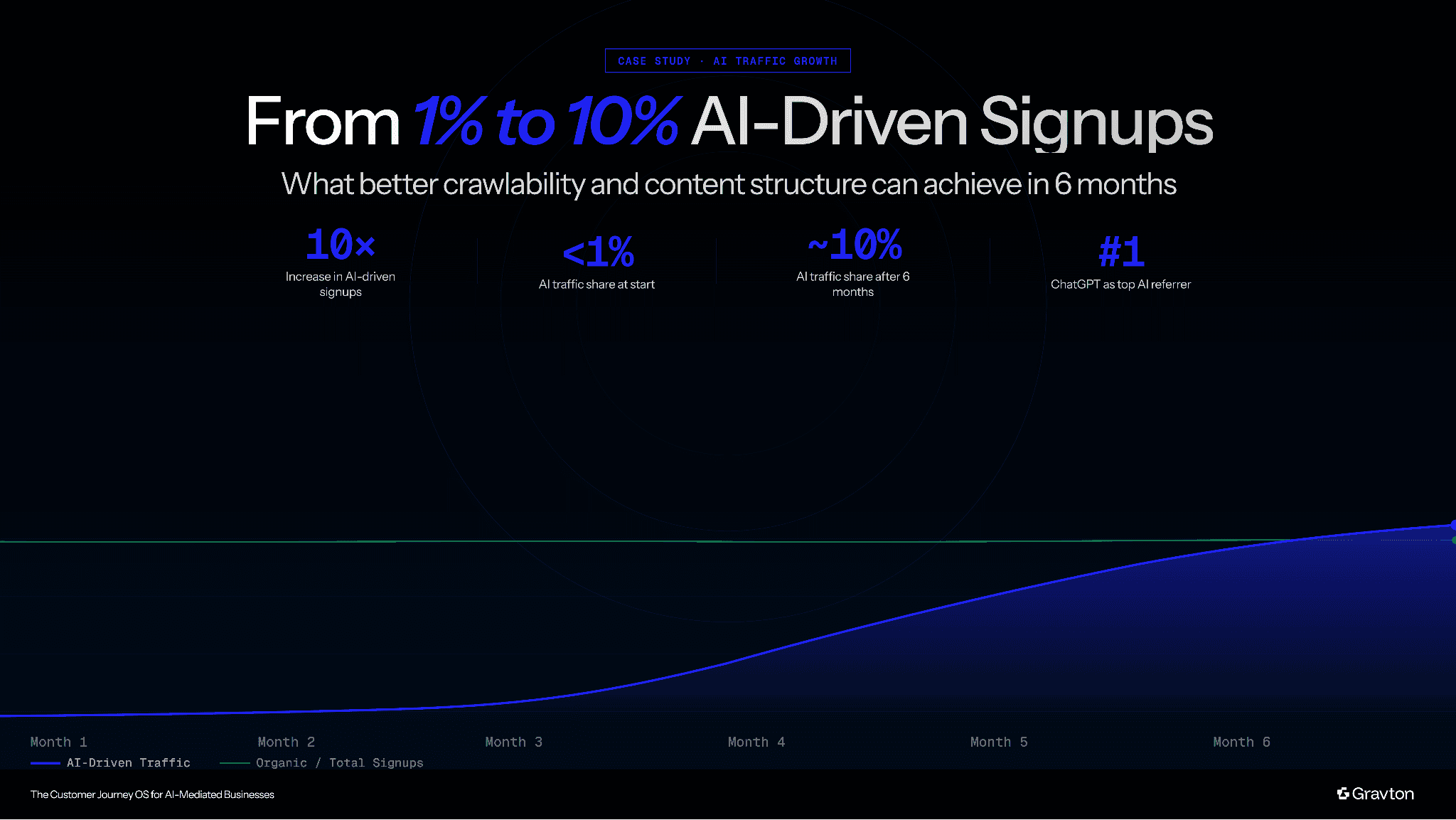
Figure 4: An example of effective technical GEO and AI crawlability.
Final Thoughts on Technical GEO for AI crawlability
Technical GEO and AI crawlability form the infrastructure that enables AI models to access and use your content. If your site is not reachable by the crawlers that feed LLMs, it will not appear in AI search.
The shift is clear: visibility is moving from links to answers. Content that is not structured, machine-readable, and supported by strong authority signals risks exclusion from AI discovery.
The core message is straightforward: ensure proper crawler access, use server-side rendering, implement structured data, and maintain clean semantic HTML. These are not advanced tactics; they are the baseline requirements before any content-level GEO effort can succeed.
Technical GEO ensures your content can be understood and surfaced by AI models. When your site’s architecture and structure align with how models process information, you build a reliable foundation for long-term visibility in AI search.
Technical GEO for AI Crawlability: Frequently Asked Questions
What is Technical GEO for AI crawlability?
Technical GEO for AI crawlability refers to the practices that ensure AI crawlers can access, interpret, and use your content in generated responses. It combines technical SEO with content structuring for AI models.
How is AI crawlability different from traditional SEO?
Traditional SEO focuses on rankings and clicks. AI crawlability focuses on whether your content can be extracted, understood, and cited in AI responses.
Why is AI crawlability important for businesses?
AI search is becoming a major discovery channel. If your content is not crawlable by AI systems, your brand may not appear in responses that influence user decisions.
Do AI crawlers execute JavaScript like Googlebot?
No, most AI crawlers rely primarily on raw HTML and do not reliably execute JavaScript. Critical content should always be available in the initial HTML.
What role does structured data play in AI crawlability?
Structured data provides machine-readable context about your content. It helps AI models understand what your content represents, increasing the likelihood of correct interpretation and citation.
How can I check if AI crawlers are accessing my site?
You can review server logs for AI crawler user agents such as GPTBot, PerplexityBot, and Google-Extended to track crawl activity and page access.
What type of content performs best for AI crawlability?
Content that is clearly structured, concise, and formatted for easy extraction, such as FAQs, lists, and step-by-step guides, performs best in AI responses.
VISIBILITY & CONTENT STRATEGY