Competitive Intelligence in AI Search: Strategies & Tools
Competitive Intelligence in AI Search: Strategies & Tools
Master competitive intelligence in AI search with this blog. Learn strategies, tools, and metrics to track rivals in AI responses for better AI visibility.
Haritha Kadapa
Highlights
Track citations, not just clicks: AI competitive intelligence monitors which brands are cited in AI responses, how often, and in what context across AI platforms.
Zero-click is the new zero attention: With 44% of AI search users relying on AI as their primary information source, missing from AI responses means missing the buyer.
Five principles determine whether AI cites you: Semantic authority, content structure, presence in the invisible funnel, AI visibility as a tracked metric, and cross-platform analysis. If you miss any one of them, a competitor might fill the gap.
Four step framework for competitive intelligence: Map your query universe, monitor AI response inclusion, identify content gaps, and benchmark AI share of voice against rivals.
Content changes move the needle fast (example): A B2B company that spotted a competitor's comparison table and rebuilt its own page accordingly started appearing in AI responses within weeks.
Competitive intelligence (CI) in AI search involves understanding two things: why your competitors are being recommended and why you are not. Your traditional analytics show nothing, because maybe a click never happened. A buyer asked ChatGPT which CRM to use, got an answer that didn’t include your brand, and moved on. That’s the competitive gap that traditional SEO dashboards can’t see. This guide shows you how to close it.
What is competitive intelligence in AI search?
Competitive intelligence (CI) in AI search is the practice of tracking how your brand and competitors appear in AI responses and determining whether AI models recommend your product or a rival’s when users ask natural-language questions. It covers which brands AI platforms cite, how frequently, in what context, and for which queries, across AI platforms like ChatGPT, Perplexity, and Google AI Overviews.
Unlike traditional competitive intelligence, which focuses on keyword rankings, backlink profiles, and paid placements, AI competitive intelligence shifts focus to LLM citation rates and answer inclusion.
AI search operates as a “black box” where you don’t see rankings or clicks. A competitor could be capturing most AI citations while your brand remains invisible. Because AI prioritizes semantic relevance and authority over ranking positions, inclusion in responses matters more than ever. This creates the “invisible funnel,” where users discover and evaluate options without visiting any website.
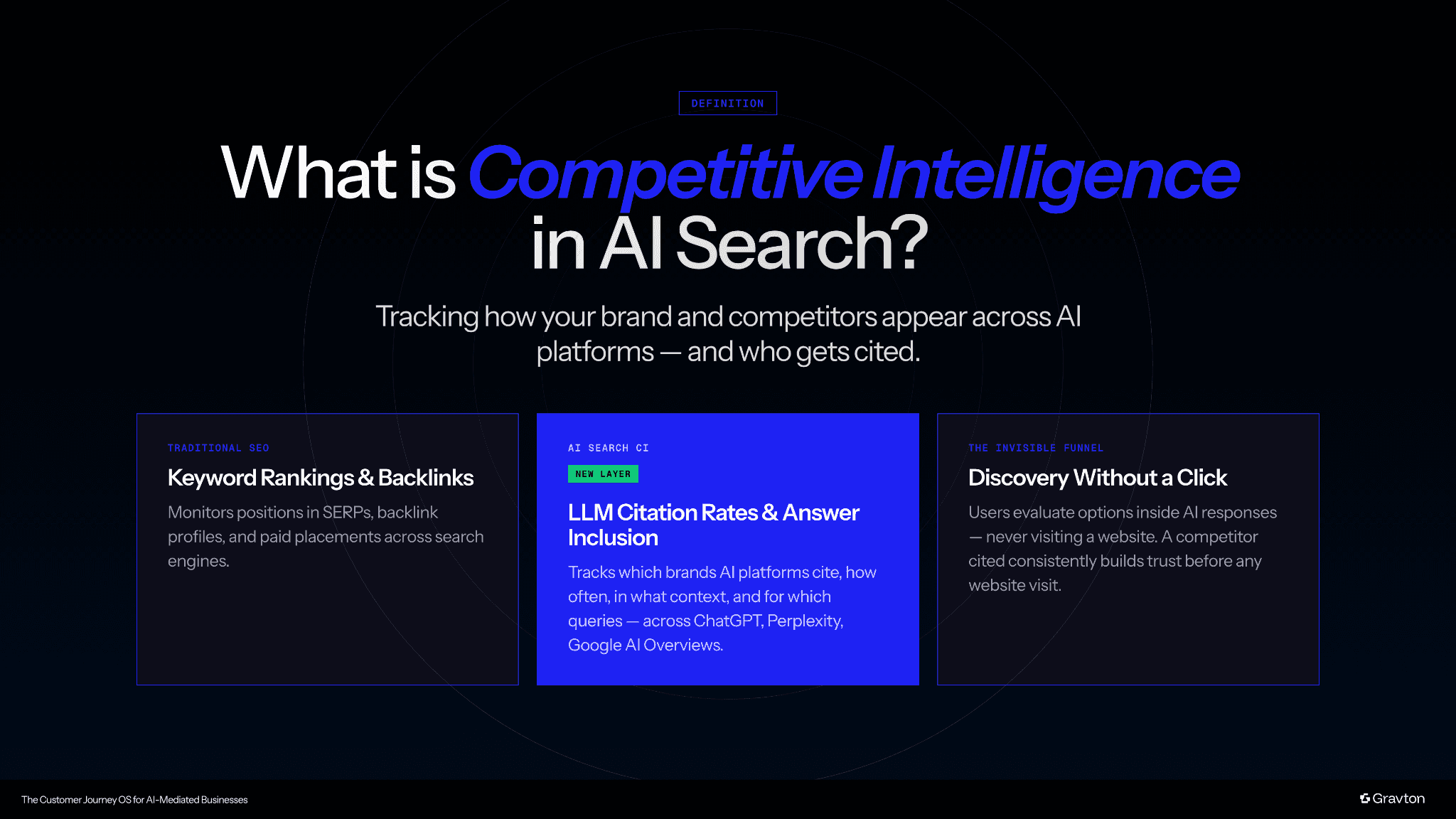
Figure 1: Competitive Intelligence in AI search.
Why competitive intelligence in AI search matters
|
If your brand isn’t mentioned in an AI response, you lose the entire consideration, not just a website visit. A competitor consistently cited in AI responses builds trust and familiarity before a prospect ever reaches your site, an advantage invisible to traditional SEO dashboards.
As more users type full questions into chatbots and receive summarized answers, the middle-of-funnel browsing phase is collapsing. Most analytics tools only track clicks and traffic. AI interactions are hidden; a user who sees your brand in an AI response and visits your site directly registers as direct traffic, with no attribution to the AI interaction. Without competitive intelligence, you won’t know which conversations AI is having about your category.
AI responses typically cite only a limited number of sources, so the share of voice matters enormously. Competitors who dominate AI citations shape user perception early in the decision process. Since most cited sources come from brand-managed content websites and help centers, and from structured data brands that actively manage their content ecosystem, these brands have a strong opportunity to influence AI visibility.
The core principles of AI search competitive intelligence
Semantic authority
AI models prioritize sources that demonstrate clear expertise and credibility, author attribution, data-backed claims, depth of topic, and consistency across sources.
Content structure
Pages using question-based headings, concise explanations, bullet points, and tables are easier for models to parse and cite.
See “How to Optimize Your Site for AI Crawlability” and “How to Implement Structured Data.”
The invisible funnel
Inclusion in AI responses drives brand exposure rather than direct traffic.
See AI Brand Monitoring, Sentiment, and Narratives.
AI visibility as a core metric
Key measures include citation frequency (how often your brand is referenced) and impression share (your portion of relevant AI responses).
Cross-platform analysis
AI platforms draw from different sources and produce varied outputs for the same query. Effective intelligence requires monitoring across multiple platforms and prompts, since even small differences in inclusion can significantly impact perception.
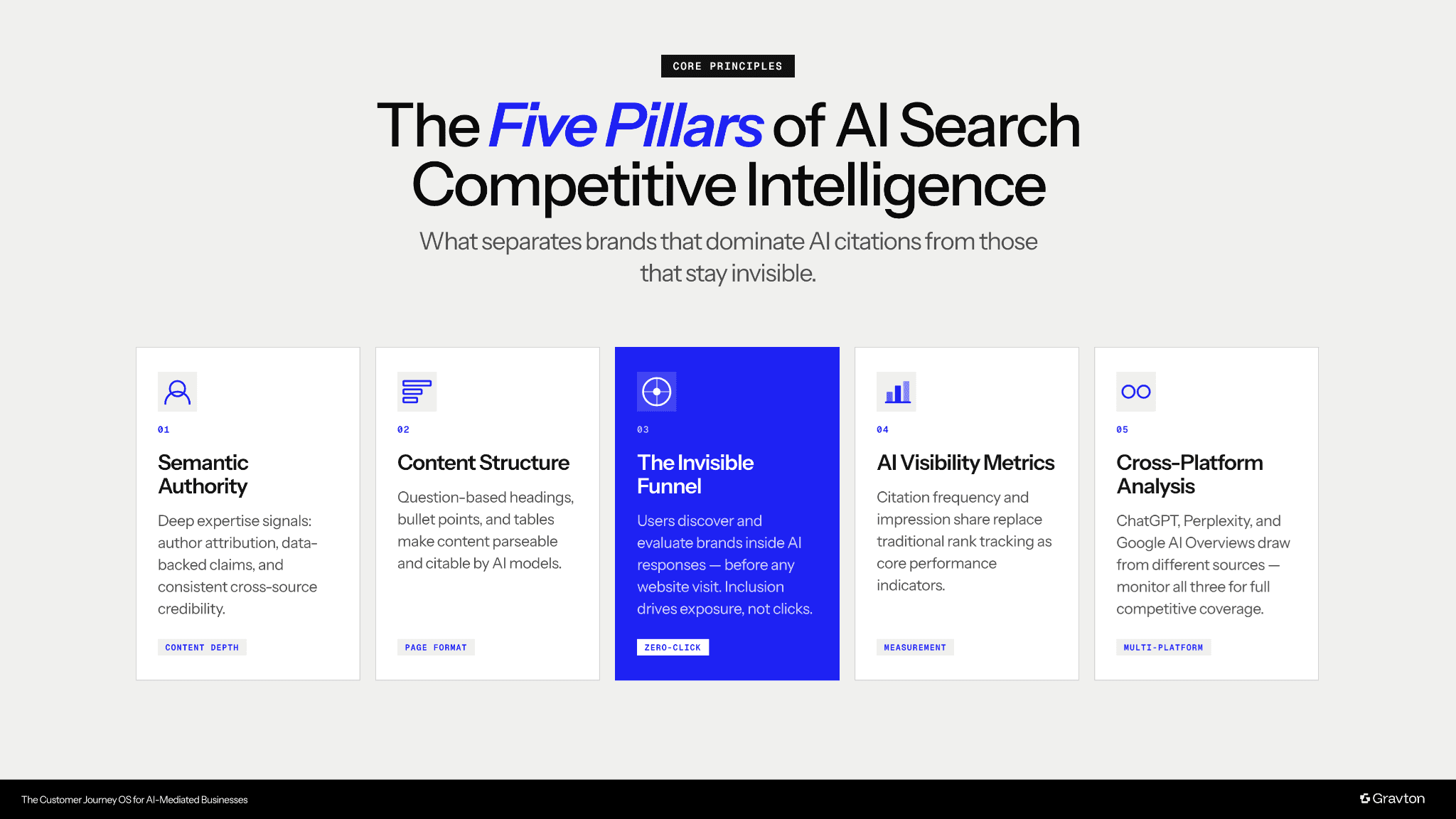
Figure 2: Five Core Principles of AI Search Competitive Intelligence.
How do you gather competitive intelligence in AI search?
Specialized platforms help CI teams automate large-scale prompt analysis and track brand mentions, competitor visibility trends, and citation patterns.
1. Run prompt-set analysis
Query high-intent questions across AI platforms, e.g., “Best CRM for SMBs” or “Top project management tools for marketing teams.” Run 50-100 prompts per persona and track which brands are cited, their citation position, and consistency across responses. This often surfaces non-traditional competitors that don’t rank in search but dominate AI responses.
2. Benchmark across AI platforms
Different platforms weigh recency, credibility, and citations differently. Comparing outputs across engines gives a more accurate view of your competitive landscape.
3. Track citation metrics
Measure citation frequency, citation position, and share of voice over time to identify whether visibility is improving or declining.
4. Use AI search analytics tools
Specialized CI tools automate large-scale prompt analysis and track brand mentions, competitor visibility trends, and changes in citation patterns, scaling what would otherwise be a manual process.
5. Analyze content patterns driving citations
Identify the formats, page types, and topics that AI platforms frequently cite from competitors. This reveals what kind of content wins citations, not just who is winning.
6. Incorporate customer and market inputs
Customer FAQs, sales conversations, and support queries help generate realistic prompts and uncover high-intent queries AI platforms are likely to answer.
7. Monitor platform changes
Track new answer formats, shifts in citation behavior, and emerging competitors regularly to keep insights up to date.
Tracking these metrics over time helps teams derive meaningful CI insights and adjust their strategy.
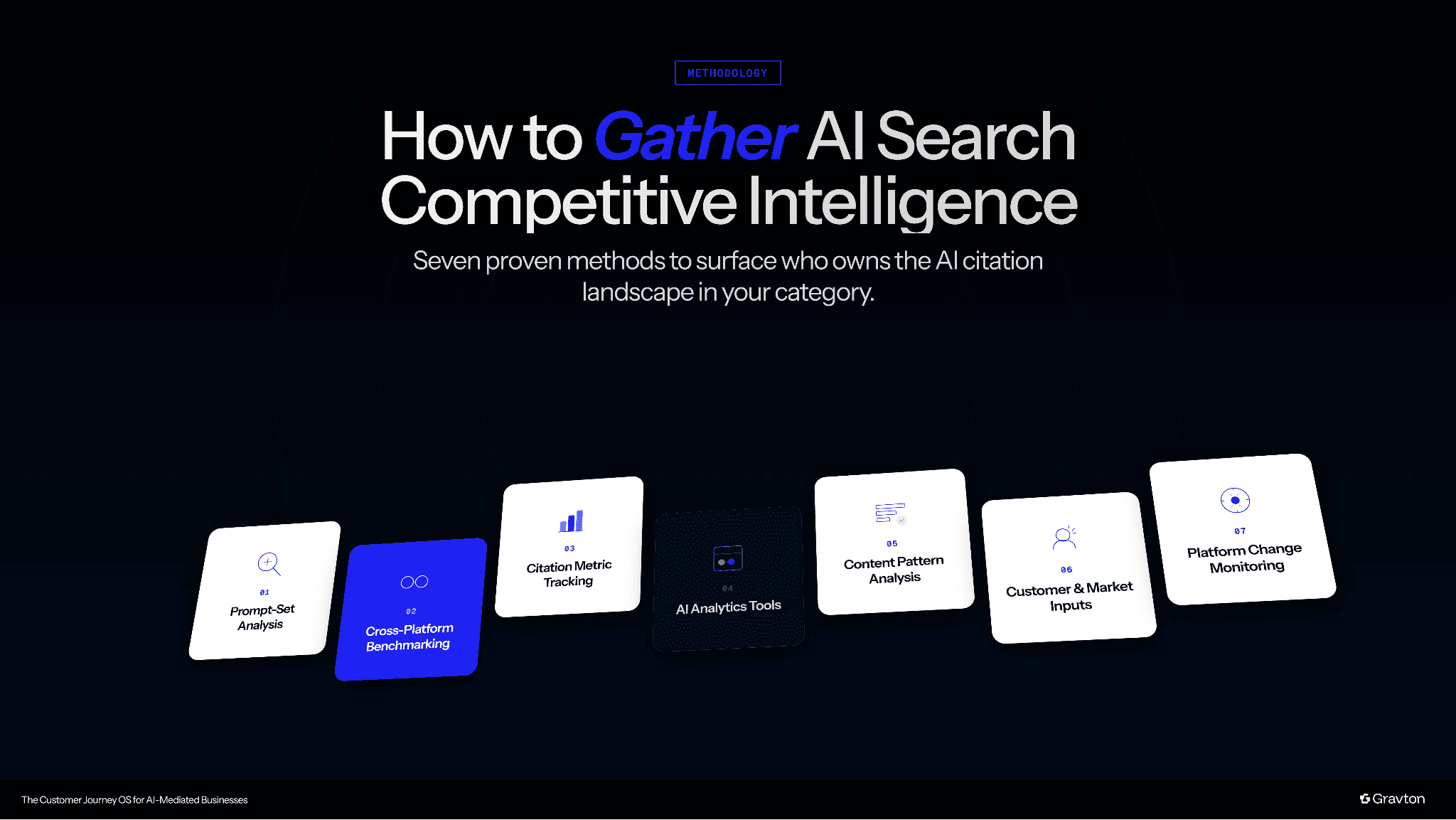
Figure 3: Seven methods to gather competitive intelligence in AI search.
How do you build an AI competitive intelligence framework?
A practical AI CI framework has four steps.
Step 1: Map your query universe
Identify questions buyers ask at each stage of the buying process and group them by intent:
Definitional: What is [category]? How does [solution type] work?
Evaluative: What should I look for in [solution type]?
Comparative: [Your brand] vs [Competitor], which is better for [use case]?
Transactional: Best [solution type] for [industry] in 2025
Step 2: Monitor AI response inclusion
Run target queries systematically across platforms and record which brands, domains, and claims appear in each platform. Tools like Gravton Labs automate this and surface citation frequency, source attribution, and sentiment at scale.
Step 3: Conduct content gap analysis
For each query where a competitor is cited and you are not, identify what content they have that you're missing: structured definitions, FAQ content, comparison tables, or original research.
Step 4: Benchmark AI share of voice
AI share of voice is the percentage of relevant AI responses in which your brand appears, relative to the total queries monitored. Track it over time against your top three to five competitors.
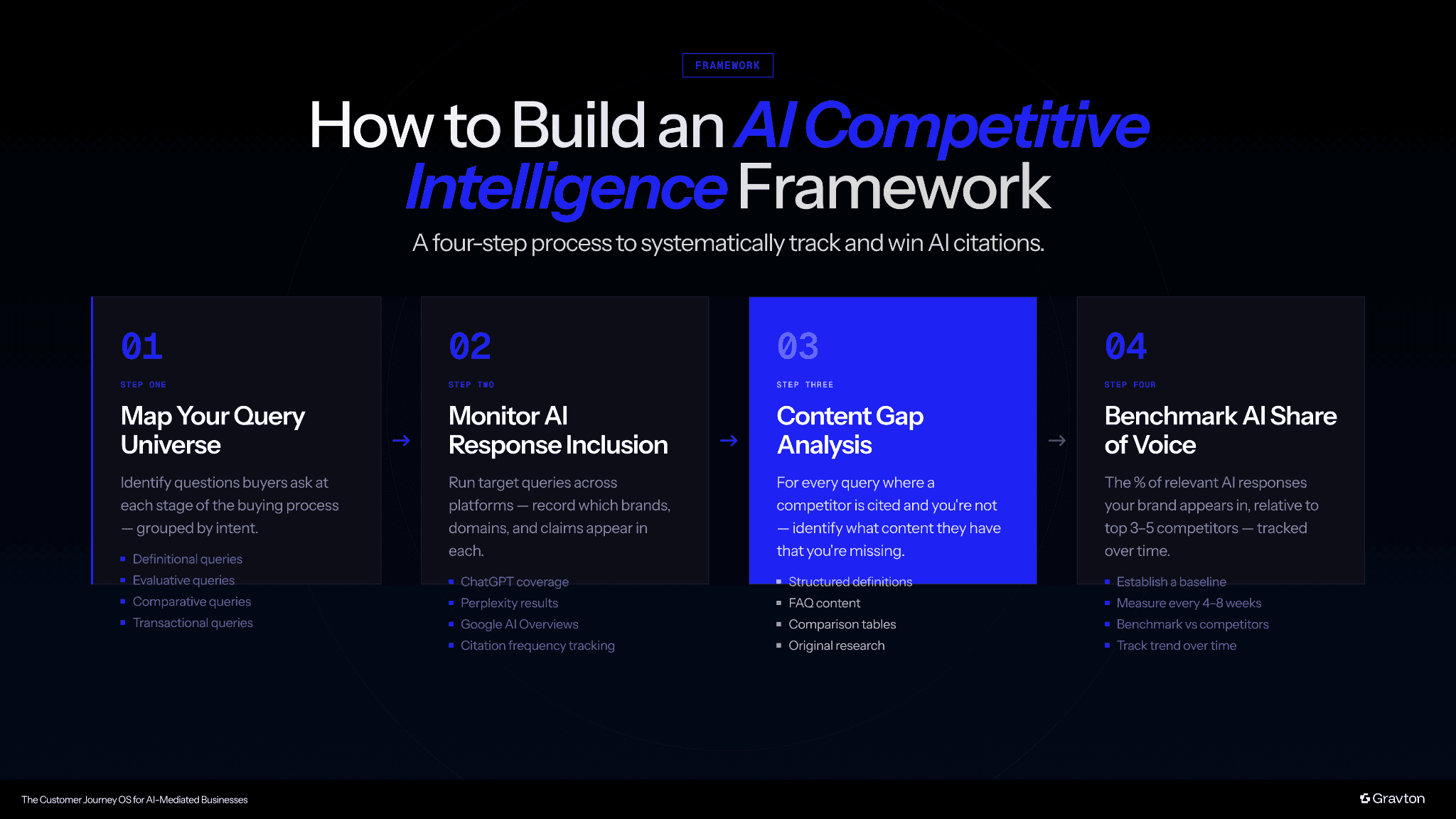
Figure 4: Four step framework to build competitive intelligence in AI search.
Examples showing the impact of AI competitive intelligence
The scenario: A CRM software company ran a set of 100 relevant prompts like “best CRM for small business” and found their brand was absent. A competitor was showing up consistently.
The investigation: A technical content audit revealed the gaps. The competitor’s cited page featured a clear, structured comparison table, the kind of content AI models parse and cite easily. The company’s own equivalent page had none of that.
The fix: They restructured their content to match and exceed the format, adding comparison tables, question-based headings, and structured definitions.
The result: Within weeks, AI platforms began citing their brand alongside the competitor in 20% of relevant prompts. Over time, they started appearing instead of the rival.
Many teams now embed an “AI check” into standard CI workflows, plugging top SEO keywords into ChatGPT to see which competitors appear, then investigating whether it’s stronger FAQ content, better structured data, or other trust signals to guide their own strategy.
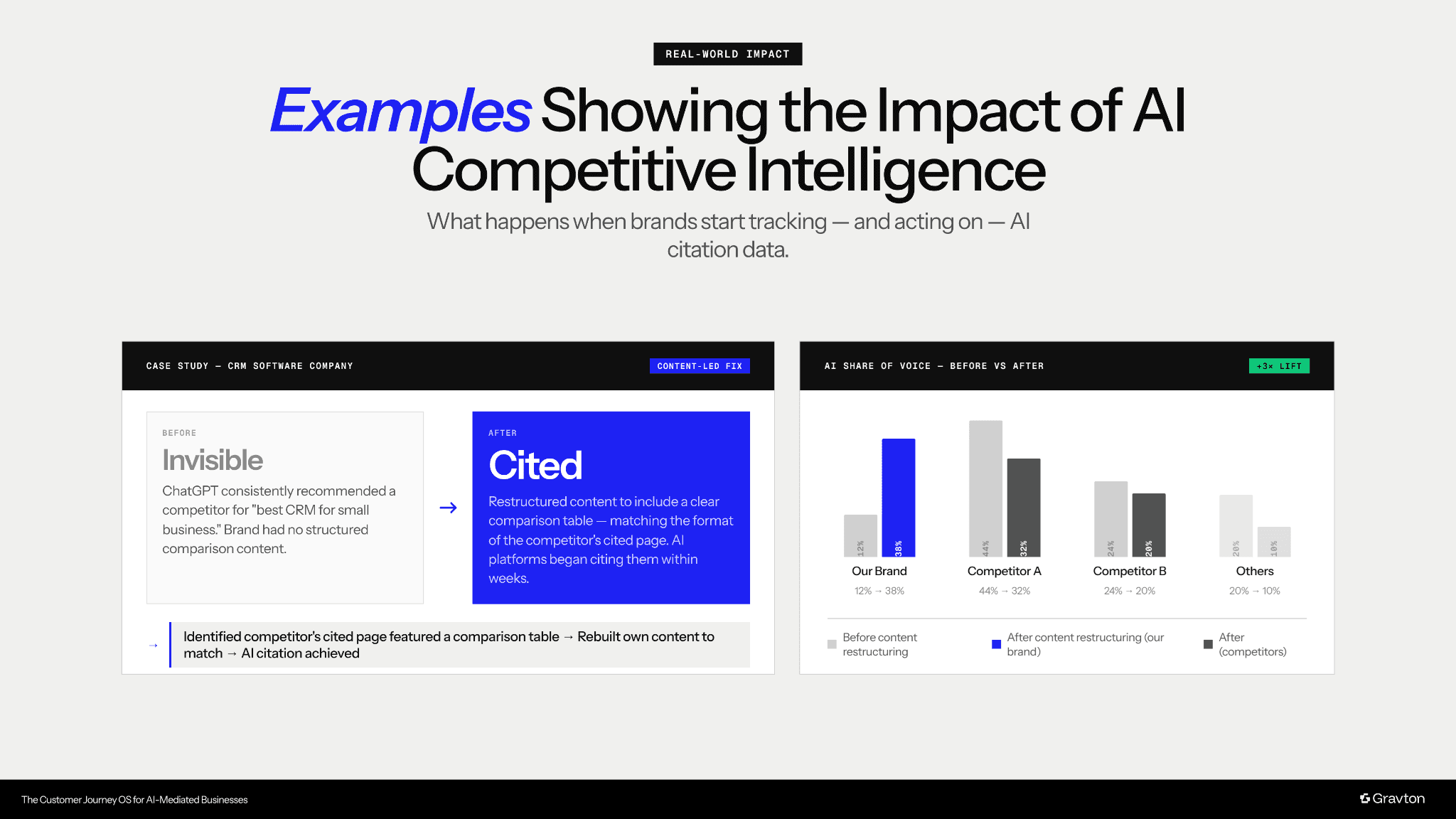
Figure 5: Examples showing the impact of competitive intelligence in AI search.
How do you measure AI competitive intelligence performance?
AI share of voice
The percentage of relevant queries in which your brand appears, relative to competitors, is the headline metric for AI visibility.
Citation frequency
How often your brand is mentioned across a defined prompt set over a given period.
Answer inclusion rate
The percentage of target queries where your brand appears, regardless of competitor performance.
Source attribution rate
How often specific URLs on your domain are cited, and which content drives visibility.
Sentiment and context
Whether your brand is described positively, neutrally, or negatively, and in what context.
Competitive benchmarking
Comparing your metrics against key competitors to identify gaps and shifts in positioning.
AI visibility scorecard
A consolidated view tracking performance across prompts, platforms, and time periods.
Measurement cadence
Establish a baseline before making changes, then track every 4 to 8 weeks. Consistent measurement is essential as AI outputs evolve rapidly.
Business impact
Direct attribution is limited, but greater AI visibility correlates with stronger brand recall, higher direct traffic, and improved conversion rates.
Final thoughts on competitive intelligence
Competitive intelligence in AI search is not a future consideration; it is a present gap. Buyers are already using AI platforms like ChatGPT, Perplexity, and Google AI Overviews to research solutions in your category. The brands that appear in those answers build awareness and preference before any website visit.
Traditional rank tracking doesn’t capture this layer of competitive activity. Closing the gap requires systematic monitoring of AI response inclusion, structured content aligned with GEO principles, and regular benchmarking of AI share of voice. Brands that build this into their marketing programmes now will have a measurable structural advantage over those that wait.
Competitive intelligence in AI search: FAQs
What is competitive intelligence in AI search?
Competitive intelligence (CI) in AI search is the process of tracking how your brand and competitors appear in AI responses. It includes citation frequency, context, and inclusion across different prompts and AI platforms.
How do you gather competitive intelligence in AI search?
You can gather CI in AI search by running prompt-set analysis, benchmarking across platforms, tracking citation metrics, analyzing competitor content patterns, and using AI search analytics tools.
What is prompt-set analysis in AI search?
Prompt-set analysis involves running a structured set of queries across AI platforms to track which brands are cited, how often they appear, and their position within responses.
Which metrics are most important for AI competitive intelligence?
Key metrics include AI share of voice, citation frequency, answer inclusion rate, source attribution rate, sentiment, and competitive benchmarking.
What is AI's share of voice?
AI share of voice is the percentage of relevant AI-generated responses in which your brand appears compared to competitors, serving as a key indicator of visibility.
How often should AI competitive intelligence be measured?
It should be tracked consistently, typically every 4 to 8 weeks, to account for rapid changes in AI outputs.
What role does content play in AI competitive intelligence?
Content structure, clarity, and authority significantly influence whether AI models cite a brand.
Can competitive intelligence in AI search impact business outcomes?
Yes, increased visibility in AI responses can lead to stronger brand recall, higher direct traffic, and improved conversion rates, even if direct attribution is limited.
Win your AI search demand universe
Understand how AI platforms surface your competitors in responses you're not tracking and where rivals are winning visibility across the prompts that matter most to your buyers.
VISIBILITY & CONTENT STRATEGY