Integration & Data Infrastructure: Building AI-Ready Marketing Stacks
Integration & Data Infrastructure: Building AI-Ready Marketing Stacks
AI platforms strip referral data, and your analytics stack cannot see the influence. This guide shows how to build pipelines that make AI-driven revenue visible and attributable.
Haritha Kadapa
Highlights
Invisible Funnel, Real Revenue: Integration & data infrastructure is the operational backbone that connects AI visibility signals, citations, referrals, and brand mentions to the revenue metrics that your CFO can act on.
Six Layers, One Stack: An AI-ready marketing data stack requires event tracking, data pipelines, a cloud data warehouse, a CDP, an AI-aware attribution model, and a unified reporting layer, each handling a distinct data category, each closing a different measurement gap.
Traditional Infrastructure Has Three Fatal Gaps: AI platforms strip referral data, LLM training influence is invisible to analytics, and most teams have no pipeline for AI signals at all, creating a structural blind spot rather than just incomplete attribution.
Measure What the Infrastructure Actually Produces: AI citation frequency, confirmed referral sessions, share of AI voice, AI-influenced branded search, referral conversion rate, and brand sentiment distribution are the six metrics every AI-ready stack must track.
The ROI Case Is Clear: Data-driven organizations achieve 15-25% EBITDA growth through analytics-led decision-making. Insights-driven businesses are projected to capture $1.2 trillion in additional value annually. Brands without connected AI infrastructure will not be in either group.
Your marketing stack was built for a world where users clicked links and analytics tools tracked every step. That world has changed.
AI search has added a new visibility layer. Most data infrastructure was never built to capture it. When a buyer asks ChatGPT to compare enterprise software, that interaction never enters your analytics pipeline. There is no click. There is no referral header. There is no session to attribute. The influence happens inside an AI conversation. Your data stack cannot see it.
Integration & data infrastructure is the operational backbone that determines whether your team can measure, manage, and improve your brand's presence across AI platforms like ChatGPT, Perplexity, and Google AI Overviews. The problem is not that the data does not exist. The problem is that most marketing teams have no pipeline connecting AI visibility signals to the rest of their analytics stack.
This pillar guide explains what AI-ready data infrastructure looks like. It explains why disconnected systems create blind spots in your reporting. And it explains how to build the integrations that give you a complete picture of how AI search is affecting your business.
Understanding Integration & Data Infrastructure
Integration & data infrastructure is the set of systems, pipelines, and governance practices that connect data sources, analytics layers, and activation tools into one reliable whole.
In the context of AI visibility, it covers how you:
Ingest data from AI-driven channels such as ChatGPT citations, Google AI Overviews, and Perplexity references
Transform and model that data so it aligns with your existing marketing and product data
Activate insights by feeding AI-driven signals back into CRM, attribution, and campaign-optimization systems
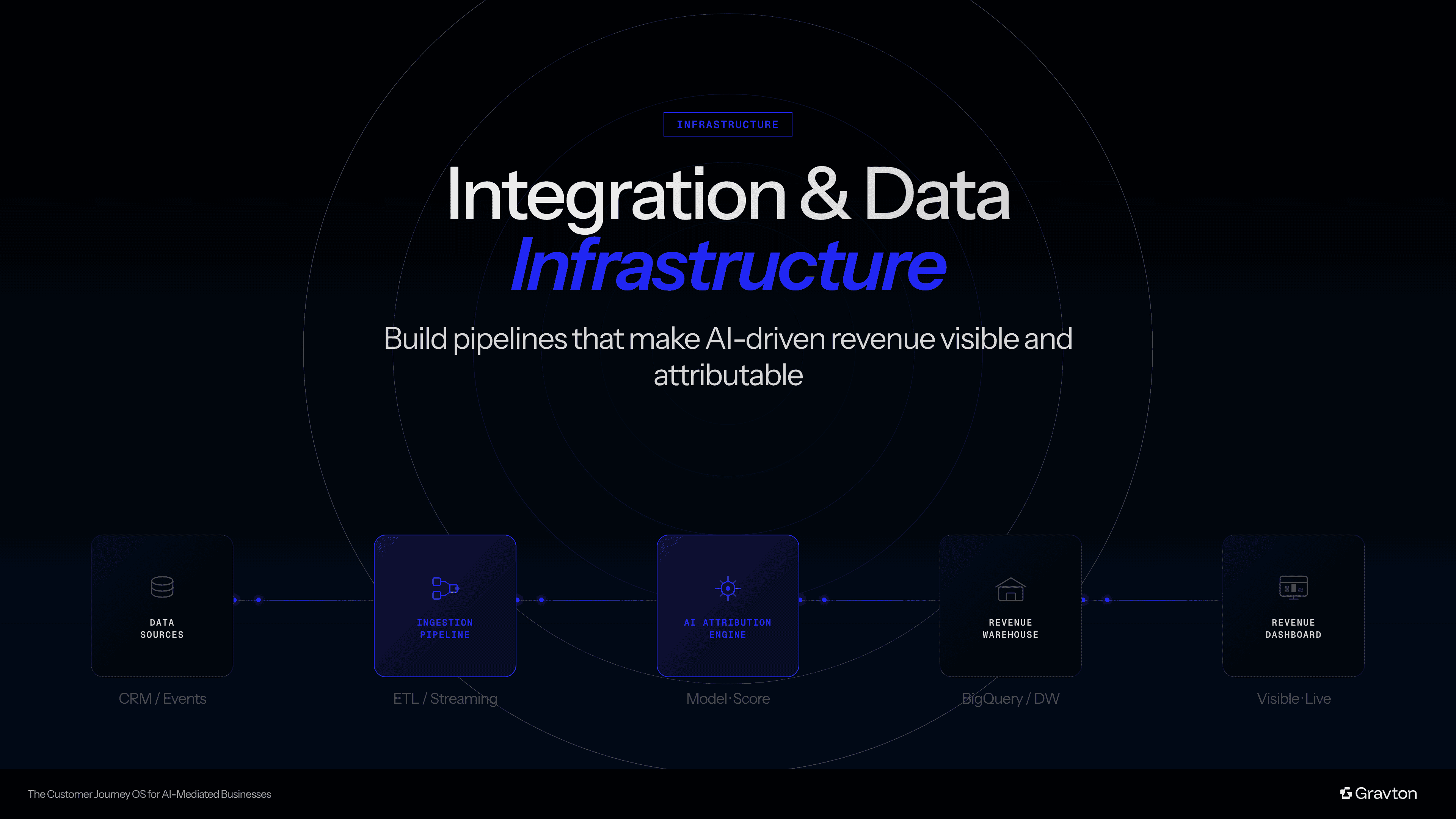
For a B2B company, this typically includes four layers working in sequence:
Table 1: The four layers of an AI-ready marketing stack.
Layer | What It Does |
Data Sources | AI platforms, web analytics, CRM, product-usage tools, paid-media platforms |
Integration Layer | APIs, ETL/ELT tools, or integration-platform-as-a-service (iPaaS) |
Data Infrastructure | Cloud data warehouse or data lake (Snowflake, BigQuery, Redshift) |
Analytics & Activation | BI tools, experimentation platforms, campaign managers |
Think of it as an AI-enabled invisible funnel. It is a pipeline that starts with AI responses and ends with closed-won revenue. Your data infrastructure holds it all together.
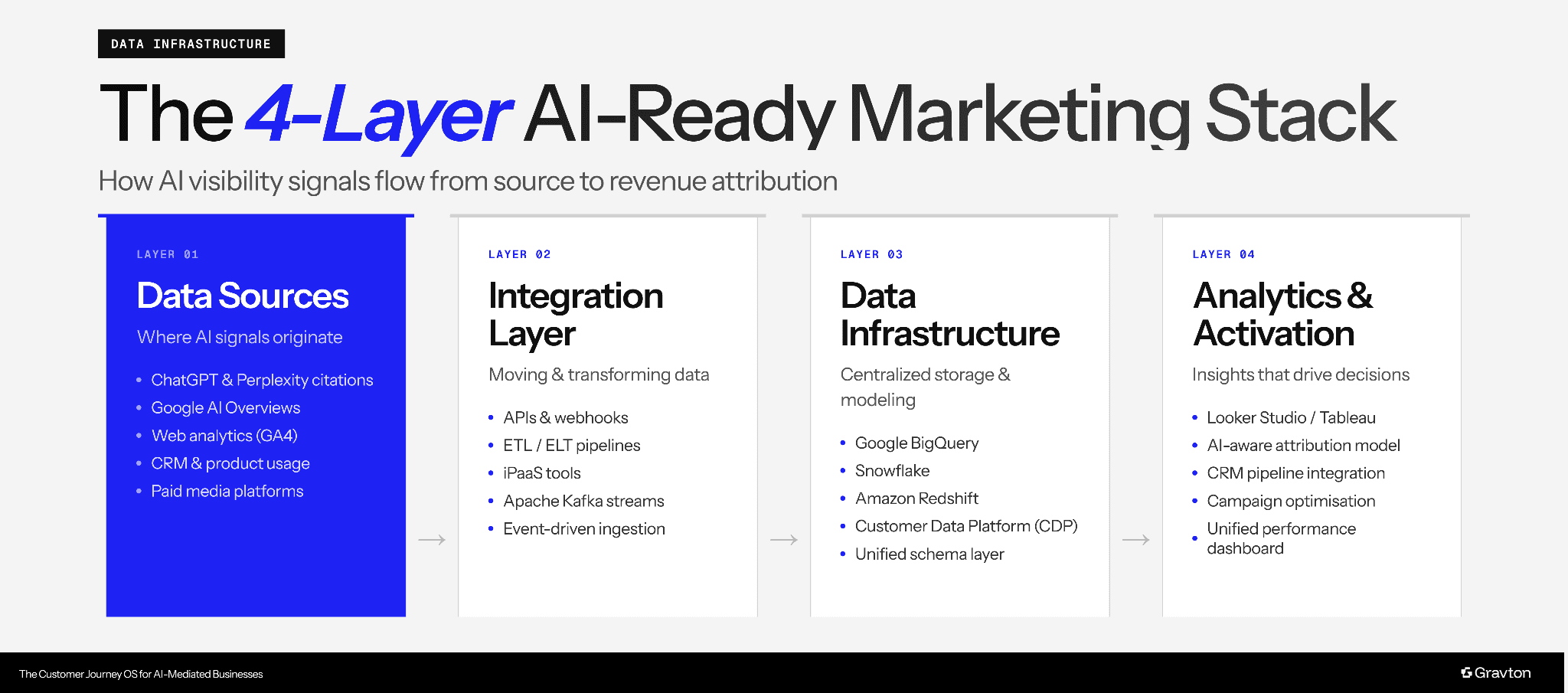
Figure 1: The 4-layer AI-ready marketing stack showing how AI visibility signals flow from source to revenue attribution.
How AI-Ready Infrastructure Differs from Traditional Data Pipelines
Traditional data pipelines move structured data from source systems into a warehouse so analysts can run reports. Integration & data infrastructure for AI visibility goes further.
Here is what makes it different:
It handles unstructured, semi-structured, and attribution-ambiguous signals (LLM citations, multi-engine answers, zero-click traffic)
It enables real-time or near-real-time ingestion of AI-driven queries and responses
It embeds contextual metadata including intent, engine, topic so AI responses can be treated like first-class traffic signals
The data integration and pipeline tools market is growing rapidly, with estimates of a CAGR of ~20-30%, outpacing traditional ETL growth. The market reflects a structural change in what "data infrastructure" means.
Why Does Marketing Data Infrastructure Matter?
What Is the Scale of the Shift?
900 million weekly users interact with ChatGPT, generating 2.5 billion daily prompts
$750 billion in U.S. revenue will flow through AI platforms by 2028
50% of consumers already use AI platforms for product and vendor research
Traditional search engine query volume will decline by 25% in 2026 as users switch to conversational AI. See how AI search engines and traffic sources are reshaping discovery.
Your current analytics stack is not built to measure these shifts.
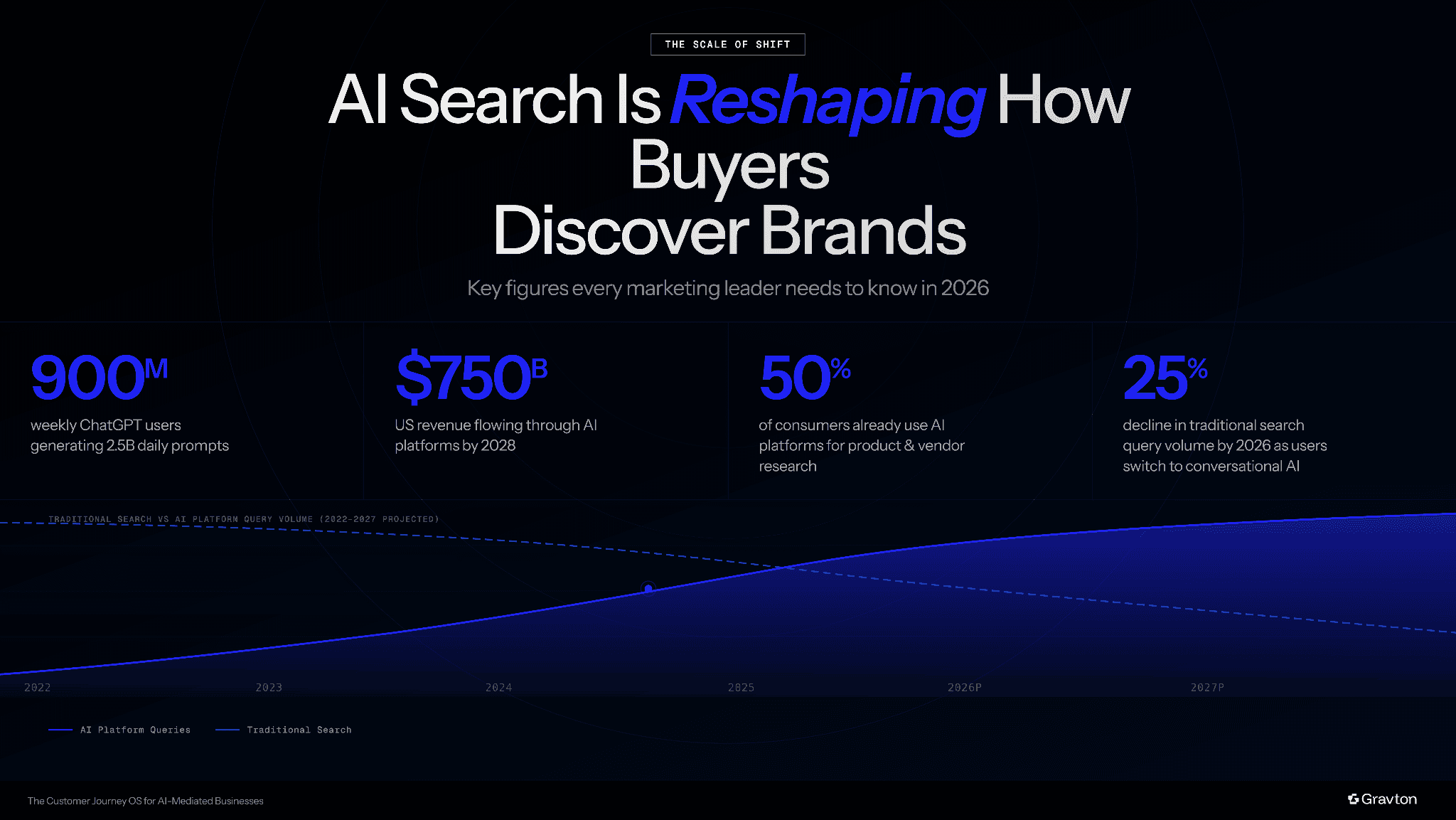
Figure 2: Key AI search figures every marketing leader needs to know in 2026.
Why Does Traditional Infrastructure Fail Here?
Traditional marketing data infrastructure was built on one core assumption: users move from source to site through a trackable click. When a user clicks, a referral header is passed. Analytics platforms record it and assign credit.
AI search breaks this system at a structural level. (For a deeper breakdown of how this challenges core measurement assumptions, see: GEO breaks all three assumptions of standard ROI.)
Table 2: How AI search breaks traditional data infrastructure.
Problem | What Happens | Result |
Referral data problem | AI platforms often strip referral data, so when a user clicks a link from an AI response, the destination site receives no referrer information. | Analytics platforms log these sessions as direct traffic. |
Training data influence | LLMs generate responses in two stages: training and retrieval. This includes all your website content, third-party mentions, and influencing perceptions before user interaction. | Traditional analytics pipelines do not capture it. |
Infrastructure gap | Even when teams acknowledge that AI shapes demand, their data systems fail to capture or connect these signals. | These influences remain unmeasured. |
The result is not just incomplete attribution. It is a structural blind spot. Traditional infrastructure was not designed to recognize this layer of influence, leading to missed data.
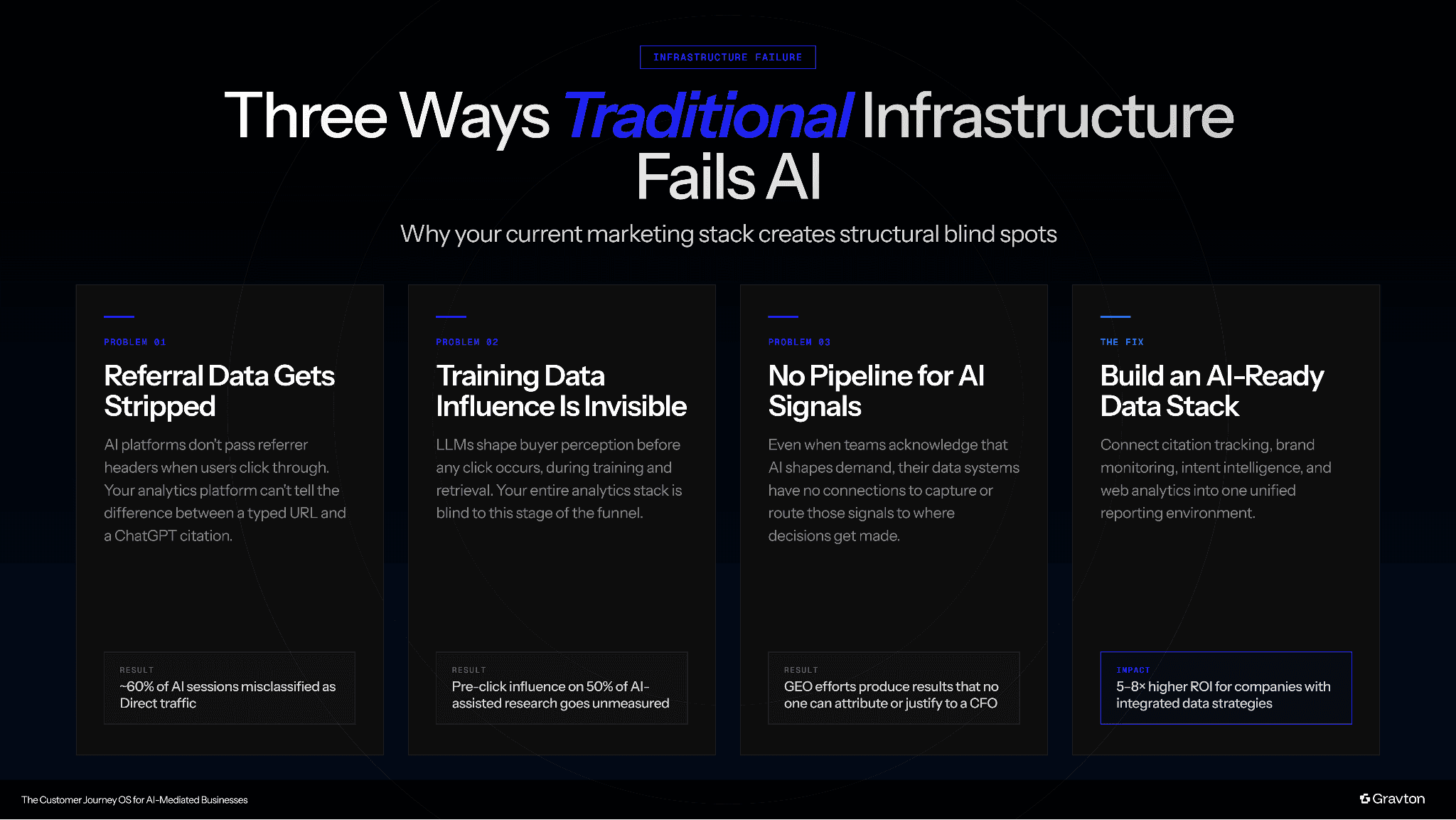
Figure 3: Three ways traditional infrastructure fails AI.
What Is the Business Case?
The data on integrated infrastructure versus siloed infrastructure is clear:
Data-driven organizations can achieve 15-25% EBITDA growth and significantly improve marketing ROI through analytics-led decision-making.
Insights-driven businesses grow significantly faster than competitors and are projected to capture $1.2 trillion in additional value annually.
Data and analytics centric organizations are significantly more likely to outperform competitors on key financial metrics.
|
Understand the full AI search visibility strategy. If your infrastructure has gaps, your strategy is built on partial information.
How Do You Build an AI-Ready Marketing Data Stack?
An AI-ready data stack is a set of integrated layers. Each layer handles a distinct data category. Together they produce a unified view of performance across both traditional and AI search channels.
What Are the Six Core Components?
1. Event Tracking and Tag Management
Event tracking captures user behavior on your website. It records page views, clicks, form submissions, and scroll depth. Then it sends that data to your analytics platform.
For AI search visibility, event tracking must be configured to capture referral strings from known AI platforms. These include chatgpt.com, chat.openai.com, perplexity.ai, and bing.com. Without this configuration, those sessions look identical to direct traffic.
Data Pipelines and ETL/ELT Processes
A data pipeline is the automated process that moves data from one system to another. For AI analytics data integration, pipelines must go beyond click data. They must include non-click signals.
Non-click signals include:
Branded search volume trends
Share of voice in AI responses
Citation frequency from tools like Perplexity
Direct traffic spikes correlated with AI mentions
Modern pipelines use tools like Apache Kafka or cloud-native event buses. These tools continuously ingest and transform AI search data. They enable near-instant alerting when your brand's AI citations surge or competitors leap ahead.
Data Warehouse
A data warehouse is a centralized repository where structured marketing data is stored for analysis. Common platforms include Google BigQuery, Snowflake, and Amazon Redshift.
The warehouse is where you run queries that cross-reference data sources. For example, you can correlate AI mention frequency with changes in branded organic search. You can also connect AI referral data to pipeline velocity.
Without a warehouse, you cannot connect AI visibility signals to downstream outcomes. An AI-influenced visit, a CRM conversion, and a revenue event remain isolated, meaning you cannot prove that AI visibility contributed to the pipeline or revenue.
Customer Data Platform (CDP)
Without a CDP, an AI-referred visitor who later converts in your CRM is invisible as an AI-influenced customer. You are crediting organic or direct for a deal that AI search actually initiated.
A CDP unifies customer data from multiple sources into a single profile. CDPs like Segment, Salesforce Data Cloud, and mParticle connect behavioral, transactional, and identity data.
In the context of AI search, the CDP serves an important function. It connects an anonymous website visit from an AI referral to a customer profile. If it cannot find a match, it flags the visit as a new contact. This new contact is influenced by AI discovery.
Attribution Model
Without an AI-aware attribution model, every AI-driven touchpoint is either ignored or misclassified. You cannot quantify the impact of AI visibility on the pipeline, making it impossible to justify the GEO investment.
Standard attribution models do not account for AI-mediated touchpoints. Building an AI-aware attribution model requires a custom approach.
For the full framework on measuring AI-driven attribution, see our guide on How to Measure ROI from GEO.
Reporting and Visualization Layer
Without a unified reporting layer, AI visibility metrics exist but never influence decisions. Teams continue optimizing based on incomplete data because AI signals are not surfaced alongside core performance metrics.
Platforms like Looker Studio, Tableau, and Power BI connect to your data warehouse and CDPs. They surface insights in readable formats.
For AI search data pipelines, the reporting layer must include AI-specific metrics:
Citation rate
AI share of voice
Brand mention frequency in LLM outputs
AI-attributed traffic as a percentage of total sessions
What Are the Five Layers of an AI Visibility Stack?
Beyond the core infrastructure components, AI visibility requires five specialized data layers:
Table 3: The five layers of an AI visibility stack.
Layer | What It Covers | Where to Learn More |
Citation Graph & Source Influence | How AI engines decide what to cite and how to become a cited source | |
Brand Monitoring & Sentiment | How to monitor your brand across AI platforms at scale and how tone shapes brand perception | See Brand Monitoring in the AI Era and AI Sentiment Analysis |
Intent Intelligence | Understanding why users ask what they ask | |
Technical GEO & AI Crawlability | Making your content accessible and citable by AI systems | |
Attribution & ROI | How to measure the business impact of AI visibility |
What Are the Architecture Principles for AI-Ready Infrastructure?
Four principles separate effective stacks from fragile ones.
Normalize AI-driven signals into a common schema
An AI search data pipeline should convert raw LLM citations into usable data. Use a consistent event schema. It should include engine, query, content_unit, confidence, timestamp, and campaign_id. This way, AI-driven traffic can be treated like web or paid-search events.
Build a layered architecture
Ingestion layer → storage layer → transformation layer → activation layer. This structure supports the trajectory of the data pipeline tools market toward tens of billions by 2030.
Embrace event-driven and streaming patterns
AI visibility signals are event-like: a user queries, an LLM cites your content, and the user may or may not click. Your infrastructure should support event-driven architecture. Currently, global organizations are adopting event-driven architecture, though only a minority reports full maturity.
Design for privacy and governance from the start
A majority of data and analytics initiatives fail to deliver expected outcomes due to governance and execution gaps. This happens primarily because organizations implement governance as an afterthought. Start with clear data-ownership rules, anonymized identifiers for AI exposure signals, and access policies with audit trails.
How Do You Integrate AI Traffic into Your Analytics Stack?
Follow these steps in order.
Step 1: Establish Your GA4 Baseline for AI Referral Traffic
Start with what GA4 can capture directly. Go to Reports > Acquisition > Traffic Acquisition. Filter by session source to identify confirmed AI referral traffic. Create a custom segment for known AI referral domains to isolate AI-referred sessions in all subsequent reports.
Configure channel groupings in GA4 to classify AI referrals as a distinct traffic channel. Keep them separate from organic search and direct traffic. This prevents AI-influenced sessions from being absorbed into direct traffic. It ensures they appear as a named source in your acquisition reports.
For a detailed walkthrough of this setup process, see How to Track Traffic in GA4.
Step 2: Implement UTM Parameters for Controlled AI Placements
For any URL you distribute in content that AI platforms may surface, append UTM parameters that identify the AI channel specifically.
Use this standard UTM structure for AI-distributed URLs:
utm_source=chatgpt
utm_medium=ai-referral
utm_campaign=geo-tracking
This approach does not capture organic AI mentions where your page is cited based on training data or live browsing. But it provides reliable attribution for controlled distributions.
Step 3: Connect Brand Monitoring Outputs to Your Reporting Stack
Most brand monitoring platforms support data export via API or scheduled reports. Configure these exports to push AI visibility metrics into the same BI tool or dashboard environment where you report on SEO and paid media performance.
This is the step most teams skip. When AI citation data stays in a standalone monitoring tool, it never gets reviewed alongside the metrics that drive decisions.
Step 4: Build Downstream Attribution Signals for AI Traffic
AI platforms do not consistently pass referral data. So, you need to construct downstream attribution signals to estimate total AI traffic volume. Three signals are particularly useful:
Table 4: Three downstream attribution signals for AI traffic.
Signal | How It Works |
Direct traffic correlation | When your brand's citation rate in ChatGPT or Perplexity increases, a corresponding rise in direct traffic to specific pages provides indirect evidence of AI visits. |
Landing page analysis | Identify pages that attract unexplained traffic increases. Then cross-reference those pages against AI platform responses to determine whether they are being cited. |
Brand search volume monitoring | Track whether increases in branded search queries follow periods of increased AI citation activity. This is a downstream signal that AI mentions is driving awareness. |
For applying multi-touch attribution that accounts for these AI touchpoints, the How to Measure ROI from GEO framework provides a complete methodology.
Step 5: Integrate Search Console for AI Overviews
Google AI Overviews are partially tracked in Google Search Console. Pages that appear in AI Overview snippets generate impressions distinct from standard organic results.
By integrating Search Console data with GA4 and your data warehouse, you can correlate AI Overview impression volume with changes in organic click-through rate and traffic.
This integration directly informs Technical GEO & AI Crawlability decisions. It tells you which pages AI systems are already surfacing. This allows you to prioritize those pages for structured data optimization and content depth improvements.
Step 6: Build a Unified AI Traditional Performance Dashboard
The final step is to bring all signals together into a single reporting view. A unified dashboard for AI search performance should show:
Confirmed AI referral sessions by platform
AI citation frequency and trend over time
Brand sentiment distribution across AI responses
Share of AI voice relative to competitors
Downstream conversion behavior from AI-referred sessions
Traditional SEO performance alongside AI metrics for full-funnel comparison
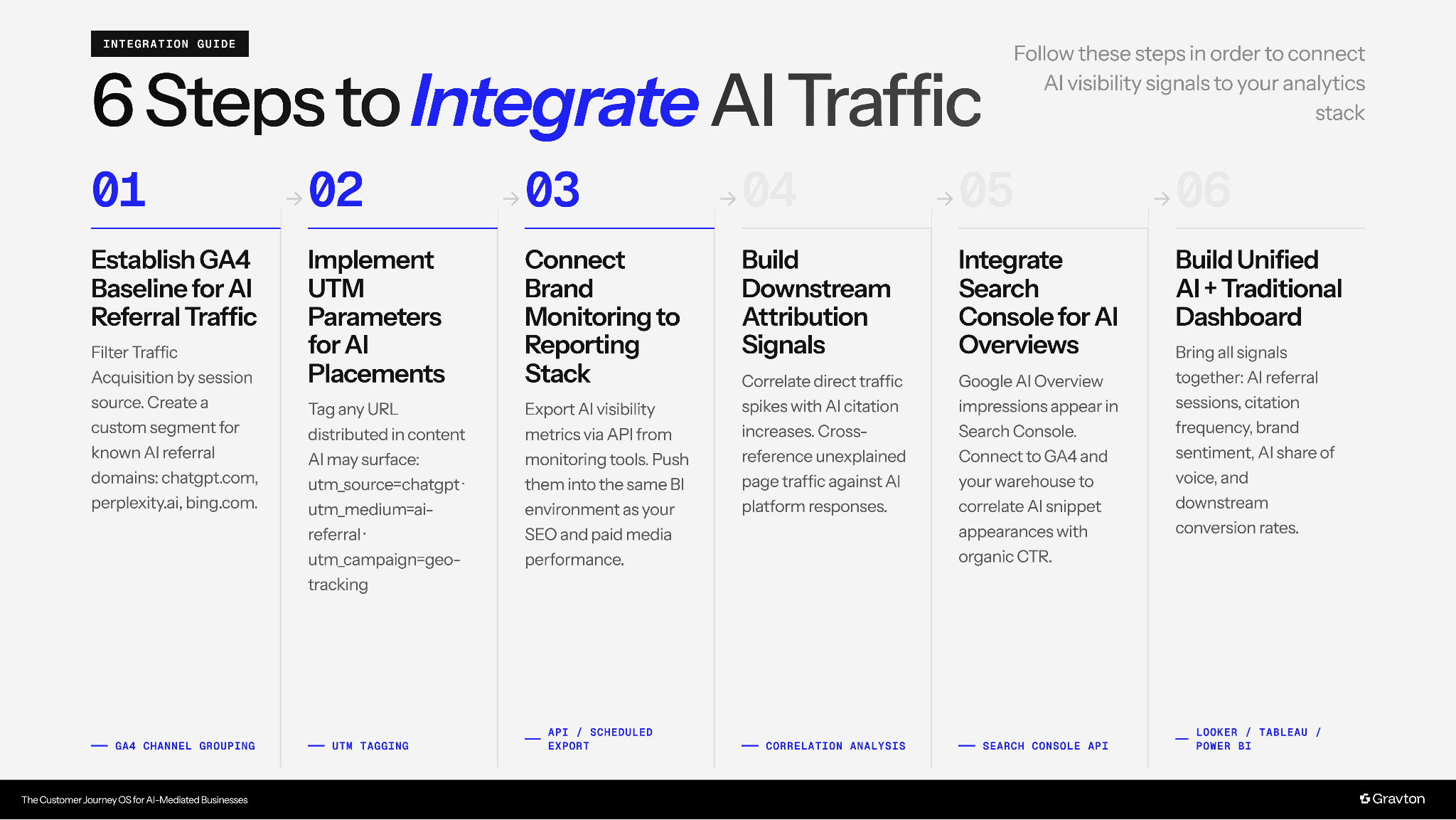
Figure: 6-Steps to integrate AI traffic and connect AI visibility signals to your analytics stack.
What Are the Common Data Infrastructure Gaps?
Most marketing teams have at least a partial web analytics infrastructure in place. The gaps that matter for AI search visibility typically appear in four specific areas.
Gap 1: No AI-Specific Channel Grouping in Analytics
Without a dedicated AI traffic channel in GA4, all AI-referred sessions are absorbed into either direct traffic or unclassified referrals. This prevents your team from seeing AI traffic as a distinct source. It also makes it impossible to measure AI conversion rates or session behavior separately.
The scale of misattribution: A significant portion of the AI-referred sessions may be misclassified as direct traffic in standard analytics configurations. If your direct traffic has grown unexpectedly over the past 12 months, a significant portion of it may be AI-originated.
Gap 2: No Citation Tracking Infrastructure
Most marketing teams have tools for tracking organic search rankings and paid media performance. But they have no systematic process for tracking how often their brand appears in AI responses.
A structured manual prompt testing cadence helps. Run a defined set of target queries across ChatGPT, Perplexity, and Google AI Overviews weekly. This provides a baseline that most teams currently lack entirely.
Understanding GEO vs SEO makes it clear why citation tracking is distinct from keyword ranking. You are not tracking position in a results list. You are tracking presence in a synthesized answer. These are fundamentally different measurement problems requiring different tools.
Gap 3: Disconnected Brand Monitoring and Analytics Data
Brand monitoring tools that track AI mentions operate in isolation from web analytics platforms. This means teams cannot connect a change in AI brand sentiment to a subsequent change in direct traffic or branded search volume.
The correlation exists in the data. It just never surfaced because the two data sources are never connected.
For context on what competitive intelligence looks like when this data is properly integrated, see Competitive Intelligence in AI Search. It shows how brands use connected infrastructure to identify when competitors gain share in AI responses before it shows up in traffic data.
Gap 4: No Intent Intelligence Data in Content Strategy
Content teams optimize for keywords and organic search performance. They have no data on how users are phrasing questions to AI platforms. They also have no data on which brands appear in those answers.
Intent intelligence data should feed directly into the content planning process. This includes prompt patterns, entity citation share, and competitive citation gaps.
AI summaries are reducing most of potential clicks by resolving queries without requiring a site visit. These are material impacts on marketing performance. Most data infrastructures are not currently tracking them.
Gap 5: Skills and Governance Deficits
The infrastructure gap is not just technical; it is organizational. Teams that treat AI data infrastructure as an IT project rather than a marketing operations priority consistently underinvest. They underinvest in governance, documentation, and cross-functional alignment. Without these, the data never actually drives decisions.
How Do You Measure AI Data Infrastructure Performance?
Measuring infrastructure performance means assessing two things. First, is the infrastructure capturing the right signals? Second, are those signals actually improving marketing outcomes?
What Are the Infrastructure Completeness Metrics?
Table 5: Infrastructure Completeness Metrics.
Metric | What It Measures | Target |
AI Platform Coverage | How many major AI platforms are included in your citation tracking (ChatGPT, Perplexity, Google AI Overviews, Copilot) | 4+ platforms |
Attribution Coverage Rate | % of total sessions with a known, attributed source | 80-90% (mature B2B SaaS) |
Data Freshness | How recently AI citation data, brand sentiment data, and intent analysis were updated | Sub-24 hours for fast signals |
Pipeline Reliability | Pipeline uptime, error rate, and recovery time | >99% uptime |
What Are the AI Visibility Performance Metrics?
Table 6: AI Visibility Performance Metrics.
Metric | What It Measures |
AI Citation Frequency | How often your brand appears in AI responses to tracked queries |
Confirmed AI Referral Sessions | Sessions originating from known AI platform domains |
Share of AI Voice | Your brand's presence in AI responses relative to competitors |
AI Influenced Branded Search Volume | Branded search queries that follow increases in AI citation activity |
AI Referral Conversion Rate | Conversion rate of sessions from AI platform referral domains |
Brand Sentiment Distribution | Ratio of positive, neutral, negative, and absent AI characterizations |
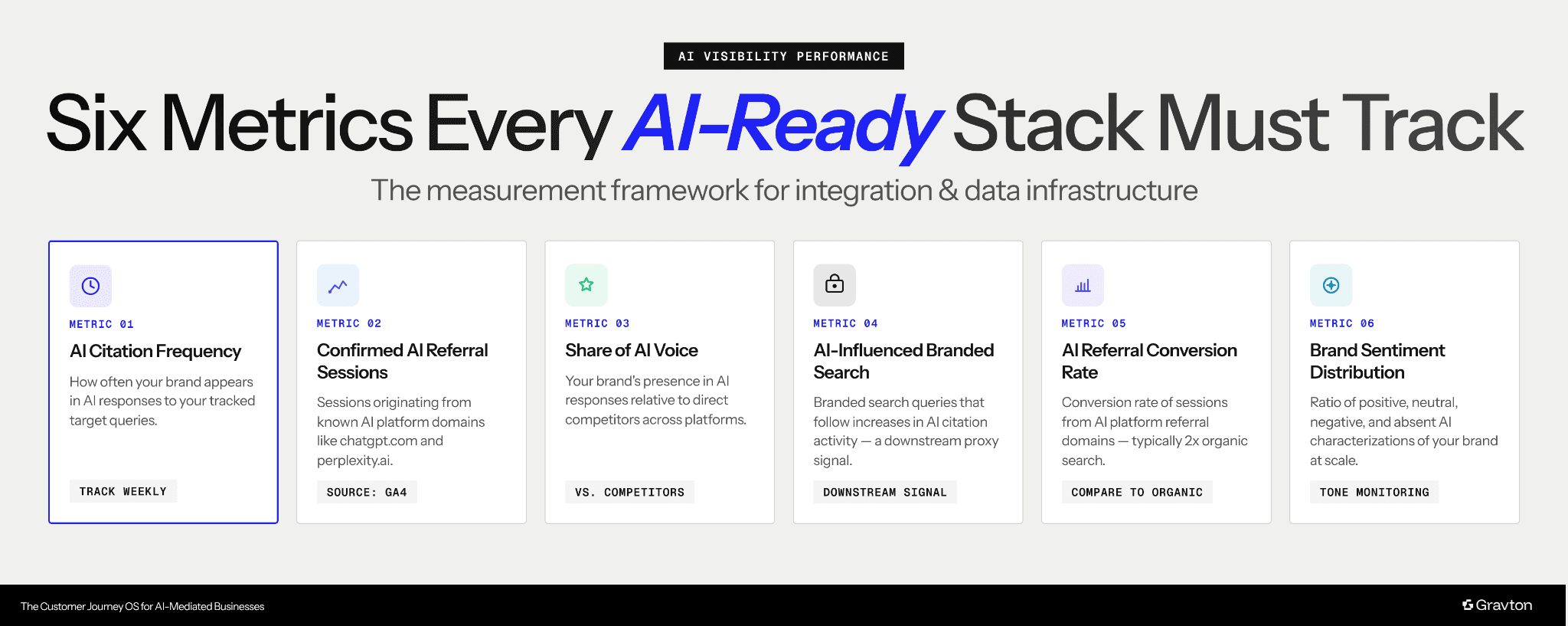
Figure: 6 Metrics Every AI Ready Stack Must Track as a Measurement Framework for Integration and Data Infrastructure.
What Is an Infrastructure Health Score?
An infrastructure health score is a composite metric. It combines coverage rate, data freshness, attribution completeness, and reporting accuracy into a single indicator. It gives your marketing operations team a weekly signal of whether the data foundation your decisions rest on is sound.
A well-performing AI data infrastructure should show:
Increasing citation frequency
Growing confirmed AI referral sessions
Positive shifts in brand sentiment distribution
A stronger correlation between AI visibility improvements and downstream branded search and direct traffic growth
If none of these metrics are moving, the problem is typically in the infrastructure itself: missing pipelines, broken integrations, or incomplete coverage or in the underlying GEO strategy.
How Do You Evaluate Your Infrastructure Maturity?
Ask yourself these four questions:
Table 7: Infrastructure maturity evaluation framework.
Question | What It Tests |
Can you attribute AI-driven traffic to the downstream pipeline and revenue with the same rigor as you do for search or paid media? | Attribution completeness |
Do you have a defined schema for AI-driven events (engine, query, content unit, timestamp)? | Data structure maturity |
Can your team add a new AI platform to the stack in weeks, not months? | Infrastructure agility |
Do you actively monitor data-pipeline health (latency, errors, drift)? | Operational maturity |
If the answer is "no" to two or more of these, your integration & data infrastructure is likely holding back your AI visibility and GEO efforts.
|
Example of a B2B SaaS: Recovering 34% of Direct Traffic Attribution
A B2B SaaS company selling project management software to mid-market operations teams had four tools in their stack: GA4, Salesforce, HubSpot, and Semrush. None of them talked to each other in a structured way. Direct traffic was 28% of total sessions, unexplained and unexamined.
After building a connected marketing data infrastructure, three things happened:
→ They discovered that 34% of their direct traffic originated from AI.
By configuring custom channel groups in GA4 and correlating direct traffic spikes with manual prompt testing, they identified that Perplexity was regularly citing their product comparison guides. These AI-referred sessions had a 2.1x conversion rate compared to organic search traffic.
→ They identified three high-value content gaps.
Prompt testing across 40 target queries revealed that their brand appeared in 12 but was absent from 28. Six of those missing queries were ones where competitors appeared consistently. Each missing query mapped to a content type they had deprioritized: technical specification pages and third-party integration guides.
→ They corrected their attribution model.
By integrating AI referral data into Salesforce at the session level, they found that 19% of closed-won deals in Q4 had an AI referral event somewhere in the session history. This typically happened in the research or evaluation stage. Their previous model had assigned all credit to branded organic or direct.
Final Thoughts on Integration and Data Infrastructure
Integration & data infrastructure is not a technical project for the IT team. It is a strategic requirement for every marketing leader who wants to understand and improve their brand's position in AI search.
The core takeaway is direct. Without AI search data pipelines connecting citation tracking, brand monitoring, intent intelligence, and web analytics into a unified reporting environment, you are making GEO decisions without reliable measurement. You may be publishing content, building authority signals, and optimizing for AI visibility. But you have no systematic way to know whether it is working or where the gaps are.
The infrastructure work is not particularly complex. It starts with configuring GA4 to capture and segment AI referral traffic. It extends to establishing a citation tracking program across target AI platforms. It reaches completion when those signals connect to the same reporting environment as your existing marketing data. Each step reduces the measurement gap between what your brand does and what AI platforms say about it.
AI search is already influencing buyers at scale. The brands that build the infrastructure to measure that influence will have a durable advantage in every subsequent optimization decision.
Start with referral identification. Build the pipeline. Connect the data to your CRM. Then measure what matters.
Frequently Asked Questions on Integration & Data Infrastructure
What is integration & data infrastructure in the context of AI search?
Integration & data infrastructure refers to the systems, pipelines, and governance practices that connect AI-driven data sources, such as ChatGPT citations, Perplexity references, and Google AI Overviews, to your existing analytics stack. It is the operational layer that makes AI visibility measurable and actionable, linking what AI platforms say about your brand to the CRM, attribution, and reporting tools.
What are the most important components of an AI-ready data stack?
An AI-ready data stack requires six connected components that ensure AI visibility is measurable and attributable. You start by configuring event tracking to capture AI referral signals and building pipelines that ingest both click and non-click data, such as citation frequency and share of voice. When these signals are unified in a warehouse, connected to identity through a CDP, interpreted through an AI-aware attribution model, and surfaced in reporting, you gain a complete view of how AI visibility drives pipeline and revenue.
How do I start integrating AI traffic into my analytics stack if I have no existing setup?
Start by configuring GA4 to separate AI referral domains such as chatgpt.com and perplexity.ai from direct traffic so you can immediately recover misattributed sessions. Then implement UTM parameters for controlled AI distributions and connect AI brand monitoring outputs into your reporting environment. As these signals accumulate, build downstream attribution models using direct traffic correlation and branded search trends to estimate total AI influence and connect it to pipeline outcomes.
What is an integration & data infrastructure health score?
An infrastructure health score is a composite weekly metric that combines attribution coverage rate, data freshness, pipeline reliability, and AI platform coverage into a single indicator. It tells your marketing operations team whether the data foundation underlying GEO decisions is sound. A declining health score typically signals missing pipelines, broken integrations, or incomplete AI platform coverage.
How does integration & data infrastructure connect to the GEO strategy?
Without a connected infrastructure, the GEO strategy operates in the dark. You may be optimising content for AI citation, building structured data, and publishing at scale. Still, if your data stack cannot measure citation frequency, share of AI voice, or AI-attributed conversions, you have no systematic way to know whether any of it is working. Infrastructure is what converts GEO activity into reportable, attributable business outcomes.
What does misattributed AI traffic look like in practice?
Misattributed AI traffic typically appears as an unexplained increase in direct traffic. If your direct traffic has grown over the past 12 months without a clear cause, no major PR, no brand campaign, no product launch, a significant portion is likely AI-originated. Most AI-referred sessions are classified as direct in standard analytics configurations. The diagnostic step is to configure a custom GA4 segment for known AI domains and compare the volume against your direct traffic baseline.
Further Reading
Explore the full Gravton Labs' resource library to go deeper on each layer of your AI visibility stack:
Generative Engine Optimization (GEO) Guide: the foundational framework for ranking in AI search
GEO vs SEO: Key Differences & What Matters in 2026: why AI search requires a different optimization mindset
How to Track ChatGPT Traffic: GA4 configuration and step-by-step setup guide
AI Search Visibility Strategy: building a strategy that connects to your data infrastructure
AI Search Engines & Traffic Sources: platform-by-platform breakdown of where AI traffic originates
Citation Graph & Source Influence: how AI engines decide what to cite and how to become a cited source
Brand Monitoring in the AI Era: how to monitor your brand across AI platforms at scale
AI Sentiment Analysis: How Tone Shapes Brand Perception: measuring how AI engines characterize your brand
AI Narratives: What They Are and Why They Shape Buyer Decisions: understanding and influencing the stories AI tells about you
Intent Intelligence: Understanding Why Users Ask What They Ask: using prompt data to drive content strategy
Prompt Market Analysis: mapping the query landscape in your category
How to Measure ROI from GEO: A 2026 Framework: attribution, pipeline contribution, and business impact
Technical GEO & AI Crawlability: making your content accessible and citable by AI systems
Glossary: key terms in AI search, GEO, and data infrastructure
Free AI Visibility Audit
Limited Availability.
VISIBILITY & CONTENT STRATEGY